

Why in news?
India highlighted its new Clouded Leopard Conservation Action Plan on 4 August. The plan had been formally released during July 2026. It identifies fourteen priority landscapes across Northeast India. Proposed work combines habitat connectivity, science, enforcement and community participation.
Background
The mainland clouded leopard is scientifically named Neofelis nebulosa. It lives across parts of the eastern Himalayas, southern China and mainland Southeast Asia. In India, its principal range lies across the Northeast.
Confirmed Indian states include Arunachal Pradesh, Assam, Meghalaya, Mizoram and Nagaland. Records also occur farther west into Sikkim, northern West Bengal and, through one published record, Bihar.
The Sunda clouded leopard, Neofelis diardi, is a different species occurring on Borneo and Sumatra, not India. Older accounts sometimes treated both animals as one species.
The International Union for Conservation of Nature classifies the mainland species as Vulnerable. Its global population is declining, with fewer than 10,000 mature animals estimated. India does not possess a reliable nationwide population estimate.
Distinctive ecology
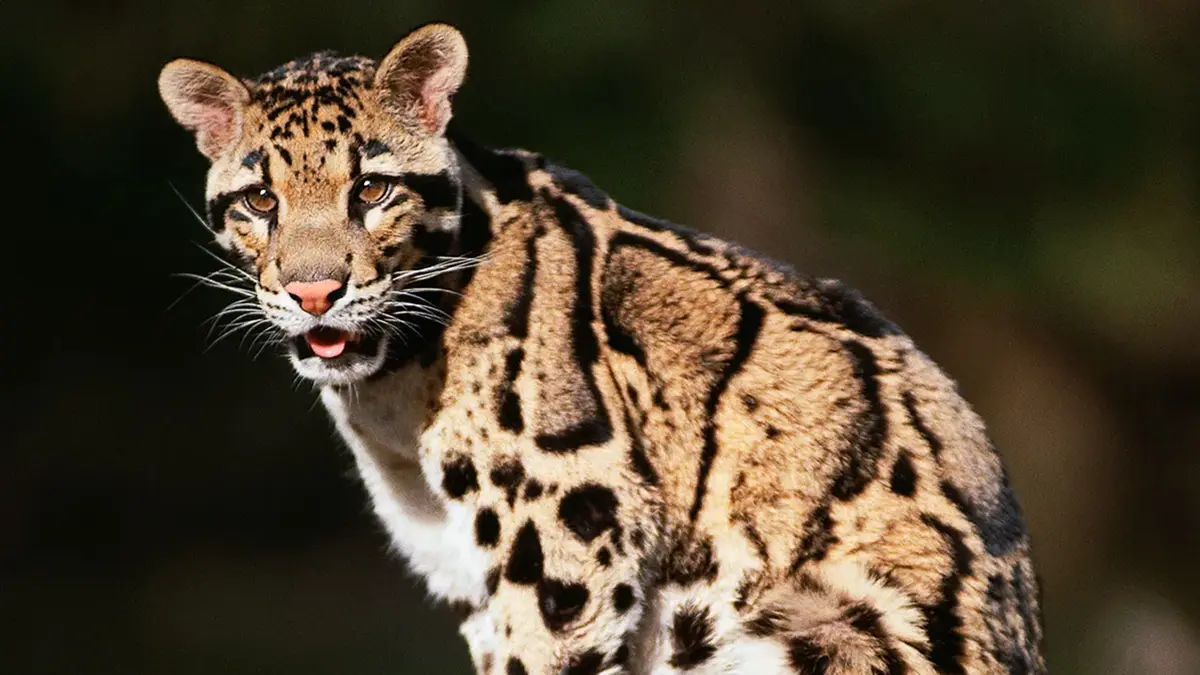
Large cloud-shaped markings give the cat its common name, while its exceptionally long tail supports balance within forest vegetation. Broad paws and flexible ankle joints make it an accomplished climber.
The cat can descend tree trunks head-first and move along branches, but it also travels and hunts on the ground. Calling it exclusively arboreal would therefore oversimplify its behaviour.
Clouded leopards use evergreen and other forest types, consuming birds and mammals of varying sizes. Dense cover and connected forest remain important because the animal is secretive and wide-ranging.
How the action plan developed
The government placed the species within its recovery programme for threatened wildlife. A national project then prepared action plans for the clouded leopard, caracal and fishing cat. The Wildlife Institute of India provided scientific coordination.
The work operated through an initiative involving the Government of India, Global Environment Facility and United Nations Development Programme. The Standing Committee of the National Board for Wild Life released the plan during July. The meeting was its ninety-first sitting.
A government release later described the plan during International Clouded Leopard Day on 4 August. The publicity date should not replace the earlier release chronology.
Fourteen priority landscapes
The plan maps fourteen landscapes across the species' northeastern range, protecting movement routes outside isolated parks. It also connects forests crossing district, state and international boundaries.
Several landscapes adjoin Bhutan, Bangladesh or Myanmar, while wildlife moves across those boundaries without recognising national lines. Transboundary cooperation can therefore align monitoring and enforcement.
Priority status creates no legal protected-area category because each landscape contains different land tenures and existing protections. Implementation must follow applicable laws and consult affected communities.
Scientific monitoring
Camera traps can identify occurrence, distribution and activity patterns. Occupancy surveys estimate suitable sites used by the species, rather than directly counting every individual.
Genetic material from hair, scat and tissue can reveal connectivity. Environmental deoxyribonucleic acid may detect traces in water or soil, but requires validation for humid mountain conditions.
The plan proposes standardised databases and repeated surveys, allowing comparable methods to reveal change across years. Data sharing must still protect sensitive locations from poachers.
Threats and proposed responses
Forest fragmentation separates habitat and prey populations, while roads and other construction can open previously remote areas. Poorly planned projects also increase traffic, noise and hunting access.
Snares set for other wildlife can injure clouded leopards. Targeted hunting and illegal trade create additional pressure. Prey loss can make apparently forested habitat unsuitable.
The action plan calls for habitat restoration and corridor protection. It supports stronger anti-poaching work and frontline training. Monitoring System for Tigers–Intensive Protection and Ecological Status tools may help record patrol effort.
Authorities also propose climate-resilient management and periodic review. Forest shifts can move suitable habitat upwards or fragment it further. Adaptive planning must change when monitoring reveals unexpected outcomes.
Communities and governance
Many priority forests overlap community-managed or customary lands. Conservation cannot succeed through enforcement alone. Local institutions possess important knowledge about wildlife presence, hunting pressures and seasonal access.
Livelihood support should be voluntary, locally designed and fairly shared. Conflict compensation and livestock protection need accessible procedures. Community monitors should receive training, payment and recognition.
The species has Schedule I protection under the Wild Life (Protection) Act, 1972. It also appears in Appendix I of the Convention on International Trade in Endangered Species. These listings create strong protection but do not prevent habitat loss automatically.
Measuring success
Counting meetings or camera traps would measure activity rather than conservation impact. Useful indicators include occupied habitat, corridor condition, prey recovery and snare removal. Monitoring should also examine community costs and benefits.
A nationwide population number may remain difficult for this elusive cat. Comparable occupancy trends can still show whether distribution is stable. Public reports should identify uncertainty instead of presenting false precision.
Conclusion
The action plan shifts attention from scattered sightings towards connected landscapes. Its success depends upon durable funding, rigorous monitoring and respected community partnerships.