

Why in news?
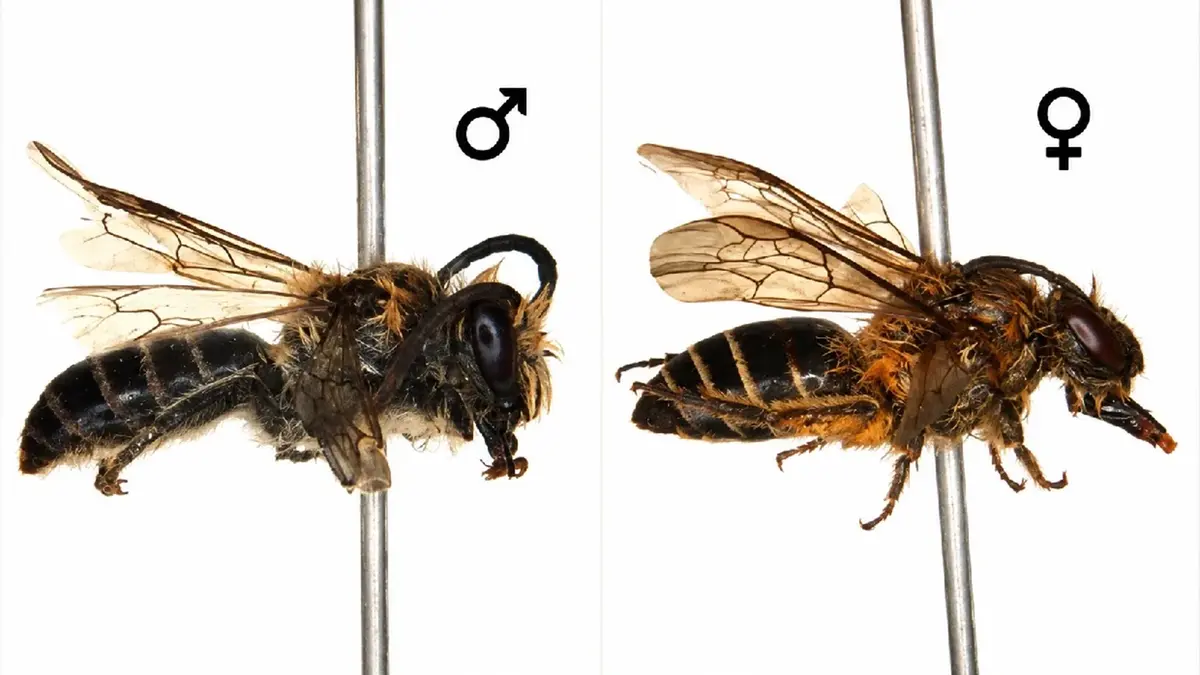
Zoological Survey of India researchers reported Colletes bhutanicus from Tawang. It is the species’ first documented record in India.
Identity and earlier range
The species belongs to the family Colletidae and the order Hymenoptera. Michael Kuhlmann described it scientifically in 2003 from material collected in Bhutan.
Published records previously placed the bee in Bhutan and China’s Xizang region. The Tawang finding extends its documented distribution westwards into India.
Geographic setting
Tawang lies in western Arunachal Pradesh within the eastern Himalaya. Bhutan adjoins the district towards the west and south-west.
The Tibet Autonomous Region of China lies to the north. High mountains, valleys and alpine vegetation create varied habitats across short distances.
These adjoining Himalayan landscapes can support species across political boundaries. National records may therefore reflect survey coverage as well as biological range.
A new national record is not a new species
The bee was already known to science. The finding documents its presence in India and does not establish that it recently arrived.
Why the record matters
Reliable taxonomy is the foundation of biodiversity monitoring. It allows later surveys to track range, habitat use and possible population change.
A single record cannot establish abundance or conservation status. Repeated sampling across seasons and elevations would give a stronger ecological picture.
Researchers should preserve voucher specimens and location data responsibly. Public coordinates may need safeguards where collection pressure could threaten rare organisms.
From inventory to conservation
Pollinator surveys are often uneven across the Himalaya. Comparable sampling would show whether apparent gaps reflect ecology, access or limited research effort.
Identification can be difficult when related bees look similar. Diagnostic morphology and, where useful, genetic evidence should support any later range claims.
Roads, tourism and land-use change can alter flowering habitat. Baseline records allow future teams to test those effects rather than assume them.
Cross-border scientific exchange could improve the regional picture. Species distributions do not stop at the India–Bhutan or India–China political boundaries.
Flowering-plant surveys would add useful context. They could test which resources sustain the bee across seasons and elevations.
Future publications should state collection methods and effort. That detail lets later researchers compare sites and distinguish absence from inadequate sampling. Consistent records also support a national pollinator inventory.
Conclusion
The Tawang record fills a gap in India’s bee inventory. Its wider importance depends on continued surveys and careful taxonomic verification.