

Why in news?
Colombia held a presidential runoff election on 21 June 2026. Nationalist lawyer Abelardo de la Espriella narrowly defeated left‑wing senator Iván Cepeda, ending the progressive administration of Gustavo Petro. The result signals a sharp rightward shift in Latin American politics.
Background
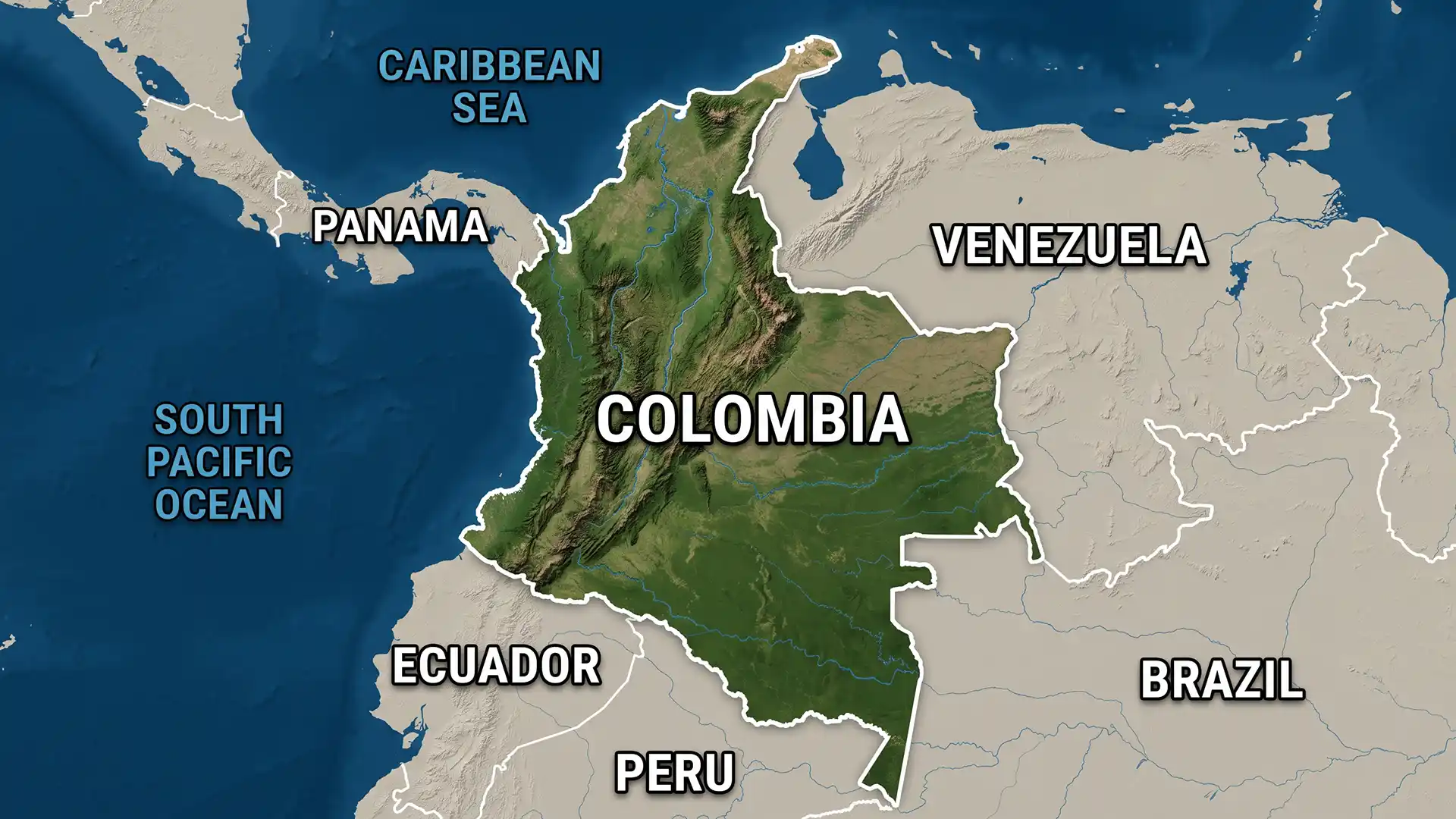
The Republic of Colombia is situated in the north‑western part of South America. It borders Venezuela and Brazil to the east, Peru and Ecuador to the south, and Panama to the northwest. Colombia is the only South American country with coastlines on both the Pacific Ocean and the Caribbean Sea. Its area is about 1.14 million square kilometres and it has a population of around 50 million. The capital and largest city is Bogotá.
Biodiversity and economy
- Colombia is the world’s second most biodiverse country after Brazil. Although it covers less than one per cent of Earth’s land area, it hosts about 10 % of all known species.
- The country has more than 1,900 bird species—more than any other nation—and ranks first in orchid diversity.
- Landscapes range from Amazon rainforest, Andes mountains and llanos (grasslands) to deserts and tropical coasts. Major rivers include the Magdalena, Cauca, Atrato and Sinú.
- Colombia is the world’s main producer of emeralds and exports coffee, bananas, oil, coal and gold. Its economy benefits from trade with the United States, its largest partner.
- The official language is Spanish and the currency is the Colombian peso.
2026 presidential election
- Under Colombia’s constitution, presidents serve a four‑year term and cannot be re‑elected consecutively. Gustavo Petro, elected in 2022 as the country’s first left‑wing president, could not seek a second term.
- In the runoff held on 21 June 2026, far‑right lawyer Abelardo de la Espriella won 49.66 % of the vote, beating Iván Cepeda’s 48.7 %. The margin was roughly 250,000 votes.
- De la Espriella campaigned on an “iron‑fist” approach to organised crime, promising mega‑prisons and stronger cooperation with the United States. He received the endorsement of U.S. President Donald Trump.
- The vote reflects a broader rightward shift in Latin America, with conservative leaders also gaining ground in Argentina, Chile and Peru. Colombia’s Congress remains divided, so the new president will need to negotiate with opposition parties.
- Women’s groups and human rights organisations have raised concerns over the president‑elect’s past sexist remarks and his hardline security proposals.
Conclusion
Colombia is a land of immense ecological and cultural wealth. Its recent election results will influence the country’s approach to peace, security and development. Observers will watch how the new administration balances tough security policies with social inclusion and environmental protection.
Sources: DD News