
Why in news?
The Colorado River has been in the news due to prolonged droughts and record‑low snowpack in the Rocky Mountains that feed the river. In 2026 researchers warned that low spring runoff will worsen water shortages across the southwestern United States, affecting millions of people and threatening hydroelectric generation at reservoirs such as Lake Powell and Lake Mead.
Background
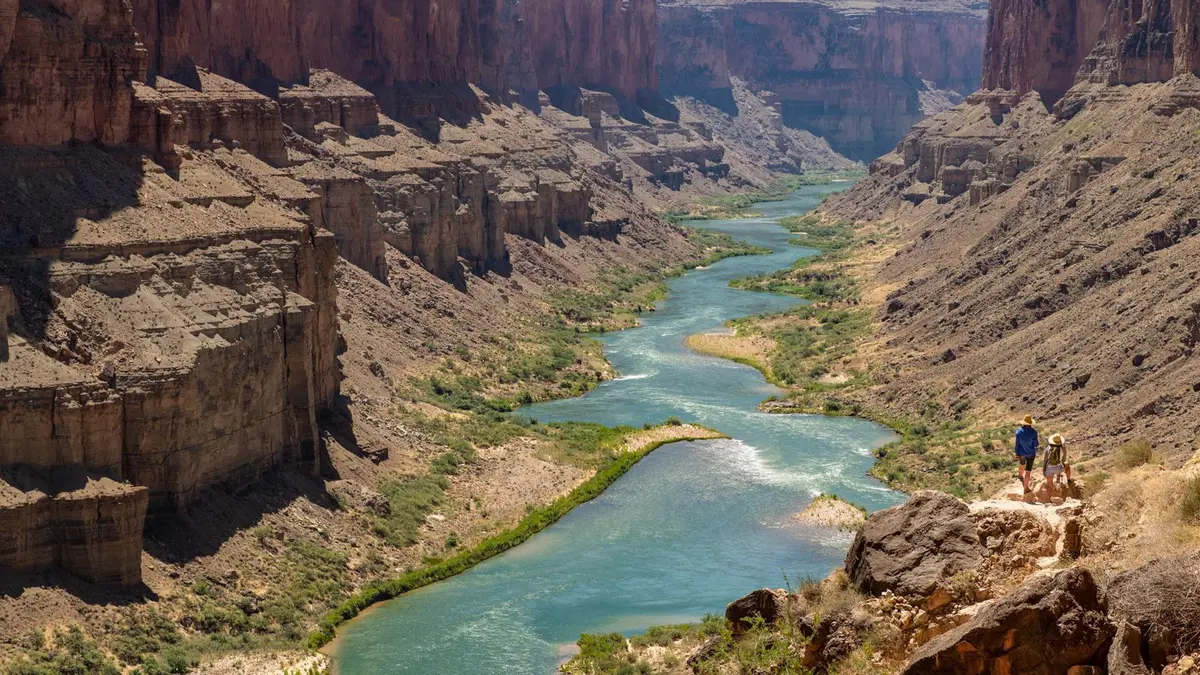
The Colorado River rises in the Rocky Mountains of north‑central Colorado and flows generally west and south for about 1,450 miles (2,330 km) through the Grand Canyon and the deserts of Arizona and California before reaching the Gulf of California in Mexico. Its drainage basin covers roughly 246,000 square miles (637,000 km²) and includes parts of seven U.S. states—Wyoming, Colorado, Utah, New Mexico, Nevada, Arizona and California—and two Mexican states.
Physical and ecological features
- River course: The river cuts spectacular gorges such as the Grand Canyon, Marble Canyon and Glen Canyon. Major tributaries include the Green, Gunnison, San Juan, Virgin, Little Colorado and Gila rivers. The lower Colorado flows between the Mojave and Sonoran deserts.
- Basin division: The Colorado River Compact of 1922 divides the basin into an Upper Basin (Wyoming, Colorado, Utah, New Mexico and parts of Arizona) and a Lower Basin (Arizona, Nevada and California) at Lees Ferry. Each basin is allocated 7.5 million acre‑feet of water annually.
- Dams and reservoirs: Numerous dams on the river and its tributaries provide water storage and hydropower. Hoover Dam (726 feet high) created Lake Mead, while Glen Canyon Dam impounds Lake Powell. Other notable structures include Parker Dam, Davis Dam and Imperial Dam.
- Flora and fauna: Elevational gradients produce diverse habitats—from alpine tundra in the headwaters to desert scrub in the lower basin. Animals include elk, bighorn sheep, pronghorn, mule deer, mountain lions and beavers. Several native fish such as the humpback chub and razorback sucker are endangered due to dams and invasive species.
Water management and challenges
- Over‑allocation: Compact apportionments were based on early 20th‑century flow estimates that were higher than the long‑term average. Rising demand from agriculture, cities and industry now exceeds reliable supply.
- Climate change: Reduced snowpack, higher temperatures and prolonged droughts have lowered river flows. In 2023 and 2024, the river’s largest reservoirs reached critically low levels, threatening hydropower generation and drinking water supplies.
- Interstate and international agreements: In addition to the 1922 Compact, the United States and Mexico signed a 1944 treaty guaranteeing Mexico 1.5 million acre‑feet of water per year. Ongoing negotiations seek to update allocations and promote conservation.
- Environmental restoration: Programmes aim to restore riparian habitats, remove invasive species such as tamarisk, and increase flows to the river’s delta, which has been deprived of water for decades.
Conclusion
The Colorado River is the lifeline of the American Southwest, sustaining agriculture, cities and ecosystems. Addressing water shortages will require cooperation among states and nations, conservation measures and adaptation to a warmer, drier climate.
Sources: TOI

