
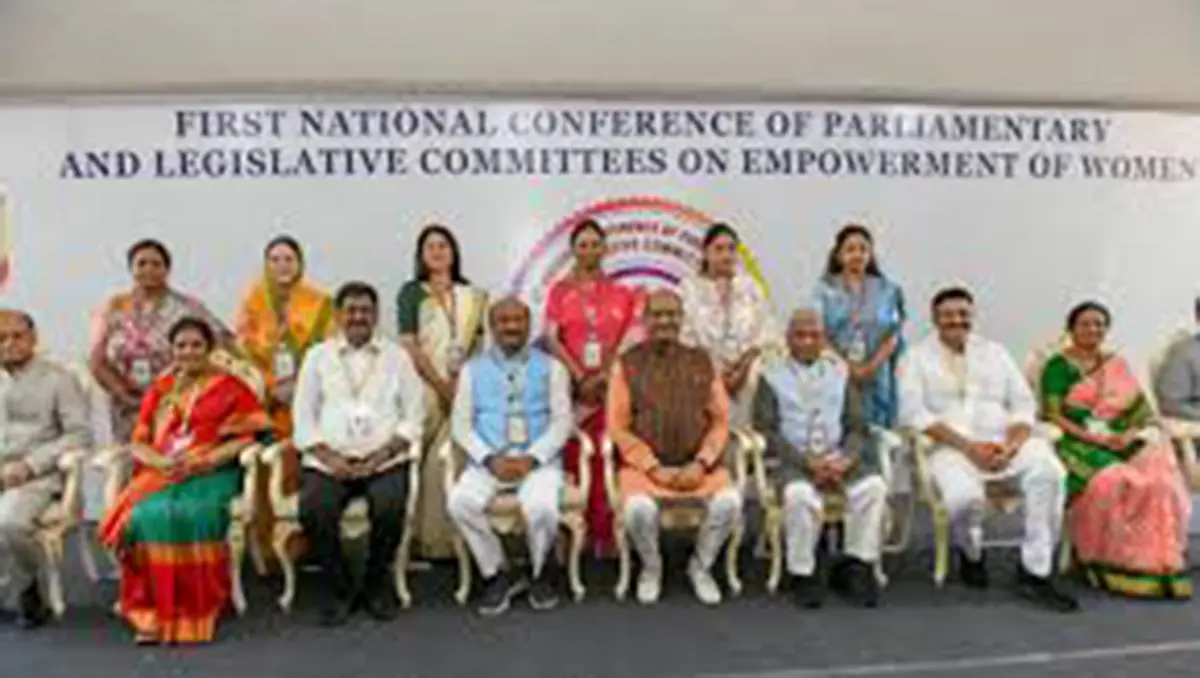
Why in News?
The Speaker of the Lok Sabha recently reconstituted the Committee on Empowerment of Women and appointed BJP MP Dr Daggubati Purandeswari as its chairperson. The committee now has 30 members drawn from both the Lok Sabha and the Rajya Sabha and will review national policies and programmes aimed at women’s welfare.
Background
India’s parliament created the Committee on Empowerment of Women in April 1997 during the 11th Lok Sabha to provide parliamentary oversight of initiatives for women’s equality. Before its formation, issues relating to women were dealt with by various standing committees, leading to fragmented scrutiny. The committee was designed as a joint parliamentary body so that members from both houses could deliberate together on women’s issues. Every year the Speaker of the Lok Sabha and the Chairman of the Rajya Sabha nominate members to the committee and it is reconstituted annually.
Over the years, the committee has examined topics ranging from the representation of women in the civil services to the implementation of gender‑responsive budgeting. Its reports have prompted discussions on workplace safety, political representation and access to education, highlighting gaps in laws and recommending policy corrections. By bringing together MPs across party lines, the committee seeks to create consensus on measures for women’s empowerment.
Composition and Functions
- Membership: The committee comprises 30 MPs – 20 members are nominated by the Speaker from the Lok Sabha and 10 are nominated by the Chairman of the Rajya Sabha. It includes prominent figures from across the political spectrum.
- Term: Members serve for one year; however, they may be renominated in subsequent years. The chairperson is selected from among the members of the Lok Sabha.
- Mandate: The committee examines reports submitted by the National Commission for Women and recommends measures to improve the status of women. It reviews government schemes aimed at achieving equality, dignity and representation for women in legislature, government services and other fields. It also evaluates the performance of welfare programmes and follows up on action taken by the Union government and union territories on its recommendations.
- Working: Members discuss evidence presented by ministries, experts and civil society organisations. Their reports are tabled in Parliament, prompting debates and requiring the government to respond with an action taken report.
Significance
- The committee ensures legislative oversight of gender policies, helping Parliament hold the executive accountable for commitments under the Constitution and international conventions like CEDAW.
- By analysing gaps in law implementation, it provides a platform for highlighting systemic challenges such as gender‑based violence, wage disparity and political underrepresentation.
- The joint composition encourages bipartisan collaboration on sensitive issues, promoting consensus on reforms that benefit women across the country.
Conclusion
The reconstitution of the Committee on Empowerment of Women underscores Parliament’s continuing commitment to scrutinise policies affecting half of India’s population. Through its inquiries and recommendations, the committee plays a pivotal role in steering legislation and programmes towards genuine empowerment and equality.
Source: News On Air

