

Why in news?
Reports in February 2026 drew attention to the declining population of the black‑necked crane in the high‑altitude wetlands of the Himalayas. Conservationists highlighted habitat loss, predation by feral dogs and climate change as major threats to this vulnerable species.
Background
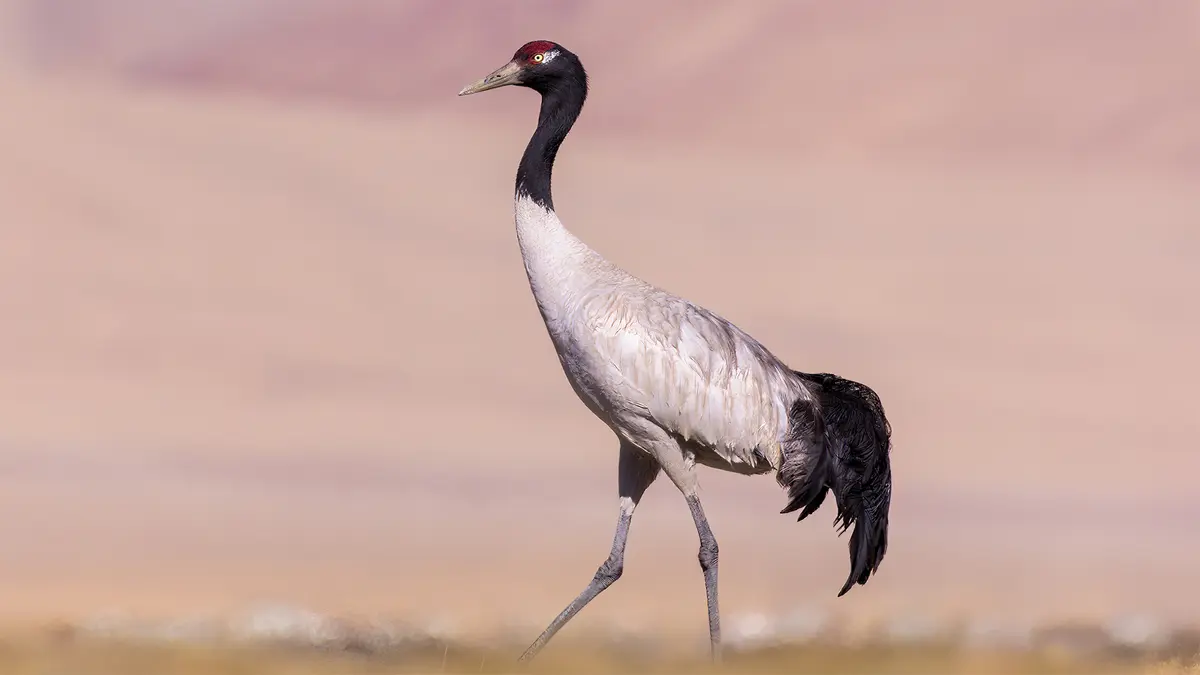
The black‑necked crane (Grus nigricollis) is a large wading bird found on the Tibetan Plateau and in parts of Bhutan and India, including Ladakh and Arunachal Pradesh. It breeds on alpine marshes at elevations of 3,000–5,000 metres and migrates to lower valleys in winter. Recognised by its black head and neck with a red crown patch, the species is considered Near Threatened by the IUCN and is listed on Appendix I of the Convention on Migratory Species.
Threats to the species
- Habitat degradation: Drainage of wetlands for agriculture, construction of roads and tourism facilities disrupts breeding and foraging areas. Overgrazing by livestock reduces vegetation cover.
- Predation: Feral and domestic dogs prey on eggs and chicks. This problem is exacerbated by inadequate waste management in nearby villages, which sustains dog populations.
- Disturbance and climate change: Increasing tourism in high‑altitude regions brings noise, human presence and infrastructure that disturb nesting sites. Climate change alters snow‑melt patterns and may dry up marshes or shift vegetation zones.
Conservation measures
- Protecting wetlands: Governments have designated Ramsar sites and wildlife sanctuaries to safeguard key breeding and wintering habitats. Communities participate in wetland restoration and sustainable tourism initiatives.
- Managing feral dogs: Programmes to sterilise and vaccinate dogs, coupled with waste management and awareness campaigns, help reduce predation.
- Research and monitoring: Regular population surveys, satellite tracking and ecological studies provide data for conservation planning. Local residents and monks often take part in monitoring and guarding nests.
Significance
- Cultural importance: The black‑necked crane holds sacred status in Tibetan Buddhism and is celebrated in festivals and folklore. Protecting the species preserves cultural heritage as well as biodiversity.
- Indicator of wetland health: Cranes require pristine wetlands; their presence indicates a healthy ecosystem. Conservation efforts benefit a wide range of alpine flora and fauna.
- International cooperation: As a migratory species, the black‑necked crane crosses national borders. Effective protection requires cooperation among India, Bhutan and China.
Conclusion
The plight of the black‑necked crane underscores the fragility of Himalayan wetlands. Coordinated conservation actions and community stewardship are essential to ensure that these majestic birds continue to grace high‑altitude landscapes.
Source: Down To Earth