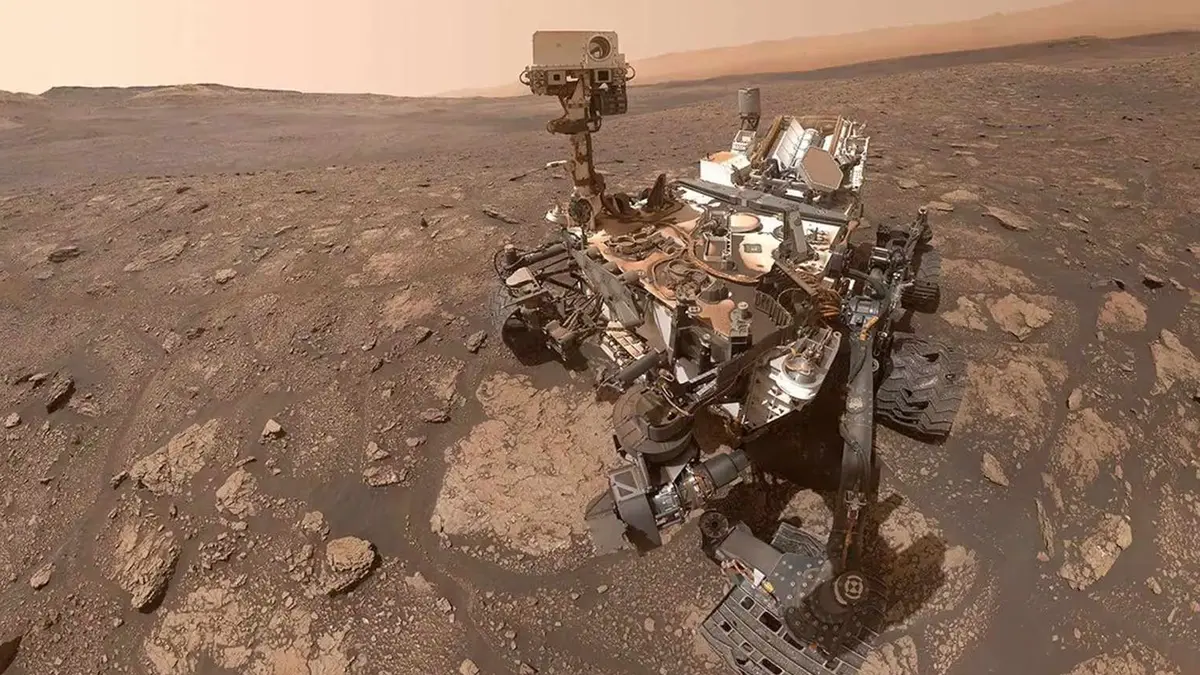
Why in news?
NASA’s Curiosity rover has detected a suite of organic molecules in Martian soil, including a nitrogen‑bearing ring structure that may resemble precursors to DNA or RNA. The discovery expands our understanding of the building blocks present on the Red Planet.
Background
The Mars Science Laboratory mission launched in 2011 and landed the Curiosity rover in Gale crater in August 2012. Since then the rover has traversed the ancient lake bed and climbed the slopes of Mount Sharp, analysing rocks and soil with instruments such as the Sample Analysis at Mars (SAM) suite. Previous measurements detected simple organic molecules like chlorobenzene and thiophenes.
New findings
- Twenty‑one organic compounds: Researchers detected 21 compounds in the rock powder drilled from Mount Sharp. Seven of these had never been observed on Mars before.
- Nitrogen heterocycles: Among the molecules were ring‑shaped compounds containing carbon and nitrogen. On Earth such structures form the backbone of genetic materials and some vitamins.
- Ancient preservation: The samples analysed are about 3.5 billion years old. The preservation of complex organics in such old rocks implies a relatively mild geochemical environment.
- No proof of life: Scientists cannot determine whether the molecules are of biological origin. They may have formed through abiotic processes such as photochemical reactions or meteorite delivery.
Mars context
- Past habitability: Geological evidence suggests Gale crater once contained lakes and rivers. Mars lost most of its atmosphere billions of years ago, making the surface cold, dry and bombarded by radiation.
- Astrobiology goal: Finding organic molecules does not confirm life but indicates that the ingredients for life were present. Future missions, including sample return, will help determine whether life ever emerged on Mars.
Significance
- Expanding chemical inventory: The discovery shows that Mars harbours a greater diversity of organic compounds than previously thought.
- Guiding future exploration: Understanding the stability of organics helps scientists target promising sites for sample return and human missions.
- Public interest: Revealing potential precursors to life captures the imagination and supports continued investment in planetary science.
Source: The Indian Express