
Why in news?
The United States reported a sharp seasonal rise in cyclosporiasis. Authorities confirmed 1,645 domestically acquired cases after 1 May 2026. Another 5,100 reports still required analysis and confirmation. No single food source had been confirmed when the advisory appeared.
Background
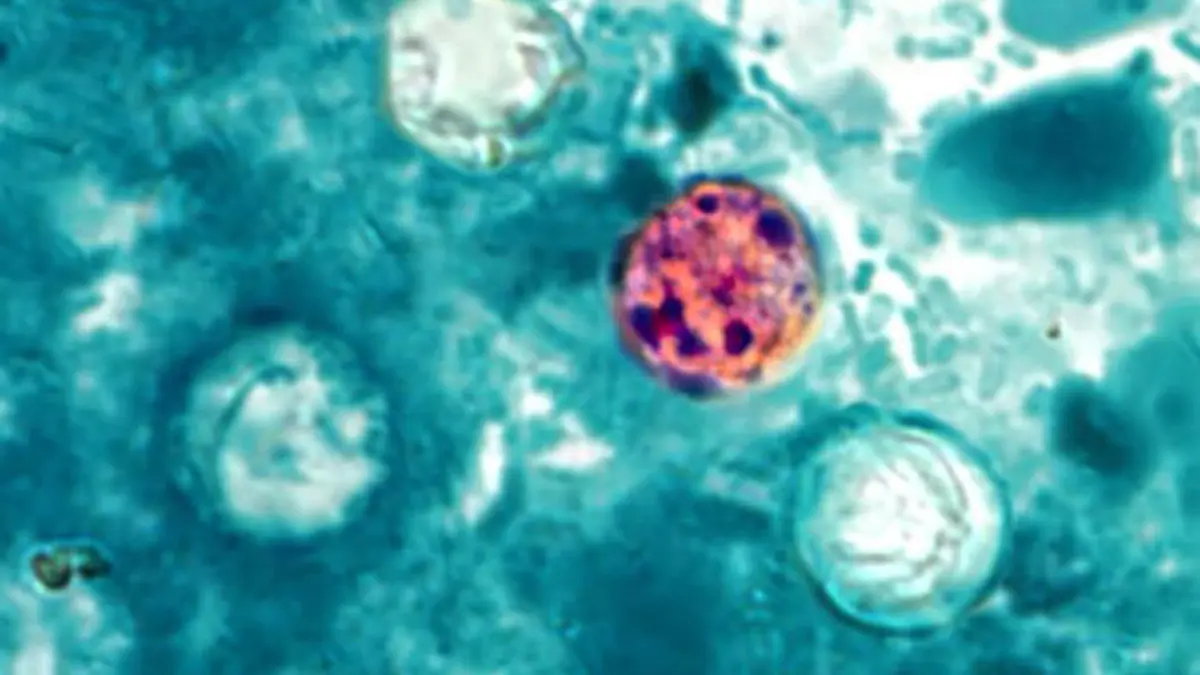
Cyclosporiasis is an intestinal illness caused by the microscopic parasite Cyclospora cayetanensis.
The parasite is a single-celled organism; it infects the small intestine and mainly causes watery diarrhoea.
Humans become infected after swallowing contaminated food or water; fresh produce has caused several earlier outbreaks.
The Centers for Disease Control and Prevention is a United States public health agency, shortened to CDC.
Its Health Alert Network issued the current advisory on 14 July 2026.
Important distinction: The 5,100 reports were not confirmed cases; they still required detailed analysis by health authorities.
What did the advisory report?
- The CDC had received 1,645 laboratory-confirmed domestic cases.
- The confirmed cases came from 34 American states.
- Patients had not travelled internationally during the previous 14 days.
- Their ages ranged from two to 95 years; the median patient age was 44 years.
- Women formed 56 per cent of the confirmed patients.
- Hospitals admitted 141 patients, or nine per cent; no death had been reported.
Only 249 cases had been reported nationally by the comparable point during 2025.
However, surveillance numbers can change; underdiagnosis and delayed reporting may also hide additional illnesses.
The CDC treats 1 May to 31 August as the annual American cyclosporiasis season.
How does the parasite spread?
- An infected person passes immature forms of the parasite in faeces.
- These forms are called oocysts, not eggs.
- The oocysts enter the environment through poor sanitation or contamination.
- They need at least one or two weeks to become infectious.
- Food or water may later carry the mature oocysts.
- Another person becomes infected after swallowing that contaminated material.
This delay explains why direct person-to-person transmission is unlikely; it should not be described as absolutely impossible.
The route is called faecal-oral transmission; it means faecal contamination finally reaches another person’s mouth.
Prelims point: Cyclospora oocysts must mature outside the human body before becoming infectious.
What symptoms can appear?
Symptoms usually begin about one week after exposure; the known range is two days to two weeks or longer.
The main symptom is frequent watery diarrhoea; bowel movements may sometimes be sudden and explosive.
Other symptoms can include:
- Patients may lose their appetite and body weight.
- They may develop stomach cramps, bloating and increased gas.
- Nausea, tiredness and body aches may also occur.
- Some patients may experience vomiting or a low fever.
Symptoms may disappear and later return; without treatment, illness can continue for a month or longer.
Possible complications include dehydration, poor nutrient absorption, gallbladder inflammation and reactive arthritis.
Reactive arthritis is joint inflammation that can follow an infection.
People with weakened immunity may face longer or more serious illness.
Why can diagnosis be difficult?
The parasite may appear in stool only intermittently; a single negative sample can therefore miss the infection.
Doctors may request several stool samples collected on different days; routine stool testing may not include Cyclospora.
Microscopy can identify the oocysts; polymerase chain reaction testing can detect the parasite’s deoxyribonucleic acid.
Polymerase chain reaction is shortened to PCR; deoxyribonucleic acid is shortened to DNA.
How is it treated?
The preferred medicine is the combination trimethoprim-sulfamethoxazole; its shortened form is TMP-SMX.
The CDC recommends seven to ten days for people with normal immune function.
People with weakened immunity may need longer treatment; they should follow qualified clinical advice.
Replacing lost fluids is also important during diarrhoea; people with sulfa allergies need individual medical guidance.
How can infection risk be reduced?
- Wash hands before preparing food; rinse fresh produce thoroughly under clean running water.
- Keep chopping boards, counters and refrigerators clean.
- Avoid food or water that may contain faecal contamination.
- Follow safe storage and preparation practices.
Washing lowers risk, but it cannot guarantee complete removal; routine chemical sanitisers may not kill the oocysts.
Produce should still be washed when its label says it was pre-washed.
Earlier outbreaks involved leafy greens, herbs, raspberries and snow peas; no specific item was confirmed for this rise.
Conclusion
The outbreak shows why precise surveillance matters; clear testing, safe food handling and timely treatment can limit serious illness.