
Why in news?
Cyprus President Nikos Christodoulides paid a state visit to India from 20–23 May 2026. During the visit he met Prime Minister Narendra Modi in New Delhi, where the two leaders upgraded bilateral relations to a strategic partnership and signed several agreements ranging from defence cooperation to cultural exchanges.
Background
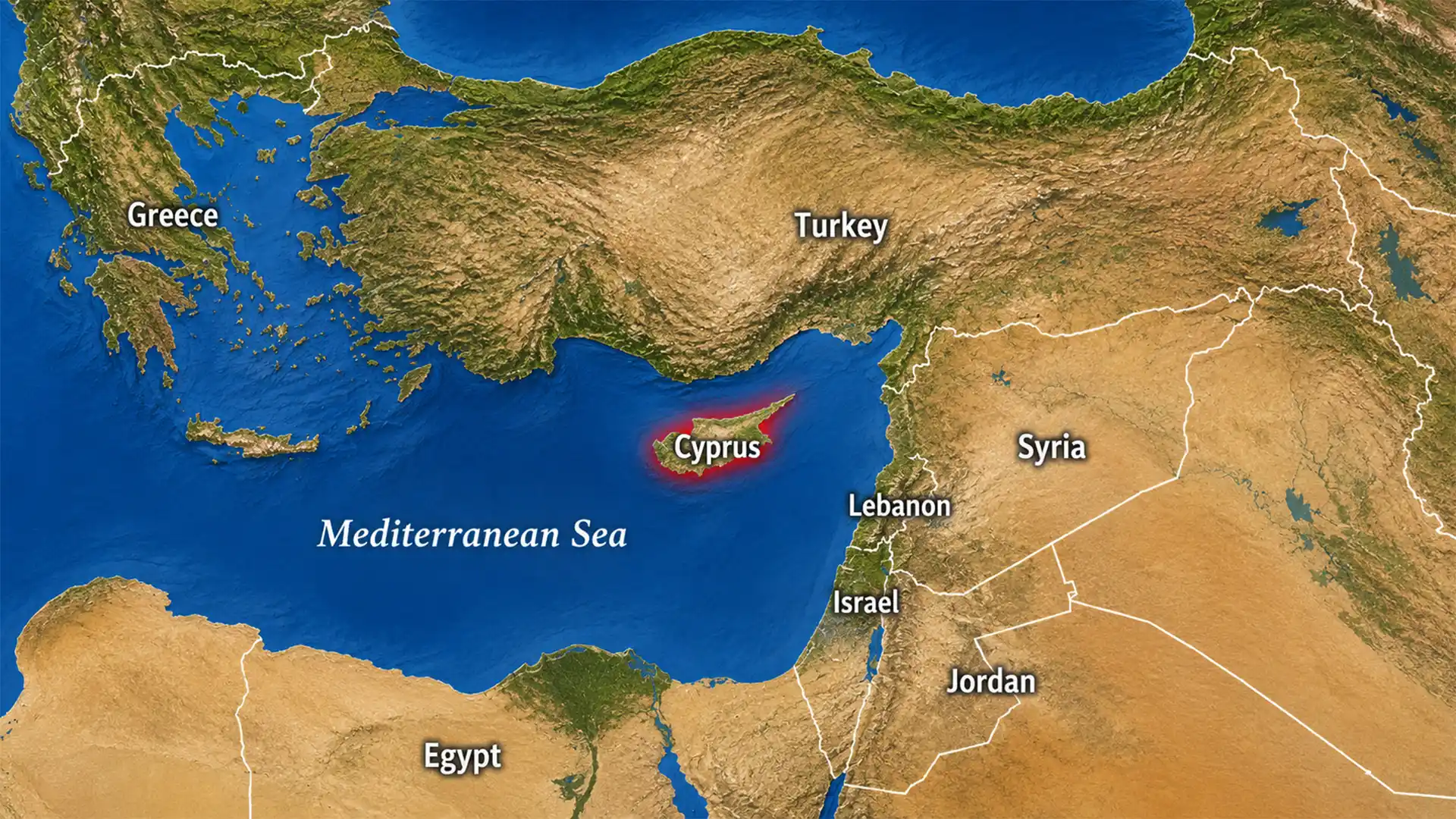
Cyprus is the third‑largest island in the Mediterranean Sea and sits at the crossroads of Europe, Asia and Africa. It became independent from British rule in 1960 and has been divided since 1974, when a coup by pro‑Greek officers prompted Turkey to occupy the northern third of the island. The capital, Nicosia, remains the only divided capital in Europe. Cyprus enjoys a subtropical climate with hot summers and mild winters, and its economy relies on tourism, shipping and financial services.
Key outcomes of the visit
- Strategic partnership: Both countries elevated their relationship to a strategic partnership and adopted a roadmap for defence cooperation covering joint exercises, maritime security and defence industry collaboration from 2026–2031.
- Counter‑terrorism and cyber security: A joint working group on counter‑terrorism was created, and a separate dialogue on cyber security and digital cooperation was announced.
- Training and education: Memoranda of understanding were signed for diplomatic training, technology and innovation cooperation, search‑and‑rescue coordination, higher education exchanges and cultural cooperation programmes for 2026‑2030.
- Economic initiatives: Cyprus will join India’s Indo‑Pacific Oceans Initiative, and a new Cyprus trade centre will open in Mumbai. India gifted a portable BHISHM medical cube under the Aarogya Maitri initiative, and both sides agreed to celebrate India–Cyprus Space Day.
Why Cyprus matters to India
- Cyprus occupies a strategic location at the eastern edge of the Mediterranean, providing a bridge to the European Union and Middle Eastern markets.
- The island has been a consistent supporter of India’s positions in multilateral forums. India, in return, supports Cyprus’s efforts to achieve a peaceful reunification.
- Closer ties offer opportunities in renewable energy, maritime cooperation and tourism, complementing India’s “Act East–Europe” outreach.
Conclusion
The Cypriot President’s visit marks a turning point in bilateral relations. By formalising a strategic partnership and outlining concrete projects, the two countries have signalled their intent to work together in defence, education and trade. This builds on longstanding goodwill and opens new avenues for cooperation in the Mediterranean region.

