
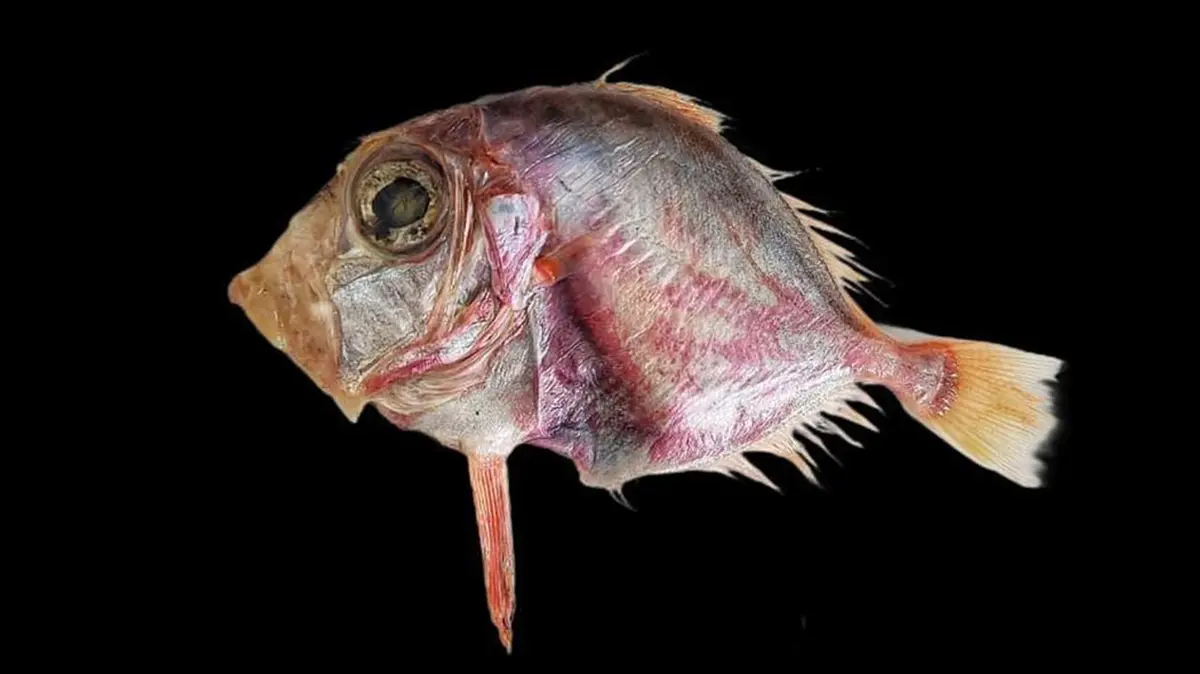
Why in news?
Scientists from the Central Marine Fisheries Research Institute announced the discovery of a new species of dory fish. Named Cyttopsis indica, or the Indian dory, it was collected from depths of 350 to 500 metres off Kerala’s coast. The species was described in the Indian Journal of Fisheries and corrects long‑standing misidentification in regional fish collections.
Background
The genus Cyttopsis comprises small deep‑sea fishes known as dories. Only two species – C. cypho and C. rosea – were previously recognised. Researchers examining specimens from the eastern Lakshadweep Sea found notable differences in fin spine counts and vertebral structure. Genetic analysis also revealed significant divergence from other species. Based on these data the team described a new species and named it indica to reflect its Indian origin.
Distinctive features
- The fish has two anal fin spines and a distinct pattern of nine rays in the caudal fin, unlike its congeners.
- It possesses a broader inter‑orbital region and fewer gill rakers on the lower limb of the first gill arch.
- Genetic sequencing showed a four to eleven per cent divergence from other Cyttopsis species, confirming its separate identity.
- The species inhabits bathyal depths of 350–500 metres in the eastern Arabian Sea, an area with limited biological surveys.
- The discovery highlights the rich but poorly explored deep‑sea fauna around India and underscores the need for sustainable exploitation of deep‑water resources.
Conclusion
Documenting new marine species enhances our understanding of ocean biodiversity and informs fisheries management. By clarifying the taxonomy of deep‑sea dories, the discovery of Cyttopsis indica may aid in monitoring catches and conserving vulnerable habitats.