

Why in news?
In early January 2026, a severe cold wave swept through the Kashmir Valley. Temperatures in Srinagar plunged to around −6 °C, causing portions of Dal Lake to freeze. Photographs of shikaras surrounded by ice and residents scraping frost off their cars attracted national attention.
Background
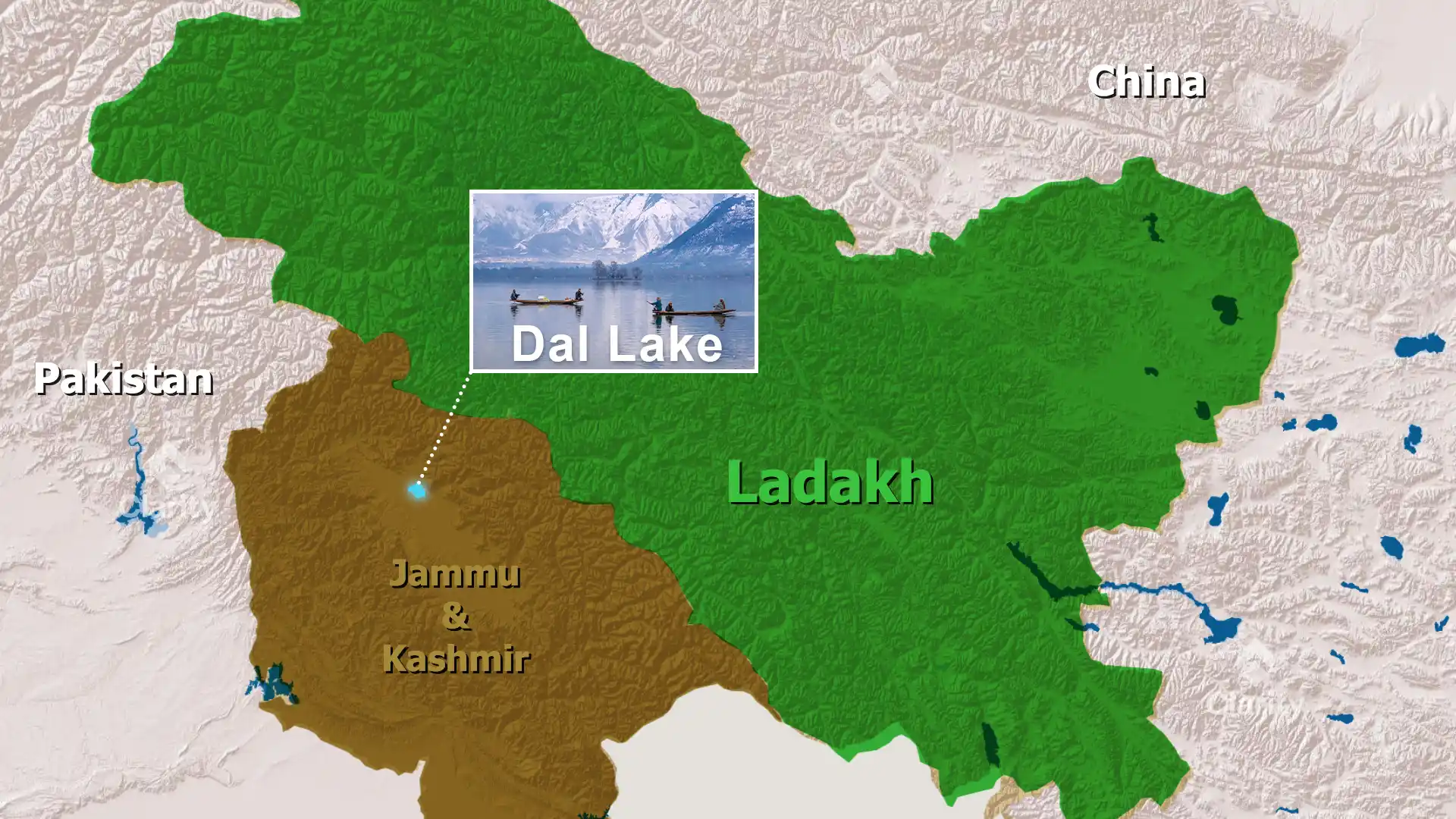
Dal Lake is an urban wetland in Srinagar, the summer capital of Jammu and Kashmir. In Kashmiri, “Dal” simply means “lake”, so the name “Dal Lake” is technically redundant. Covering about 18 km², it is often called the “jewel in the crown of Kashmir” because of its scenic beauty and economic importance. A boulevard lined with Mughal gardens such as Shalimar Bagh and Nishat Bagh encircles its 15.5 km shoreline. Causeways divide the water body into four basins: Gagribal, Lokut Dal, Bod Dal and Nagin. The lake also supports floating gardens known as raad, which produce lotus blooms and vegetables.
The cold wave
- Temperature plunge: During the 40‑day winter period known locally as Chilla‑i‑Kalan, temperatures in Srinagar dropped below freezing, with the city recording about −6 °C. Pahalgam saw lows of −7.6 °C and Gulmarg around −7.2 °C.
- Lake freezing: The surface of Dal Lake partially froze, especially in shallow sections. Houseboats and shikaras became stuck in ice, and locals used sticks and oars to break the crust.
- Impact on residents: Pipes and taps froze, making access to water difficult. Farmers and fishermen faced disruptions, and tourism slowed as boat rides were suspended in some areas.
Significance of Dal Lake
- Tourism hub: Visitors flock to Dal Lake for houseboat stays and shikara rides. The lake offers panoramic views of snow‑capped mountains and Mughal gardens.
- Economic lifeline: Hundreds of families depend on fishing, lotus cultivation and vegetable farming on the lake’s floating gardens. The lake also supports livelihoods through tourism services.
- Environmental importance: As part of a larger wetland system, Dal Lake regulates local climate, recharges groundwater and provides habitat for birds and aquatic life.
Conclusion
The January cold wave reminds us of both the beauty and fragility of Kashmir’s lakes. While freezing temperatures create stunning winter scenes, they also disrupt lives. Managing Dal Lake sustainably and adapting to climatic extremes will be essential for preserving this cherished water body.
Source: The Telegraph India