

Why in news?
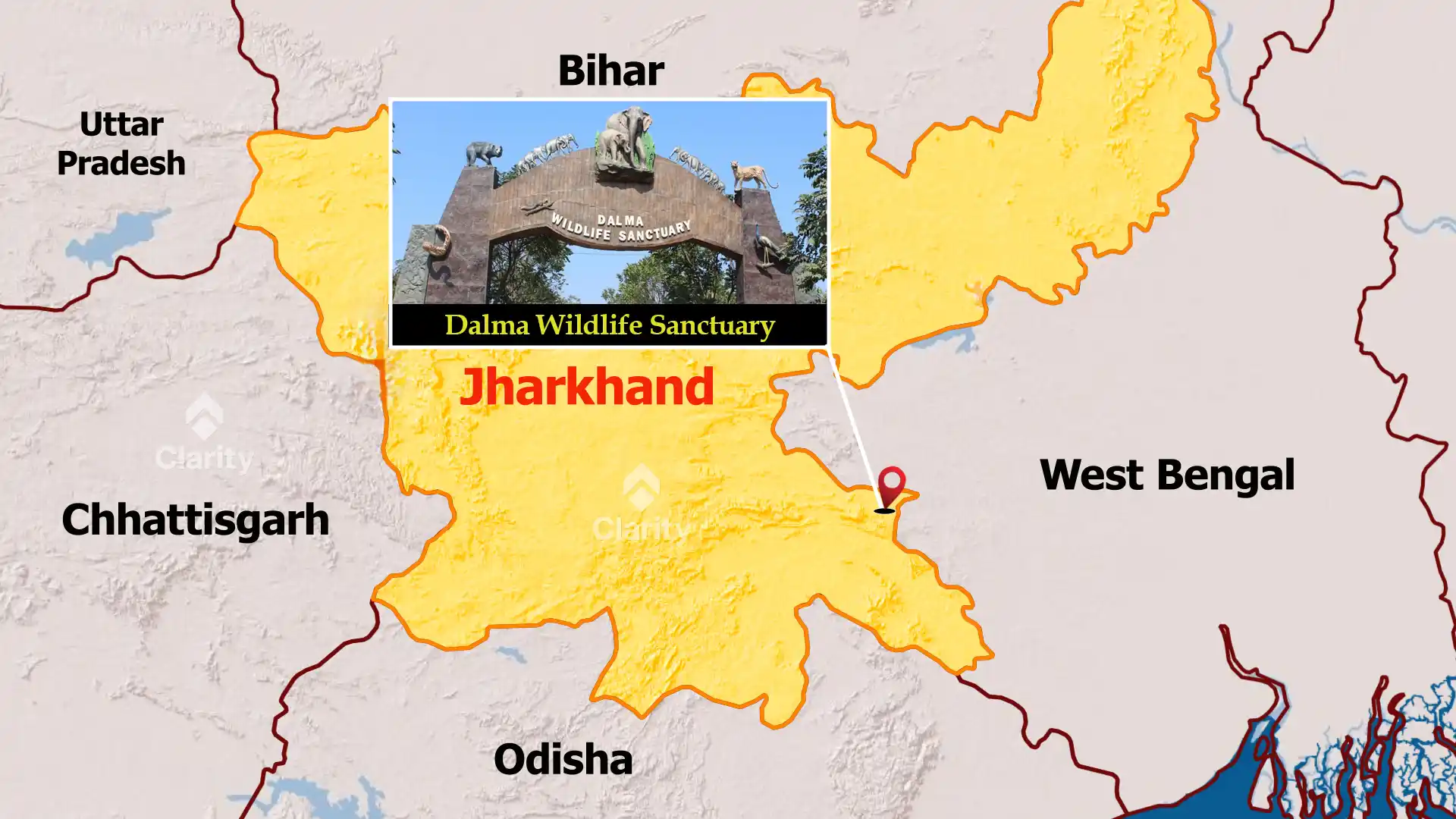
The government of Jharkhand has introduced new jungle safari vehicles and laid the foundation for eco‑friendly cottages in the Dalma Wildlife Sanctuary near Jamshedpur. The move aims to promote responsible tourism, generate employment and raise awareness about the region’s biodiversity.
Background
Dalma Wildlife Sanctuary was notified in 1975 and covers roughly 193 to 195 square kilometres along the Dalma hills. It is famous for its resident herd of Asian elephants, which migrate seasonally across a landscape of dry deciduous forests. The sanctuary is named after the local goddess Dalma Mai and provides a catchment for the Subarnarekha River and the Dimna reservoir.
Details of the initiative
- Safari vehicles: Five modern safari vehicles have been deployed to take visitors along designated routes. Trained guides accompany each vehicle to interpret wildlife sightings and ensure visitor safety.
- Eco‑cottages: Thirty cottages are being built using sustainable materials to provide overnight accommodation. The cottages will be managed by local communities, offering opportunities for employment and hospitality training.
- Interpretation centre: Plans include an interpretation centre to educate visitors about elephant behaviour, forest ecology and conservation challenges.
- Community involvement: The initiative emphasises involvement of neighbouring villages in guiding, housekeeping and craft sales, ensuring that tourism benefits reach the people living around the sanctuary.
Ecological significance of Dalma
- Elephant habitat: The sanctuary serves as an important corridor for elephants migrating between Jharkhand and West Bengal. Protecting this corridor helps reduce human‑elephant conflict and maintains genetic diversity.
- Biodiversity: Besides elephants, Dalma hosts leopards, barking deer, sloth bears, porcupines, several species of birds and reptiles. Dry sal and mixed deciduous forests support a variety of plant species adapted to low rainfall.
- Water catchment: Forested hills regulate rainfall run‑off and replenish the Dimna Lake, which supplies drinking water to Jamshedpur.
Conclusion
The safari and eco‑cottage programme demonstrates how wildlife conservation and rural development can go hand in hand. By offering visitors a chance to experience forests responsibly, it fosters appreciation for nature while creating livelihoods for local communities.
Source: The Times of India