Why in news?
Vikram, a 21‑year‑old Bengal tiger that once roamed Jim Corbett National Park, died at the Dhela Rescue Centre in early May 2026. Veterinarians said he succumbed to age‑related ailments after being under care for several years. Vikram was notorious for attacking forest staff before being captured and relocated. His longevity and the circumstances of his death raise questions about human–wildlife conflict and animal welfare.
Background
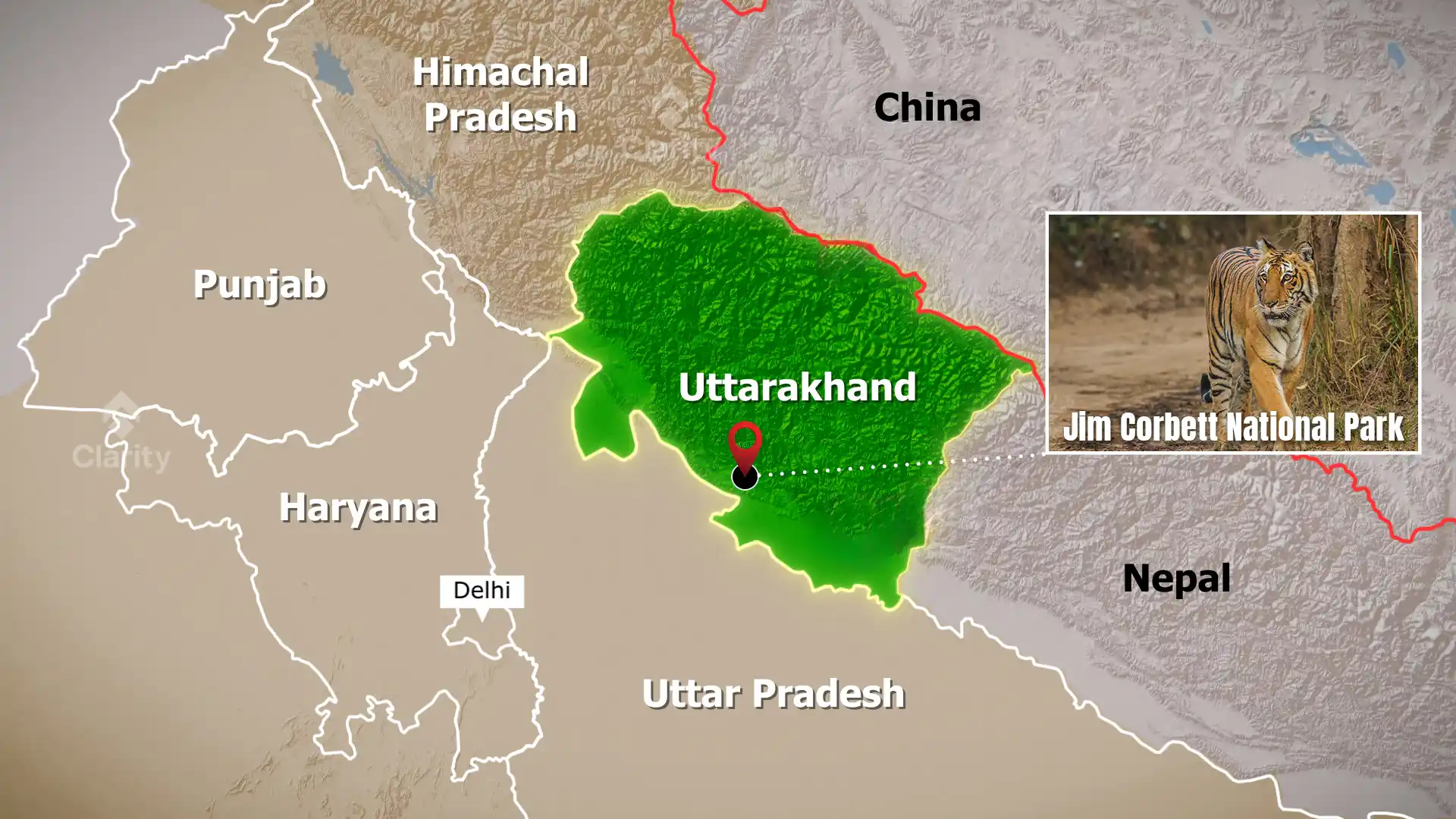
Jim Corbett National Park in Uttarakhand was established in 1936 as India’s first national park. Spread over about 520 square kilometres, it forms the core of the Corbett Tiger Reserve in the Himalayan foothills. The park comprises sal forests, grasslands and riverine belts along the Ramganga River. It supports around 250 tigers, as well as elephants, leopards, deer and over 600 species of birds.
Vikram’s story
- Conflicts with humans: In 2009 Vikram fatally attacked three forest department employees. Officials declared him a man‑eater and tranquilised him. He was first kept at the Nainital Zoo before being moved to the Dhela Rescue Centre in 2017.
- Extended lifespan: Wild tigers typically live 12–15 years. With proper veterinary care, Vikram survived beyond 20 years at the rescue facility, though he suffered age‑related ailments such as arthritis.
- Care in captivity: Keepers provided regular veterinary check‑ups, a controlled diet and enrichment activities to stimulate natural behaviour. Despite these measures, animals in captivity often experience stress and reduced life quality compared with their wild counterparts.
Lessons and issues
Vikram’s case illustrates the complex balance between protecting humans and conserving wildlife. Growing human populations and habitat fragmentation push animals into villages, leading to conflicts. Capturing and confining problematic animals may prevent further attacks but raises ethical questions about animal rights. Long‑term solutions include preserving corridors for wildlife movement, educating local communities and improving compensation schemes for livestock losses.