

Why in news?
The National Green Tribunal dismissed a petition challenging the cancellation of environmental clearance for sand mining on the Dhasan River. The tribunal found that the appeal was filed too late and that the clearance had been properly revoked due to non‑compliance.
Background
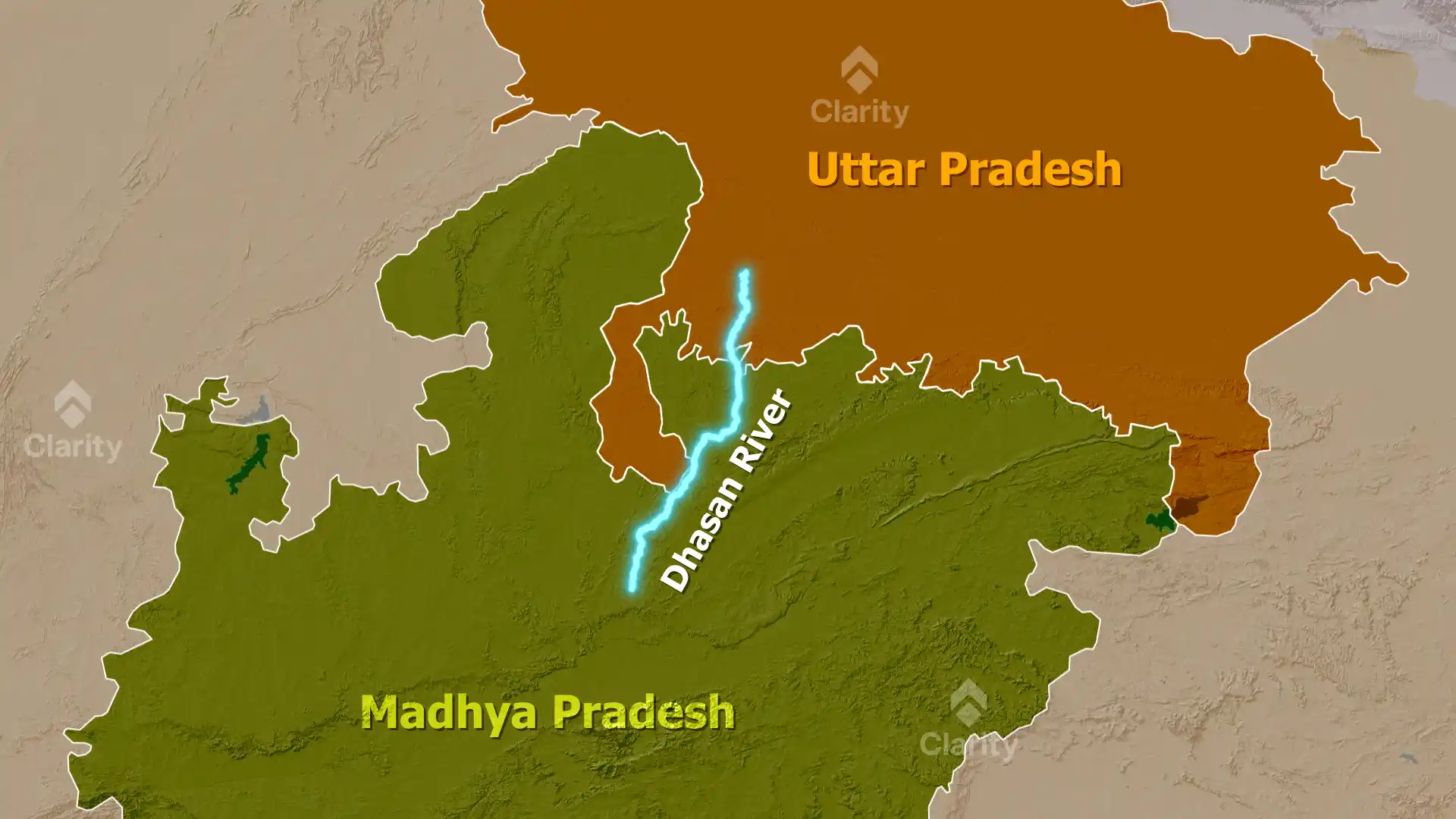
The Dhasan River is a right‑bank tributary of the Betwa River. It originates near the town of Begumganj in Madhya Pradesh and flows about 365 km before joining the Betwa in Uttar Pradesh. The river forms the south‑eastern boundary of Lalitpur district and is known as Dasharna in ancient texts.
Course and features
- Length and states: Of its total length, about 240 km lies in Madhya Pradesh, 54 km along the MP‑UP border and 71 km in Uttar Pradesh.
- Dams: The Pahari (also called Ban Sujara) and Ghat (Lahchura) dams have been built on the Dhasan to provide irrigation and power.
- Sand mining: Excessive sand mining has eroded banks and lowered the river bed, prompting authorities to revoke clearances where conditions were violated.
Significance and challenges
- Water security: The river is vital for irrigation and drinking water in the drought‑prone Bundelkhand region. Over‑extraction of sand can degrade its flow and quality.
- River linking: Plans to link the Dhasan with the Betwa and other rivers aim to transfer water to water‑scarce areas but may alter natural flow patterns.
- Conservation: The NGT’s decision underlines the need for strict enforcement of environmental conditions to protect rivers from unchecked mining and pollution.
Source: Hindustan Times