

Why in news?
More than 13,000 tribal girls performed Dhimsa near Bhogapuram airport on 31 July 2026.
Guinness World Records representatives witnessed the attempt and presented an official certificate.
News reports described the achievement as the world's largest Dhimsa dance.
The performance preceded the airport's scheduled inauguration on 1 August.
Background
Dhimsa is a community dance associated with tribal societies of the Eastern Ghats.
Its roots are commonly traced to Odisha's Koraput cultural region.
The dance later became strongly identified with Araku Valley in Andhra Pradesh.
Porja, Bagata, Valmiki and Khond communities are among its traditional performers.
Different spellings of several community names appear across official and cultural records.
How is Dhimsa performed?
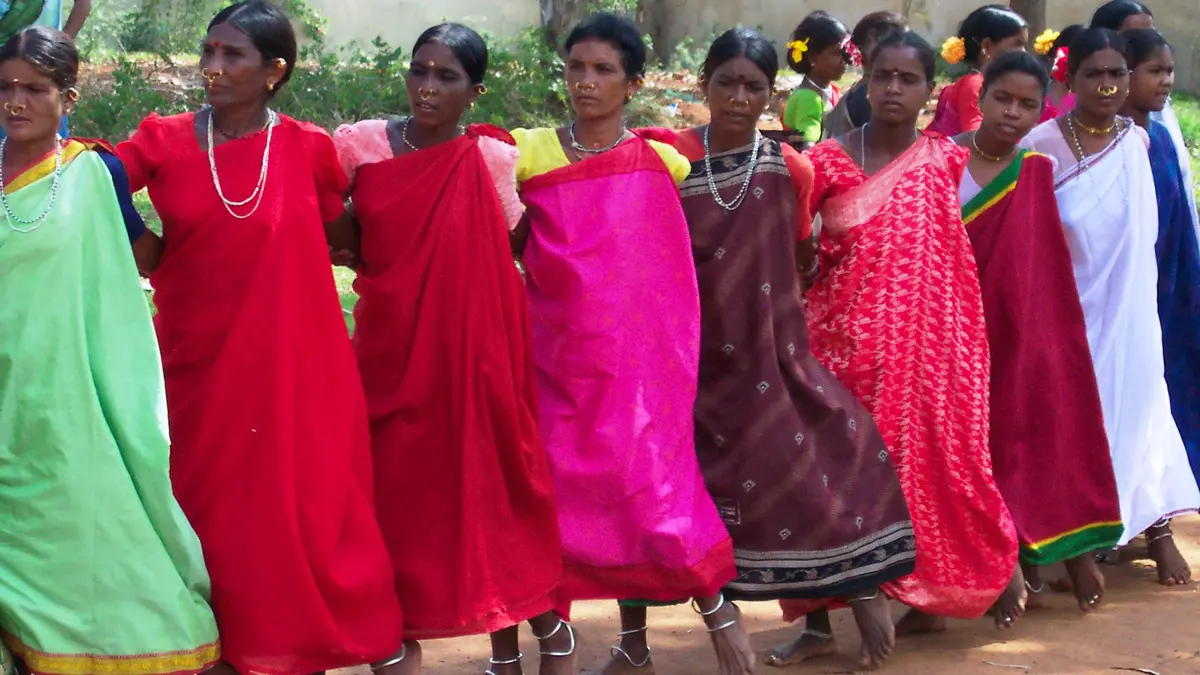
Traditionally, around fifteen to twenty women form a linked human chain.
They hold hands or link arms behind one another's backs while moving rhythmically.
The chain creates curved and serpentine patterns through coordinated steps.
A leading dancer may use peacock feathers to signal changes in rhythm.
Drums, percussion and folk songs guide the group's collective movement.
The dance emphasises shared participation more than individual display or facial expression.
Cultural setting
Dhimsa is performed during weddings, village celebrations and important seasonal festivals.
It has a special association with the Chaitra festival held during April.
Themes may reflect community history, work, kinship, marriage, folklore and the natural world.
Tourism has also made staged Dhimsa performances familiar to visitors in Araku Valley.
However, its cultural meaning extends beyond entertainment for an outside audience.
The Bhogapuram performance
Most participants were students from Classes Eight, Nine and Ten at tribal welfare schools.
They came through four Integrated Tribal Development Agencies across northern Andhra Pradesh.
Organisers arranged performers in hundreds of groups after several weeks of rehearsals.
The event connected a new infrastructure project with the region's living tribal heritage.
Prelims focus
- Dhimsa belongs to the Eastern Ghats cultural landscape, particularly Koraput and Araku.
- It is usually a group dance led and performed mainly by women.
- Linked formations and coordinated footwork are central visual features.
- The Chaitra season, weddings and community festivals provide important performance settings.
- The Guinness event occurred at Bhogapuram in Vizianagaram district.
Conclusion
The record brought global attention to Dhimsa, while its deeper value remains rooted in community practice.