

Why in news?
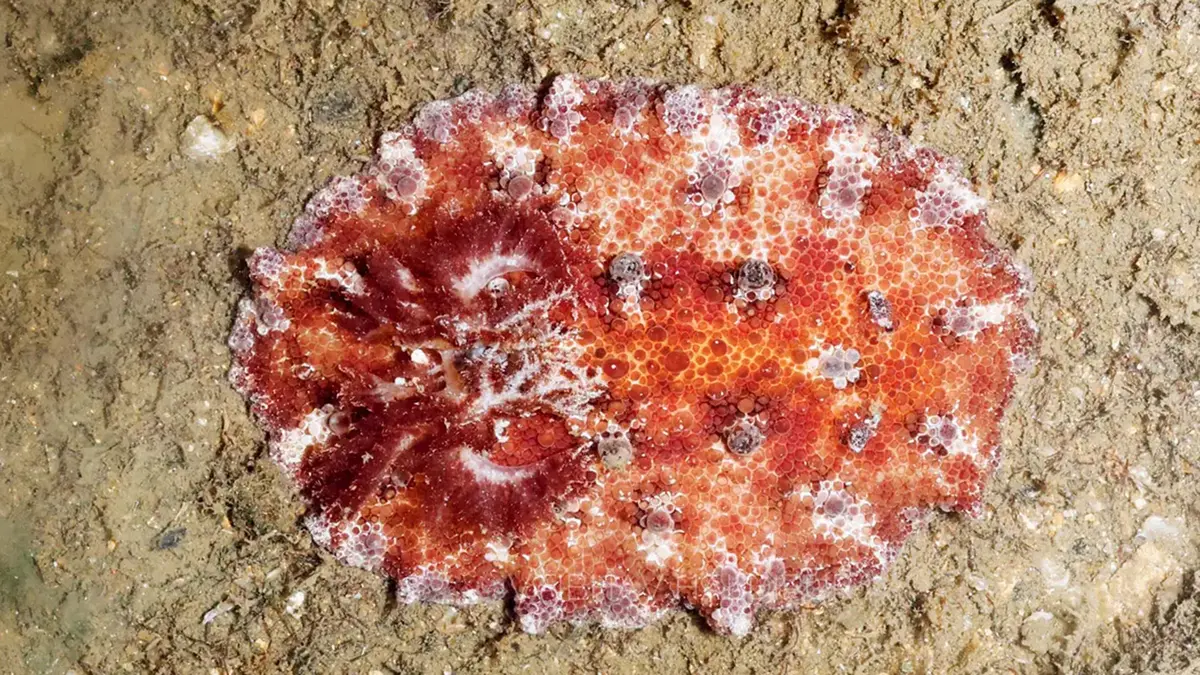
Divers in Mumbai’s Haji Ali area have recorded a tiny marine creature called Discodorid cebuensis for the first time in Indian waters. This sea slug, previously known only from the Philippines, was found clinging to sponges near the coast.
Background
Sea slugs are soft‑bodied marine gastropods belonging to the order Nudibranchia. Unlike land snails, they lack shells and display bright colours. Many feed on sponges, algae or hydroids, sometimes incorporating toxins from their prey into their own tissues for defence. Some nudibranchs even harbour photosynthetic algae, allowing them to gain energy from sunlight. The diverse shapes and colours of sea slugs make them a favourite subject of underwater photographers.
The new record
- Species: Discodorid cebuensis belongs to the family Discodorididae. It is a dorid nudibranch with a flat, oval body and mottled brown patterns, helping it blend into coral and sponge habitats.
- Discovery site: The specimen was found during a biodiversity survey near Haji Ali, highlighting the rich marine life just off Mumbai’s crowded shoreline.
- Significance: This is the first recorded sighting of the species in India. Its presence extends the known range from the Philippines to the Arabian Sea and underscores the importance of protecting coastal ecosystems.
Why sea slugs matter
- Indicators of reef health: Nudibranchs are sensitive to environmental changes. Their diversity and abundance can signal the health of coral reefs and seagrass beds.
- Biochemical treasure troves: Many sea slugs produce or accumulate unique chemicals with potential pharmaceutical applications.
- Public interest: Their vibrant colours and unusual shapes make them popular in marine education and ecotourism.
Source: Mid Day News