
Why in news?
Herpetologists recently described a new species of toad, Duttaphrynus dhara, from the high‑elevation grasslands of Mawphlang in Meghalaya’s East Khasi Hills. The discovery, announced in May 2026, underscores the hidden amphibian diversity of India’s north‑eastern Himalaya–Indo‑Burma biodiversity hotspot.
Background
Duttaphrynus is a genus of true toads within the family Bufonidae. Its species are distributed across South and Southeast Asia. Many remain poorly studied because they inhabit remote mountains. Researchers conducting field surveys in the Khasi Plateau discovered several small toads in fallow fields and leaf litter at around 1,854 metres above sea level. Detailed morphological measurements and genetic analyses revealed that these specimens did not match any known species. They were assigned the name dhara in honour of Dhara Singh Pai, a conservationist who supported amphibian research in the region.
Characteristics of the species
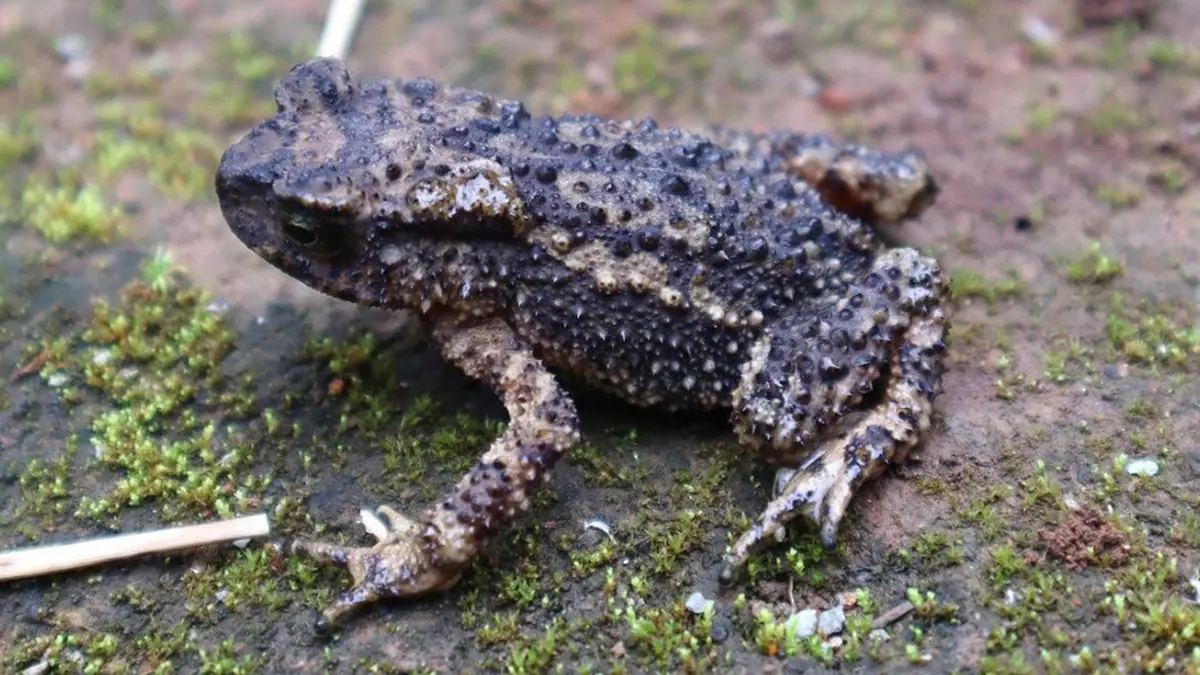
- Size and appearance: Adult males are small, measuring about 40–42 millimetres from snout to vent. They lack prominent cranial ridges and have a small but distinct tympanum (ear membrane). The toes are moderately webbed and the dorsum is covered with pointed, keratinised warts.
- Habitat: The toads were found in montane grassland and forest‑edge habitats near Mawphlang. The region experiences cool temperatures and high rainfall. The species seems restricted to this locality.
- Genetic divergence: DNA sequencing (16S rRNA) showed that D. dhara is genetically distinct from its closest relatives, D. stuarti and D. chandai, with a divergence of about 4–7 percent. Such differences warrant recognition as a separate species.
Importance of the discovery
Finding a new species highlights the rich and still poorly known amphibian fauna of north‑east India. Many montane species are highly localised and vulnerable to habitat disturbance, climate change and pollution. Protecting their habitats is essential for conserving biodiversity and maintaining ecological balance in the Eastern Himalaya.
Conclusion
The identification of Duttaphrynus dhara reminds us that even familiar groups like toads hold hidden surprises. Continued field surveys and conservation efforts in the Khasi Hills and other remote regions will likely reveal more species and deepen our understanding of evolution and ecology.