

Why in news?
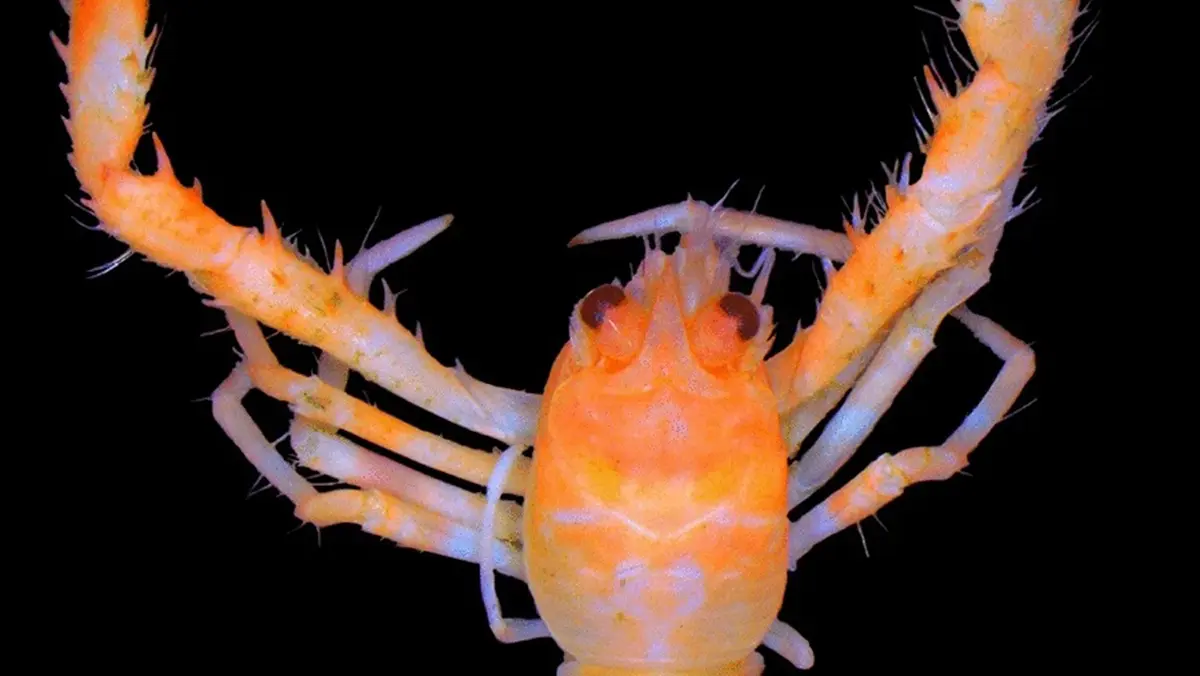
Indian marine biologists recently described a new species of squat lobster named Leiogalathea samudragiri. The species was collected in 2022 during a deep‑sea survey near the Lakshadweep Islands, and its description was published in 2025. It adds to the growing number of crustaceans discovered through India’s Deep Ocean Mission.
Background
Squat lobsters are small crustaceans related to hermit crabs. They inhabit ocean floors around the world. The genus Leiogalathea belongs to the family Munidopsidae and includes about 19 species. Many live in deep‑sea habitats that are difficult to access. India’s Deep Ocean Mission aims to explore the country’s exclusive economic zone for resources and biodiversity.
Discovery and features
- Researchers collected the specimen using a chain dredge at a depth of around 360 metres near Minicoy Island, Lakshadweep.
- The new species has smooth uninterrupted transverse ridges across its carapace. Unlike similar species, it lacks an antennular spine at the front of its head.
- It displays a bright orange colour when alive. The species name combines the Sanskrit words samudra (sea) and giri (mountain), reflecting its deep‑sea habitat.
- Taxonomists emphasise the importance of documenting deep‑sea species for understanding marine ecosystems and conserving biodiversity.
Significance
The discovery of Leiogalathea samudragiri underscores the rich biodiversity of India’s deep seas. Each newly described species broadens our knowledge of marine life and highlights the need for responsible exploration. The Deep Ocean Mission not only searches for minerals but also aims to conserve fragile ecosystems.
Source: ResearchMatters