
Why in news?
A recent feature drew attention to the Dongria Kondh of Odisha, a Particularly Vulnerable Tribal Group known for their sustainable lifestyle and their campaign to protect the Niyamgiri hills from mining. Their struggle has become a symbol of indigenous rights and environmental conservation.
Background
The Dongria Kondh live in the Niyamgiri hill range of Rayagada and Kalahandi districts in Odisha. The hills are densely forested with deep gorges and streams. To be a Dongria Kondh is to farm the fertile slopes and worship the mountain deity Niyam Raja【990502987898928†L333-L339】. The community numbers around 8,000. In 2013 the Supreme Court ruled that Gram Sabhas must decide whether mining could take place in Niyamgiri; the Dongria unanimously opposed the project【990502987898928†L310-L315】【990502987898928†L319-L323】.
Culture and livelihood
- Farming and foraging: The Dongria practise shifting horticulture. They cultivate oranges, bananas, ginger, turmeric and other crops. The forest provides wild foods such as mango, jackfruit, honey and medicinal herbs. Studies show they gather nearly 200 types of forest foods and grow over a hundred crops【990502987898928†L372-L399】. They also rear chickens, pigs, goats and buffalo.
- Spiritual beliefs: Their name Jharnia means “protector of streams.” They believe they are royal descendants of Niyam Raja and that the hills are sacred【990502987898928†L333-L341】. Triangular motifs in their art represent mountains【990502987898928†L356-L360】.
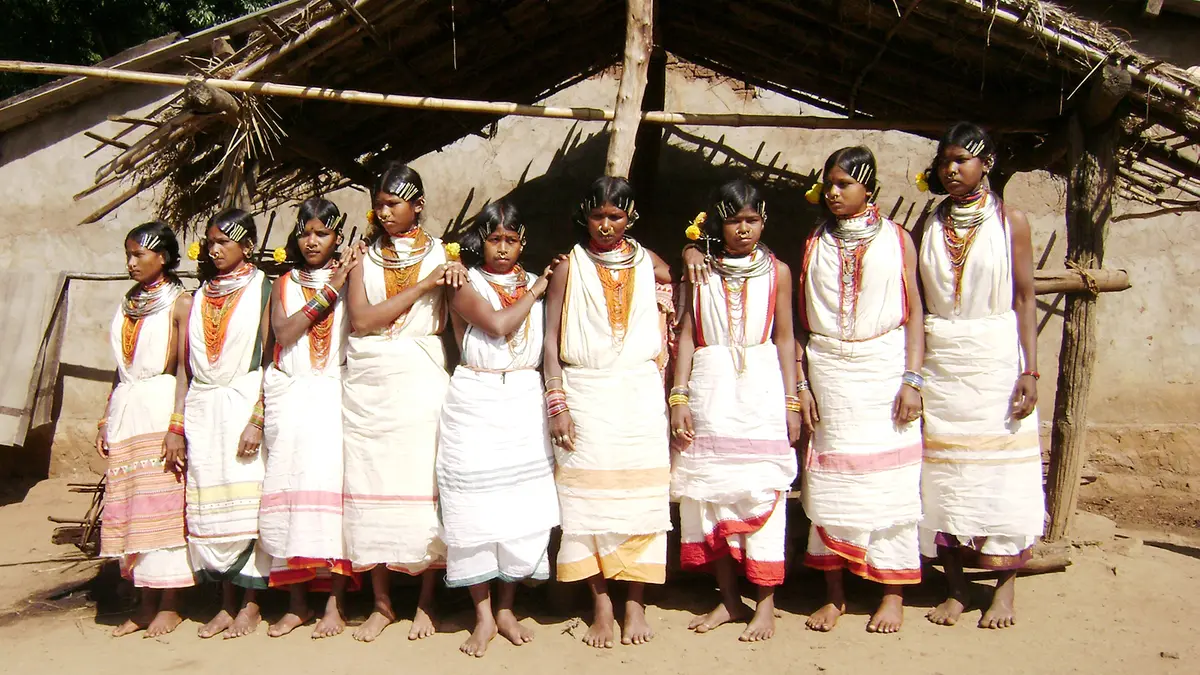
- Distinctive dress and rituals: Women wear multiple ear and nose rings and beaded necklaces, while men and boys also wear nose rings【990502987898928†L365-L367】. Villages have sacred sites where animals are sacrificed to the mother goddess Dharni, Niyam Raja and other deities【990502987898928†L414-L425】.
Struggle to protect Niyamgiri
- Mining threat: In the early 2000s Vedanta Resources sought to mine bauxite from the Niyamgiri hills. The Dongria argued that mining would destroy their forests, rivers and culture【990502987898928†L333-L345】. International campaigns supported their cause.
- Legal victory: In 2013 the Supreme Court directed that local Gram Sabhas decide on the mining proposal. Twelve Gram Sabhas unanimously rejected mining, halting the project【990502987898928†L310-L315】.
- Continuing pressure: Activists report that leaders of the community have faced harassment and arrests as mining interests continue to push for extraction【990502987898928†L323-L324】.
Conservation significance
- Water source: The bauxite‑capped Niyamgiri hills absorb monsoon rains and give rise to more than one hundred perennial streams, including the Vamsadhara river【990502987898928†L429-L437】. These streams provide drinking and irrigation water to communities in Odisha and Andhra Pradesh.
- Biodiversity: The Dongria’s stewardship has preserved rich biodiversity, with tigers, leopards, giant squirrels and sloth bears inhabiting the forests【990502987898928†L436-L437】.
- Traditional knowledge: Their detailed understanding of plants and animals demonstrates how indigenous knowledge can contribute to sustainable land management and climate resilience.
Conclusion
The Dongria Kondh’s defence of Niyamgiri shows how communities can safeguard both cultural heritage and environmental resources. Respecting their rights and wisdom is essential for inclusive development and conservation.