

Why in news?
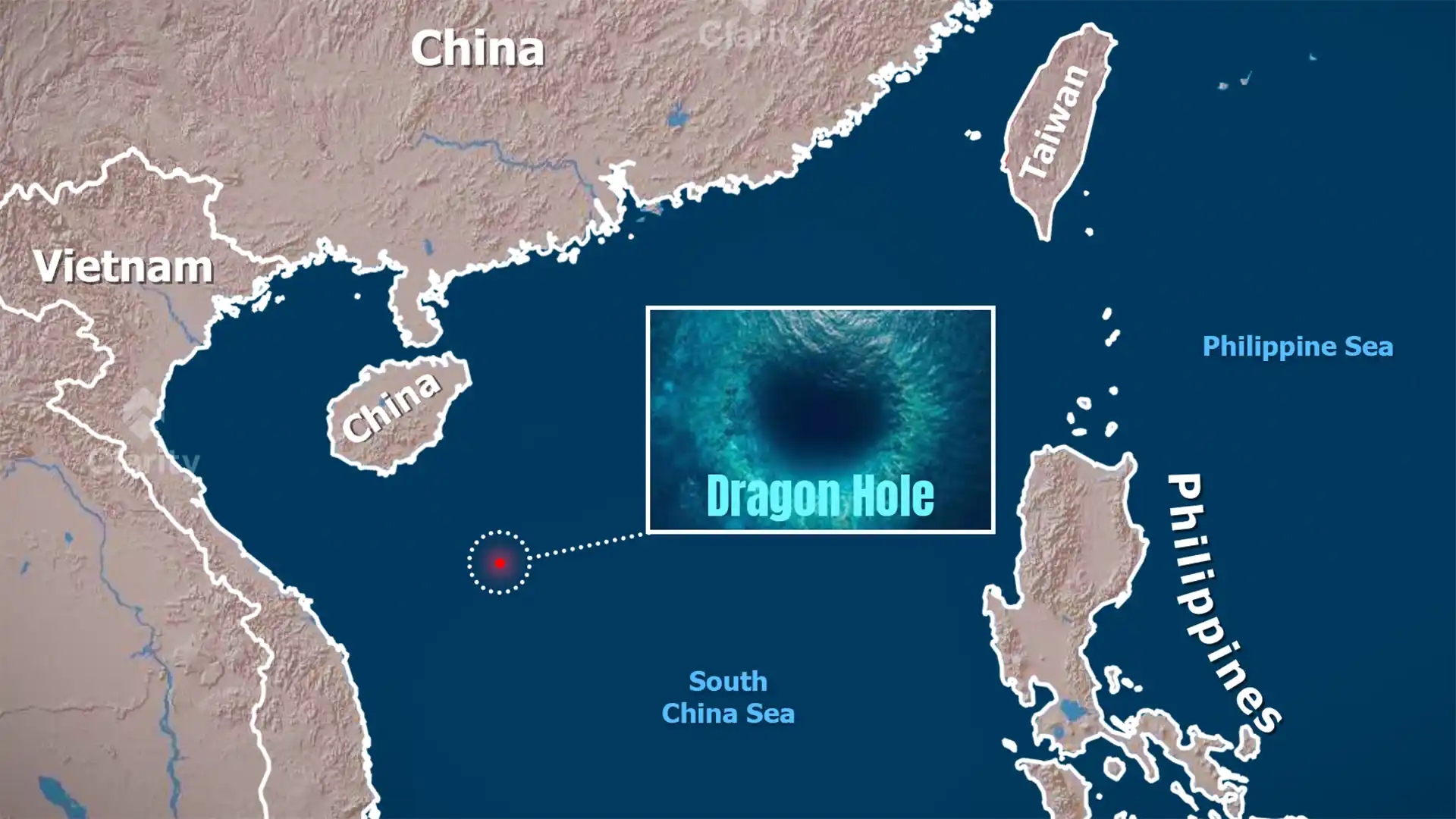
Researchers have confirmed that the Dragon Hole in the South China Sea is the deepest blue hole on Earth. New surveys show it plunges over 301 metres – deeper than nearby sea level – and its complex shape and oxygen‑poor environment have intrigued scientists. The discovery has renewed interest in blue‑hole ecology and ancient sea‑level history.
Background
A blue hole is a large, underwater sinkhole formed in carbonate rock. The Dragon Hole, also known as the Sansha Yongle Blue Hole, lies near the Paracel Islands in the South China Sea. Local fishermen have long called it the “eye of the South China Sea.” Modern surveys have mapped its depth and geometry, revealing a narrow entrance that widens below and a slanting shaft that bends away from the surface opening.
Key findings
- Record‑breaking depth: At about 301.2 metres deep, the Dragon Hole is deeper than the well‑known Dean’s Blue Hole in the Bahamas (202 m) and provides a unique window into geological processes.
- Uneven walls and ledges: Surveyors found terraces and shelves along the walls, which may mark ancient sea levels when the hole was partially dry or filled with different water layers.
- Anoxic (oxygen‑poor) lower layers: Oxygen levels drop sharply below around 90 metres, creating an environment where only specialized bacteria can survive. This makes deeper waters inhospitable for most fish and marine life.
Why it matters
- Scientific research: The Dragon Hole’s extreme depth and isolated conditions allow scientists to study ancient sediments, microbes and climate records trapped inside.
- Environmental history: The ledges and terraces provide evidence of fluctuating sea levels over thousands of years, giving clues about regional geology and climate change.
- Marine biodiversity: While the deeper zone lacks oxygen, the upper layers support unique communities. Understanding these ecosystems can inform conservation efforts in the South China Sea.
Conclusion
The Dragon Hole stands as the deepest known blue hole, with a depth exceeding 300 metres and a complex, slanted shape. Its oxygen‑poor depths and distinct terraces make it a natural laboratory for studying Earth’s history and marine life in extreme environments.
Source: Times of India