
Why in news?
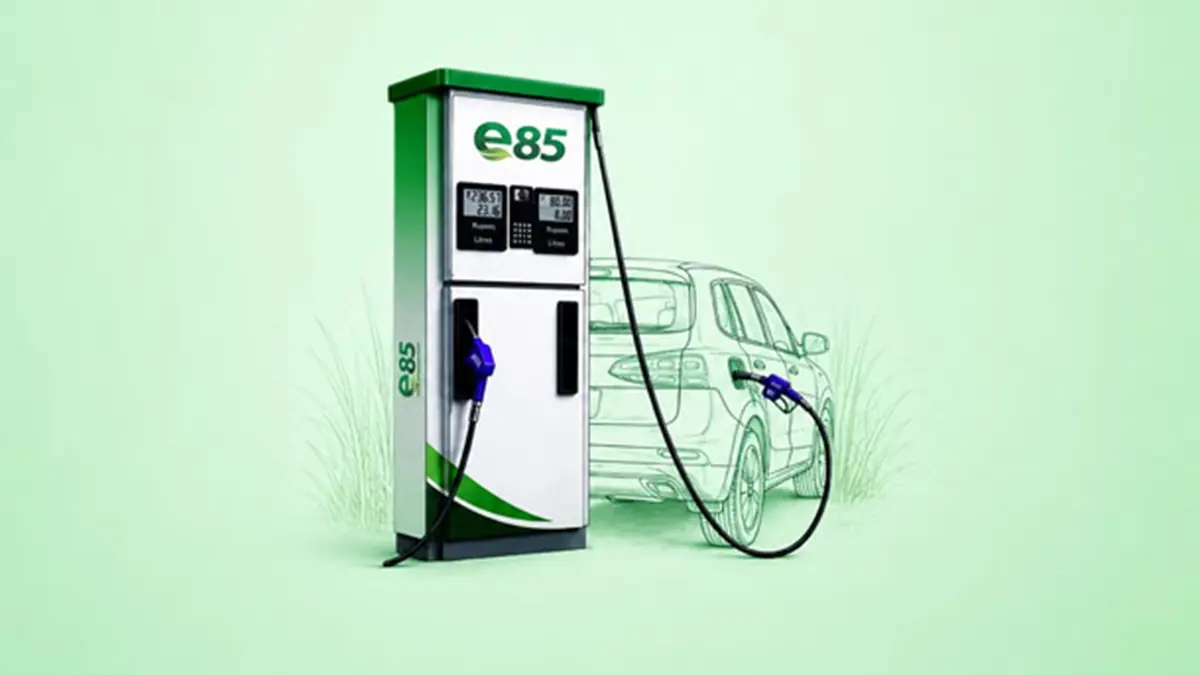
On 5 June 2026 the Union Minister for Petroleum and Natural Gas launched E85 fuel at an Indian Oil Corporation retail outlet in Delhi. E85 is a high‑ethanol blend containing 80–85 percent ethanol and 14–19 percent petrol. The roll‑out is part of India’s ethanol blending programme and is expected to reduce greenhouse gas emissions and dependence on imported oil.
Background
India’s biofuel policy aims to increase ethanol blending in petrol from a few per cent in 2014 to about 20 percent in 2026 and higher in the coming years. Ethanol is a renewable fuel produced mainly from sugarcane and grain. Blending ethanol with petrol helps absorb surplus agricultural produce, raises farmers’ incomes and reduces fossil‑fuel imports. Flex‑fuel vehicles can run on varying blends of ethanol and petrol, from E20 (20 percent ethanol) up to E85. Globally, countries like Brazil and the United States already use high‑ethanol blends. India is now promoting domestic manufacturing of flex‑fuel vehicles and expanding fuel options.
Composition and benefits
- Composition: E85 contains 80–85 percent ethanol, a biogenic alcohol, and 14–19 percent petrol. Only flex‑fuel vehicles designed to handle high ethanol concentrations should use this fuel.
- Lower price: E85 is priced roughly ₹20 per litre below conventional petrol, offering savings for consumers and supporting demand for ethanol.
- Higher octane: With a research octane number of around 108, E85 resists engine knocking and enables better engine performance.
- Cleaner combustion: Using more ethanol reduces particulate emissions and results in a 61 percent reduction in greenhouse gases compared with petrol. Ethanol burns with lower carbon monoxide and hydrocarbon emissions.
- Rural benefits: A higher demand for ethanol means more income for sugarcane growers and grain farmers. It can also create jobs in distilleries and support rural economies.
Roll‑out plan
- The initial launch covers 48 public sector retail outlets. Authorities plan to expand distribution to 500 outlets by December 2026 and to 5,000 outlets by December 2027.
- Automakers are being encouraged to produce flex‑fuel vehicles capable of running on blends ranging from E20 to E85. The government has clarified that no major engine failures have been observed with E20 and that E85 will undergo field trials.
- India aims to raise the share of ethanol in petrol to about 26 percent by the financial year 2030–31, reducing crude oil imports and foreign exchange outflow.
Conclusion
E85 fuel is a step towards cleaner transportation and energy independence. Successful adoption will depend on the availability of flex‑fuel vehicles, adequate supply of feedstock and continued investment in ethanol production infrastructure.