Why in news?
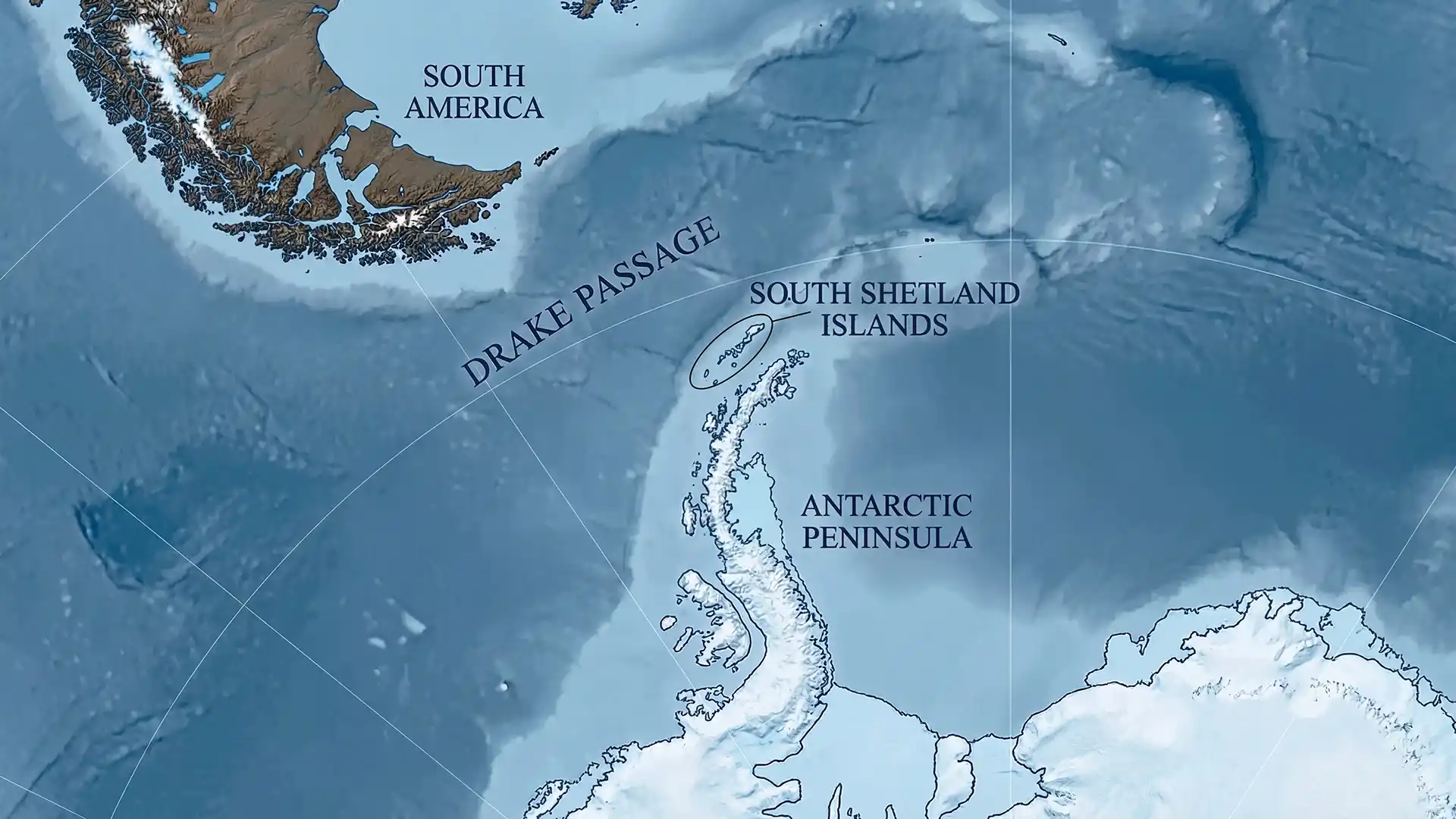
On 20 March 2026 a magnitude 6.7 earthquake struck the remote South Shetland Islands north of the Antarctic Peninsula. The quake occurred at a shallow depth of about 10 kilometres. There were no immediate reports of damage or casualties and authorities confirmed that there was no tsunami threat to distant coastlines.
Background
The South Shetland Islands form a volcanic island arc about 120 kilometres north of Antarctica. The islands were discovered by British sealer William Smith in 1819 and have remained uninhabited except for scientific research stations operated by various countries. The region sits along the boundary where the Phoenix tectonic plate subducts beneath the Antarctic plate, making it prone to earthquakes and volcanic activity. The islands have a harsh polar climate but support rich wildlife, including penguins (gentoo, chinstrap, Adélie and macaroni) and seals such as crabeater and leopard seals.
Details of the quake
- Magnitude and depth: The U.S. Geological Survey reported the quake as magnitude 6.7 with a focal depth of 10 kilometres, indicating a shallow crustal event.
- Location: The epicentre was within the South Shetland Islands archipelago, an uninhabited area used for research. No inhabited settlements were affected.
- Tsunami assessment: The Pacific Tsunami Warning Center and U.S. National Weather Service stated that the earthquake posed no tsunami threat to the east or west coasts of the Americas.
Significance
- Scientific interest: Earthquakes in polar regions help geoscientists understand how tectonic plates behave under ice‑covered crusts and provide insight into volcanic processes along Antarctic margins.
- Environmental caution: Although uninhabited, these islands are important breeding grounds for seabirds and seals. Understanding seismic risks can help protect research infrastructure and wildlife habitats.
Conclusion
The South Shetland earthquake is a reminder that seismic activity occurs even in Earth’s most remote regions. Continued monitoring helps researchers study tectonics and ensures that early warnings can be issued when necessary.
Source: India Today