
Why in news?
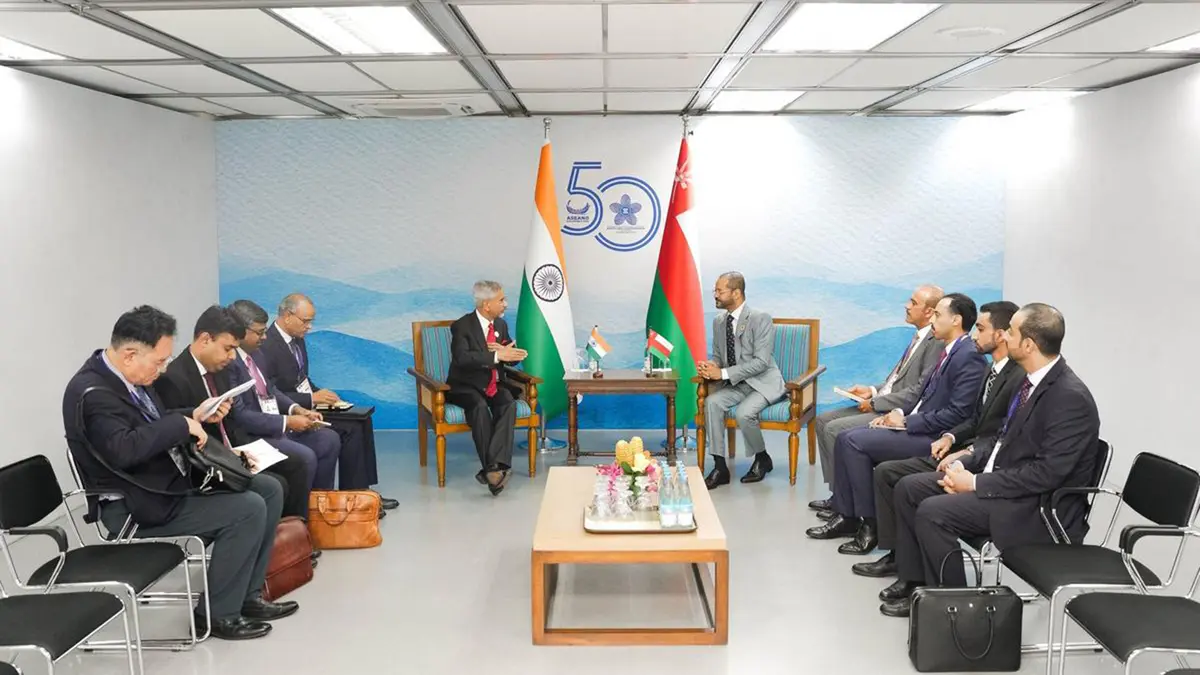
External Affairs Minister Subrahmanyam Jaishankar attended an East Asia Summit meeting in Manila. This was the 16th Foreign Ministers’ Meeting, held on 23 July 2026. He called for safe and unimpeded international waterways. He also opposed attacks on seafarers, civilian ships and critical infrastructure.
Background
The East Asia Summit (EAS) is a leaders-led Indo-Pacific forum discussing regional strategic, political and economic questions.
The Association of Southeast Asian Nations (ASEAN) created and chairs the process, including annual summit meetings.
The EAS is not a military alliance or treaty organisation, but a forum for dialogue and cooperation.
How did the EAS develop?
- 14 December 2005: The first EAS met in Kuala Lumpur, Malaysia.
- 2005: India joined as one of the sixteen founding participants.
- 2011: Russia and the United States joined, raising membership to eighteen.
- 26 October 2025: Timor-Leste became ASEAN’s eleventh member.
- After accession: Timor-Leste also became the nineteenth EAS member.
Who are the nineteen members?
Eleven ASEAN members
Brunei, Cambodia, Indonesia, Laos, Malaysia, Myanmar, the Philippines, Singapore, Thailand, Timor-Leste and Vietnam form this group.
Eight other participating countries
Australia, China, India, Japan, New Zealand, the Republic of Korea, Russia and the United States form this group.
What does “ASEAN centrality” mean?
ASEAN convenes meetings and guides their agenda, while larger powers participate within its regional framework.
Centrality does not control members’ foreign policies, but keeps ASEAN at the institutional centre of regional dialogue.
Different levels of EAS work
- Leaders’ summit: Heads of government or state provide strategic direction.
- Foreign ministers: They review regional issues and prepare leaders’ discussions.
- Economic ministers: They discuss trade and wider economic cooperation.
- Senior officials: They coordinate projects and prepare ministerial work.
Six established cooperation priorities
- Environment and energy cooperation supports cleaner and more secure development.
- Education cooperation builds skills, exchanges and institutional links.
- Finance cooperation addresses resilience and regional economic stability.
- Global health cooperation includes pandemic preparedness and response.
- Disaster management improves warning, relief and recovery capabilities.
- ASEAN connectivity supports transport, digital and people-to-people links.
India’s main messages in Manila
- International waterways should remain safe, open and unimpeded.
- Civilian seafarers, commercial ships and infrastructure must not be attacked.
- Diplomacy and dialogue should address conflicts in West Asia.
- ASEAN centrality should guide an open, inclusive and prosperous Indo-Pacific.
- Economic shocks from conflicts especially burden countries of the Global South.
- Members should cooperate against transnational cyber-scam networks.
- ASEAN efforts remain important for a peaceful solution in Myanmar.
South China Sea and international law
India supported an effective, legally binding regional Code of Conduct complying with the 1982 maritime convention.
That treaty is the United Nations Convention on the Law of the Sea (UNCLOS).
A regional code should preserve lawful navigation and overflight rights for countries outside the negotiations.
Why does the EAS matter for India?
- It places India at one table with major Indo-Pacific powers.
- It supports India’s Act East Policy and ASEAN partnerships.
- It covers maritime security, connectivity, health and disaster management.
- It allows discussion without requiring a formal military alliance.
- It gives ASEAN smaller-state convening power amid larger rivalries.
Conclusion
The EAS connects dialogue with practical cooperation through ASEAN leadership, international law and sustained member engagement.