Why in news?
Archaeologists and linguists announced in April 2026 that radiocarbon dating of wooden tablets from Rapa Nui (Easter Island) suggests the island’s indigenous script, known as Rongorongo, may have been invented independently before European contact. The findings challenge long-held assumptions that writing on the island emerged after Dutch explorer Jacob Roggeveen arrived in 1722.
Background
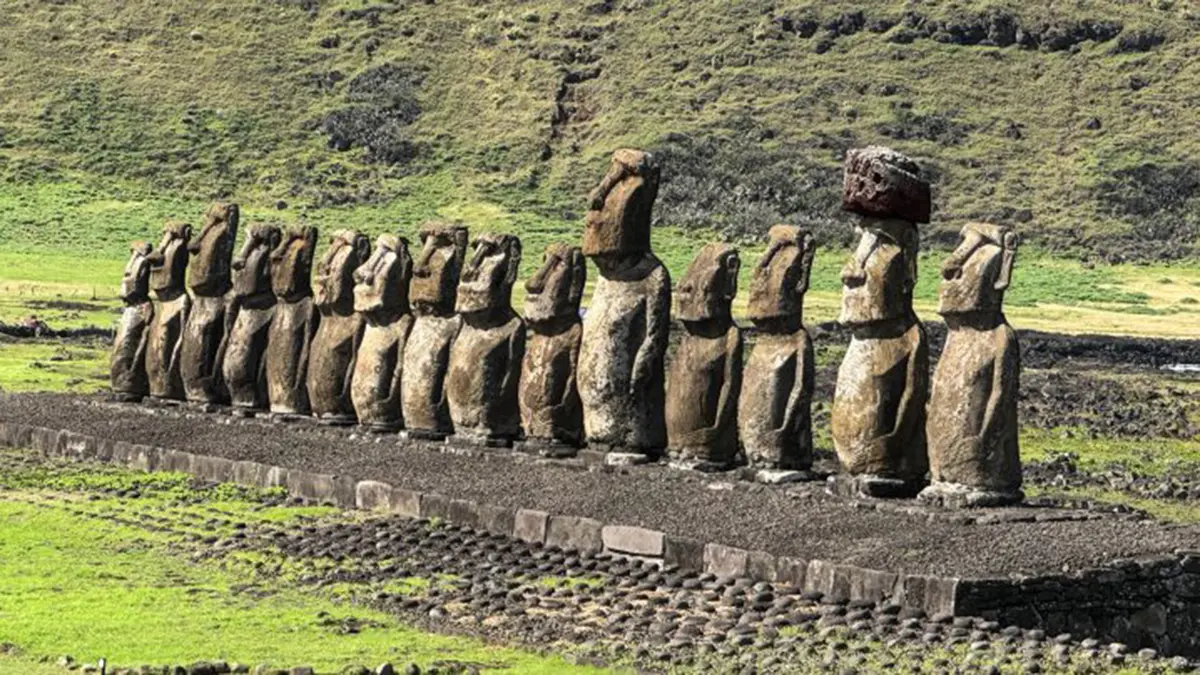
Easter Island is a small volcanic island in the southeastern Pacific Ocean, famous for its nearly 1,000 stone statues called moai. The island’s Polynesian inhabitants, the Rapa Nui, carved these statues between 1200 and 1700. They also produced wooden tablets inscribed with intricate glyphs. Because most surviving tablets were collected after European contact, scholars long debated whether the script was an independent invention or influenced by outside writing systems.
New findings
- Radiocarbon dates: Researchers analysed four of the 27 known Rongorongo tablets. One tablet was dated to between 1493 and 1509, more than a century before Roggeveen’s arrival. Other samples dated to the post-European period.
- Independent invention: The study, published in Scientific Reports, argues that if the pre-contact date is confirmed, Rongorongo would join Mesopotamian cuneiform, Egyptian hieroglyphics, Chinese characters and Mesoamerican scripts as an independent invention of writing.
- Limitations: Radiocarbon dating measures when the wood was cut, not when the symbols were carved. Researchers acknowledge that further analysis of additional tablets is needed to confirm the timing and development of the script.
Why it matters
- Cultural pride: The possibility that the Rapa Nui created their own writing system highlights the ingenuity of a small island society and may boost efforts to preserve their heritage.
- Human history: Independent inventions of writing are rare. Establishing Rongorongo as one would broaden our understanding of how societies develop complex communication systems.
- Need for conservation: Only 27 tablets survive, scattered across museums. Scholars urge international cooperation to study and protect these fragile artefacts.
Conclusion
The new evidence adds a fascinating chapter to the story of Easter Island. Whether Rongorongo proves to be an independent script or not, the research underscores the islanders’ sophisticated cultural achievements and the importance of safeguarding their remaining artefacts.
Source: Times of India