
Why in news?
A new documentary titled Enchanting Mukundra showcases the landscapes and wildlife of Mukundra Hills Tiger Reserve in Rajasthan. The film aims to promote eco‑tourism and raise awareness about conservation challenges in this lesser‑known reserve.
Background
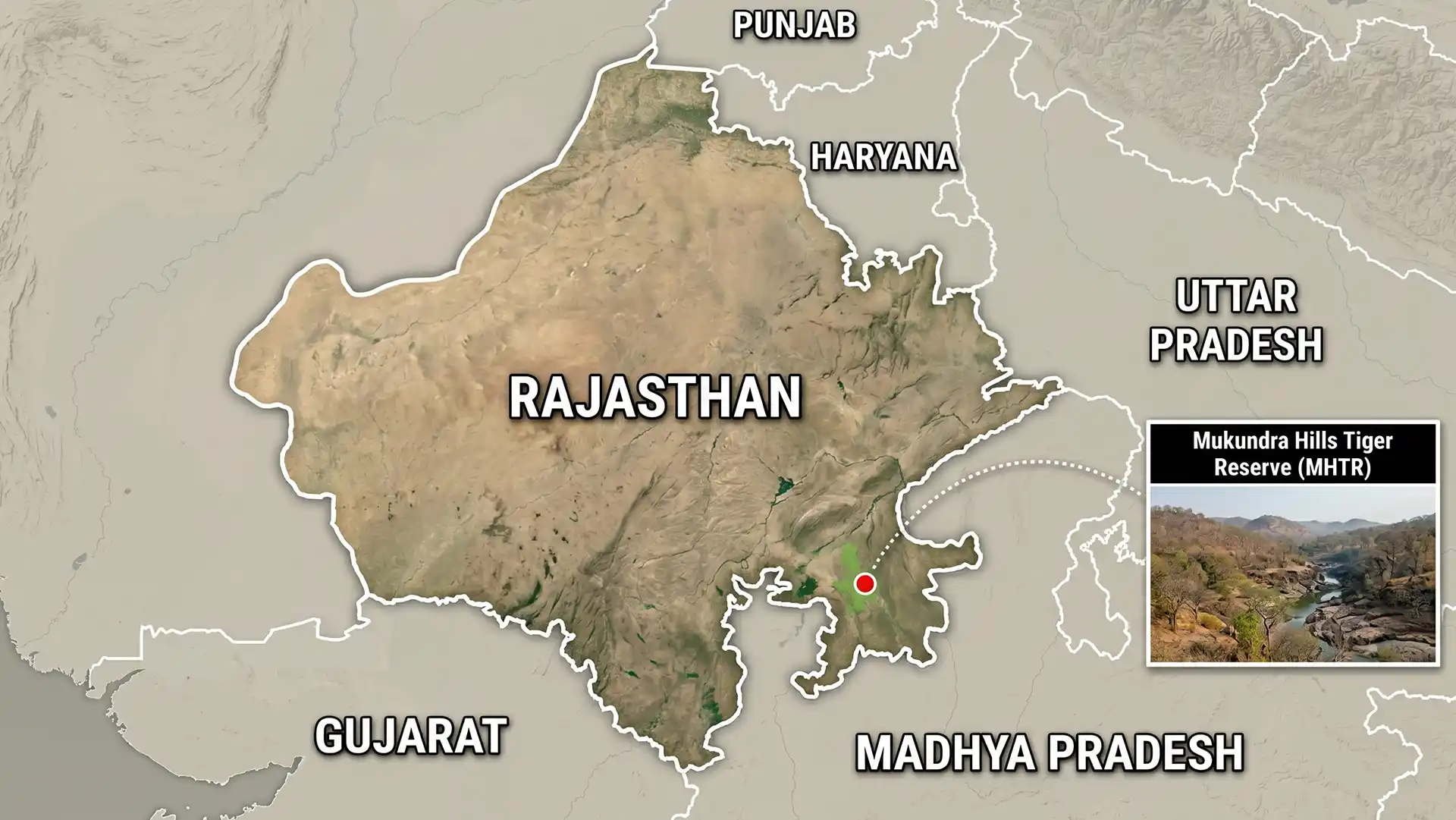
Mukundra Hills Tiger Reserve lies in south‑eastern Rajasthan and spans four districts: Kota, Bundi, Chittorgarh and Jhalawar. The reserve covers about 759 square kilometres and consists of Mukundra National Park, Darrah Wildlife Sanctuary, Jawahar Sagar Sanctuary and a portion of the Chambal Sanctuary. The area was once the private hunting ground of the Maharaja of Kota and is still locally known as Darrah, meaning “pass.”
The rugged landscape is part of the Aravalli range and contains hills, gorges and river valleys. It is bounded by four rivers: the Chambal, Kali, Ahu and Ramzan. Vegetation includes dry deciduous forest, tropical dry forest, scrublands, grasslands and riverine woodland. The park shelters tigers, leopards, sloth bears, striped hyenas, chousingha, chital, nilgai and wild boar. It was declared a wildlife sanctuary in 1955, upgraded to a national park in 2004 and notified as Rajasthan’s third tiger reserve in 2013.
Key points
- The documentary features panoramic views of hills and gorges and profiles unique plants and animals of the reserve.
- Mukundra’s valley is flanked by the Mukundra and Gargola ranges and is fed by four perennial rivers.
- The reserve combines four protected areas, making it ecologically diverse despite its modest size.
- Earlier translocation efforts faced setbacks when relocated tigers died; authorities are now improving habitat and security.
- Promoting eco‑tourism can generate revenue for local communities and support conservation if managed responsibly.
Conclusion
Enchanting Mukundra invites viewers to discover a hidden gem in Rajasthan. By showcasing the reserve’s natural beauty and challenges, the film can inspire support for protecting one of India’s lesser‑known tiger habitats.