

Why in news?
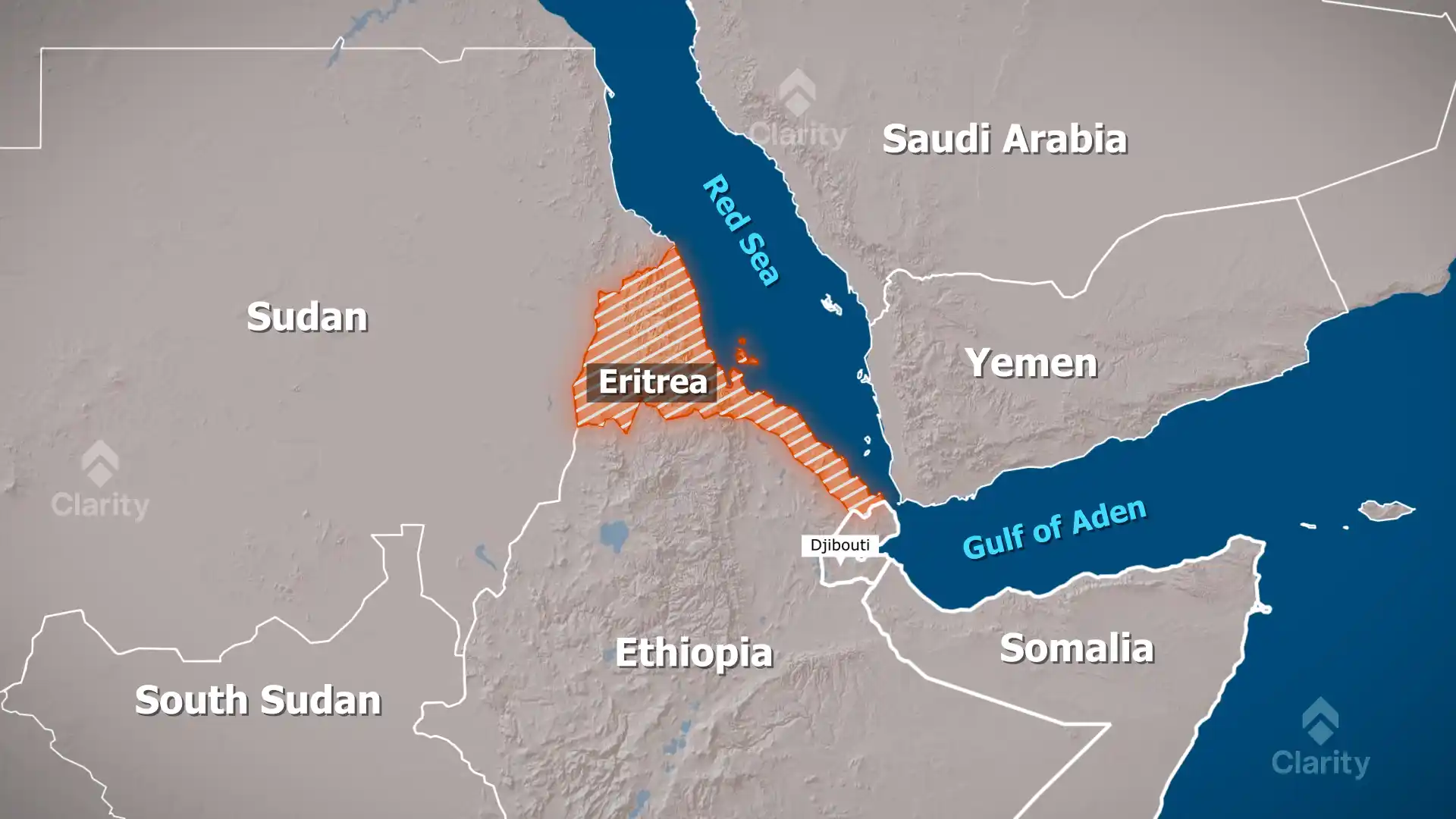
Ethiopia recently demanded that Eritrean troops withdraw from border areas and accused Eritrea of supporting insurgents. Eritrea countered by accusing Ethiopia of seeking sea access through force. The exchange revived memories of their violent past conflicts and raised concerns of new hostilities in the Horn of Africa.
Background
Eritrea is a small country on the Red Sea coast that gained independence from Ethiopia in 1993 after decades of war. A border dispute sparked another war between 1998 and 2000, costing tens of thousands of lives. Though the two nations signed a peace agreement in 2000, tensions have continued. Eritrea’s government is authoritarian and often accused of human‑rights abuses. In recent years, Eritrea aligned with Ethiopia’s central government against rebels in the Tigray region, but their alliance has frayed.
Key issues in the current dispute
- Border demarcation: Many border areas remain contested despite international rulings. Ethiopia’s call for Eritrean withdrawal suggests it believes Eritrea is occupying Ethiopian territory.
- Support for insurgents: Ethiopia accuses Eritrea of backing armed groups that destabilize Ethiopian regions, while Eritrea accuses Ethiopia of harbouring groups opposed to its government.
- Access to the sea: Ethiopia lost its coastline when Eritrea became independent and now relies on Djibouti’s port. Calls in Ethiopia to secure an alternative port, possibly through force or negotiation, have alarmed Eritrea.
Historical context
- War of independence: Eritrean fighters battled Ethiopian forces from the 1960s until 1991, culminating in a referendum where Eritreans voted overwhelmingly for independence.
- Border war (1998–2000): A clash over the town of Badme escalated into a full war, leaving tens of thousands dead. The Algiers Agreement ended active fighting, but demarcation disputes persisted.
- Tigray conflict (2020–2022): Eritrea supported Ethiopia’s federal army against Tigray rebels. After the conflict, allegations emerged of Eritrean troops committing atrocities, further straining relations.
Importance of resolving the dispute
- Regional stability: Renewed conflict could destabilize the Horn of Africa, affecting neighbouring countries and shipping lanes in the Red Sea.
- Humanitarian concerns: Both countries have experienced famine, displacement and human‑rights abuses. Peace is essential for addressing these issues.
- Economic growth: Cooperation in trade, transport and infrastructure can benefit both nations. Conflict undermines economic prospects.
Conclusion
The latest exchange between Eritrea and Ethiopia highlights deep‑seated mistrust and unresolved issues. Dialogue and adherence to international agreements are necessary to avoid another tragic war and to promote stability in the Horn of Africa.
Source: The Hindu