
Why in News?
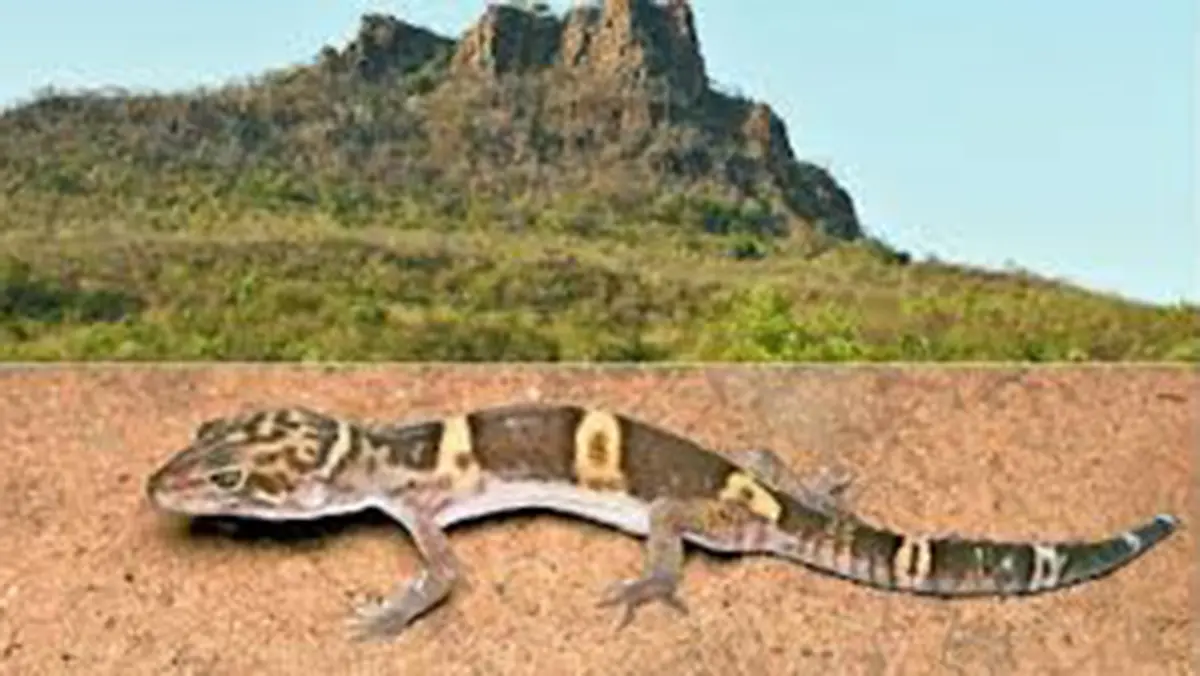
Herpetologists from the Zoological Survey of India and collaborating institutions have described a new species of leopard gecko from the rocky hills of the Kaimur Plateau in Bihar. Named Eublepharis jhuma, this discovery marks the first record of a leopard gecko from the state and expands our knowledge of India’s reptile diversity.
Background
Leopard geckos of the genus Eublepharis are medium‑sized lizards known for their eyelids (uncommon among geckos) and spotted patterns. India hosts several species, mostly confined to the rocky outcrops of central and western India. The new species was discovered during a systematic survey of the Kaimur Wildlife Sanctuary and surrounding areas. Researchers collected morphological measurements, photographed the lizard and analysed its DNA to confirm that it is distinct from previously described species.
The species name “jhuma” honours Dr Dhriti Banerjee, the first female director of the Zoological Survey of India, whose nickname is Jhuma. Naming taxa after prominent scientists acknowledges their contributions and encourages public interest in taxonomy.
Distinctive Characteristics
- Size: Adults reach about 14 cm in snout‑to‑vent length, making them medium‑sized among leopard geckos.
- Colouration: The dorsum is dark brown with two pale, spotty bands between the head and tail. The head has a reticulated light‑cream pattern.
- Scales: The back features large, flat, bumpy scales separated by unusually wide gaps. There are 22–25 tuberculate lamellae under the fourth toe, enhancing grip. Twelve to thirteen pre‑cloacal pores are present near the tail base.
- Tail regeneration: If the tail detaches, the regenerated tail grows flat, rectangular scales rather than the circular ones seen in the original tail.
- Genetic divergence: Molecular analysis shows 6.9–7.8% divergence from its closest relative, Eublepharis satpuraensis, confirming its distinct lineage.
Habitat and Conservation
- Habitat: The species inhabits rocky, dry deciduous forests on the Kaimur Plateau. These habitats experience high temperatures and seasonal rainfall.
- Threats: Like many geckos, E. jhuma faces threats from habitat loss, forest fires, pollution and illegal collection for the pet trade. Indian leopard geckos are protected under Schedule I of the Wildlife (Protection) Act, 1972.
- Significance: The discovery highlights the Kaimur Plateau as a centre of endemism shaped by ancient geological events. It also emphasises the need to conserve rocky habitats that harbour unique reptile lineages.
Conclusion
Eublepharis jhuma enriches our understanding of India’s herpetofauna and underscores the importance of systematic surveys. Protecting its habitat will help preserve not only this species but also the broader ecological community of the Kaimur Plateau.
Source: Research Matters

