
Why in news?
Botanists have drawn attention to Eulophia picta, an orchid species reported from several parts of India, after new sightings were confirmed in parts of the Western Ghats. Awareness of its classification is important because the species is now treated as synonymous with Geodorum densiflorum, affecting conservation records.
Background
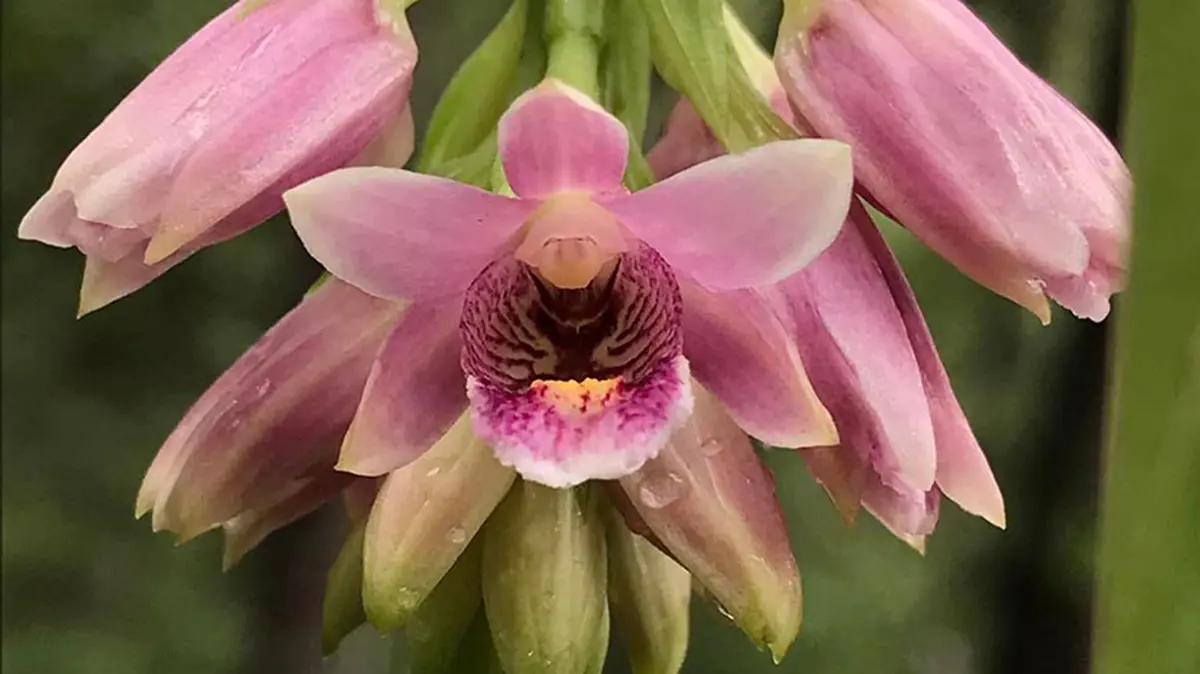
Eulophia picta is a terrestrial orchid previously placed in the genus Eulophia but now considered part of Geodorum. It grows across Asia and the Pacific, including India, Sri Lanka, Myanmar, China, Indonesia, Australia and the Pacific islands. The plant has underground spherical pseudobulbs with several lance‑shaped leaves. Flowering spikes bear many blossoms that open sequentially. The inflorescence often forms a U‑shape and straightens as seed capsules mature.
Characteristics
- Habitat. This orchid thrives in humid forests, stream edges and grassy slopes from lowlands up to 1,500 metres. It is usually found in shaded or semi‑shaded areas.
- Flowers. The inflorescence can carry 15–20 flowers that are pale violet, pink or yellowish with darker markings. Each bloom lasts only a few days.
- Conservation status. Although widespread, local populations may be threatened by habitat destruction. Recognising the synonymy helps botanists avoid double‑counting species and develop accurate conservation plans.
Significance
Clarifying the taxonomy of Eulophia picta aids in biodiversity assessment. Orchids are valuable indicators of ecosystem health and are protected under the Convention on International Trade in Endangered Species (CITES). Knowledge of their distribution helps scientists and forest departments prioritise habitats for protection.
Source: The Hans India

