
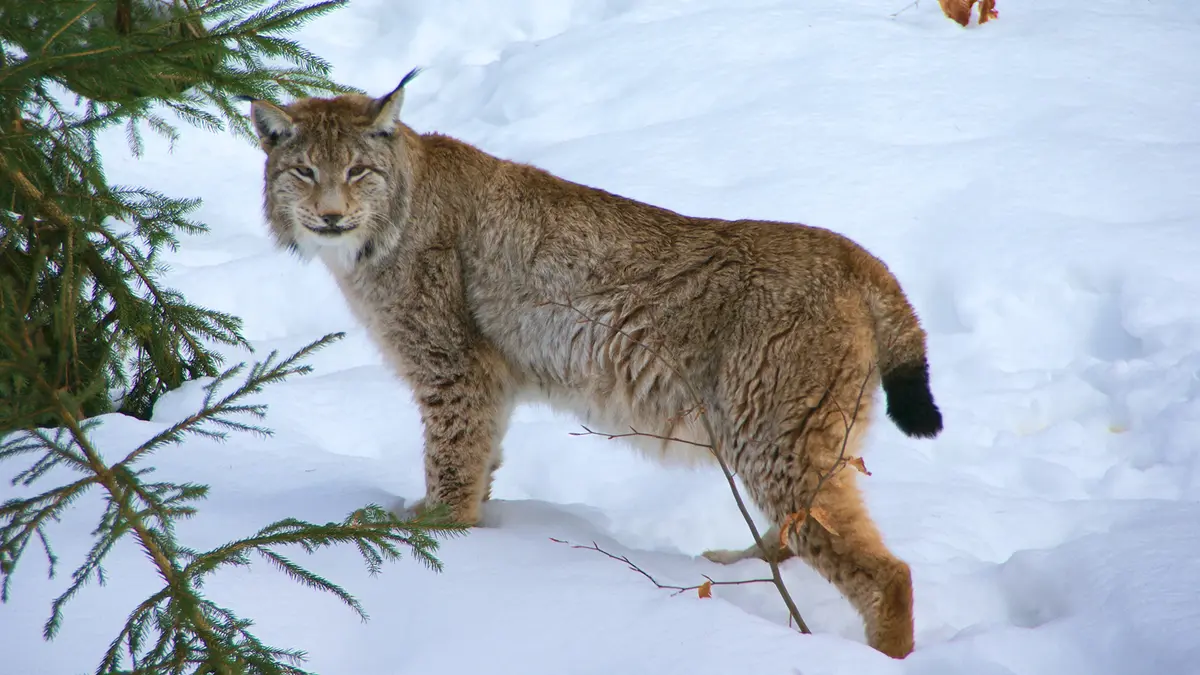
Why in news?
- A camera trap on the Tso Lhamo plateau in Sikkim recorded the Eurasian lynx at an altitude of over 17,000 feet.
- This is the first confirmed photographic record of the species in Sikkim and the second in the eastern Himalayas.
- The discovery occurred during a snow‑leopard monitoring project run by the Sikkim Forest Department and WWF‑India.
Background
The Eurasian lynx (Lynx lynx) is one of the largest lynx species, native to forests and mountainous regions of Europe and Asia. In India it is extremely rare, with sightings recorded in Ladakh, Himachal Pradesh and Jammu & Kashmir. The animal is solitary and mainly hunts at night or twilight. It occupies a large territory ranging from 20 km² to over 400 km² depending on prey availability. Its diet includes mammals like hares and deer as well as birds. Because of its elusive behaviour and sparse populations in India, little is known about its ecology in the Himalayas.
Significance of the Sikkim sighting
- Extending known range: The photograph shows that the species’ range extends eastwards into Sikkim. Previously, the only confirmed record from the eastern Himalayas came from Arunachal Pradesh in 2025.
- High‑altitude adaptation: The lynx was photographed at 17,224 feet. This suggests it can survive in extreme cold and thin air, sharing habitat with snow leopards, Tibetan wolves and other high‑altitude species.
- Local knowledge: Nomadic herders in the region have long reported seeing a large spotted cat, but scientific evidence was lacking. The new record validates local ecological knowledge.
- Need for research: Conservationists need to determine how many lynx live in the eastern Himalayas, their prey base and interactions with other carnivores. Further camera‑trap surveys and genetic studies will help plan conservation efforts.
Conclusion
The Eurasian lynx sighting in Sikkim highlights the rich but understudied wildlife of India’s high‑altitude areas. Protecting these habitats requires balancing conservation with the livelihoods of local herders. Continued monitoring will provide data to formulate effective management strategies and raise awareness about this elusive predator.
Source: NDTV