

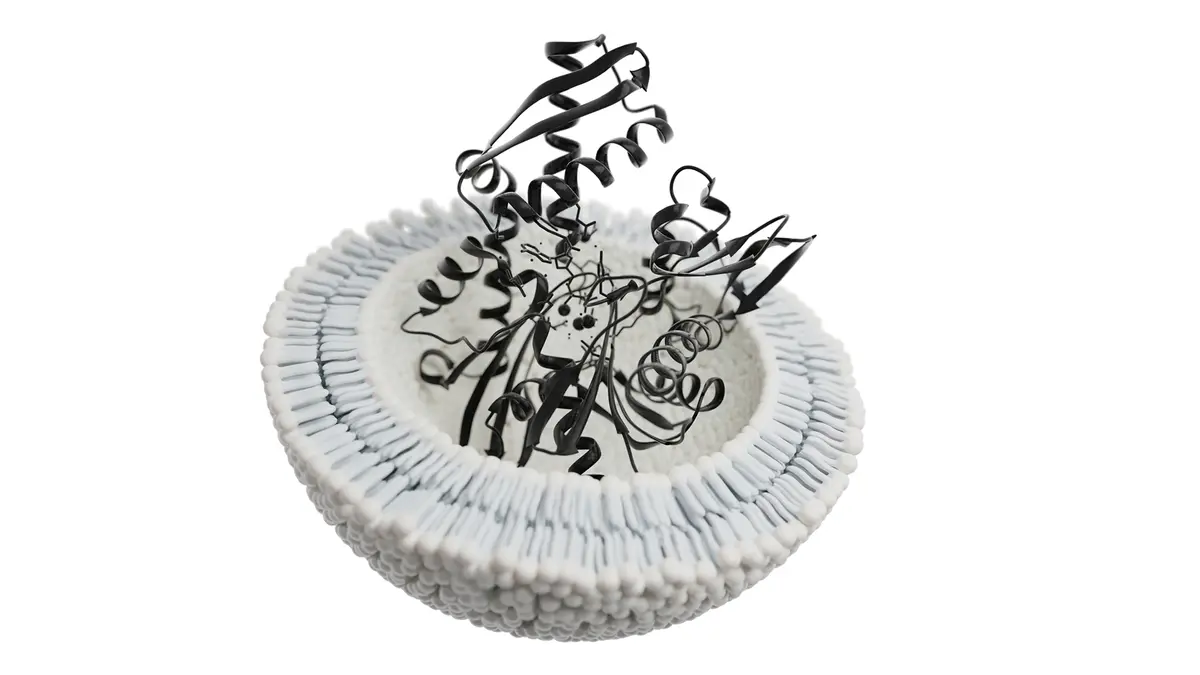
Why in news? Researchers around the world are racing to understand tiny particles called exosomes. These membrane‑bound vesicles are being investigated as potential diagnostic tools and delivery vehicles for drugs, yet scientists still struggle to observe them directly. Understanding exosomes could transform how we diagnose and treat diseases such as cancer and Alzheimer’s.
Background
Exosomes are a type of extracellular vesicle produced inside cells. They form when parts of the cell membrane fold inward to create multivesicular bodies, which then fuse with the outer membrane and release their contents. Exosomes are typically 30–150 nanometres in diameter, making them the smallest recognised class of extracellular vesicle. They are enclosed by a lipid bilayer similar to the parent cell’s membrane and carry proteins, lipids and various types of RNA. Because of their origin, exosomes display surface molecules such as tetraspanins (CD9, CD63 and CD81) and heat‑shock proteins (HSP70, HSP90), which are used as markers.
Characteristics and functions
- Composition: Exosomes transport proteins involved in cell signalling and stress response, lipid components like phosphatidylserine and cholesterol, and genetic material such as microRNAs, mRNAs and long non‑coding RNAs. This cargo reflects the physiological state of the parent cell.
- Intercellular communication: They act as messengers, ferrying their cargo to nearby or distant cells. By delivering RNA and proteins, exosomes can modify gene expression and cellular behaviour, playing roles in tissue repair, immune responses and development.
- In disease: Altered exosome profiles have been linked to cancer, neurodegenerative disorders and chronic inflammation. Because their contents are protected by a lipid membrane, exosomes are being explored as stable biomarkers for early diagnosis of diseases.
- Classification of vesicles: Extracellular vesicles are categorised by size and origin: exosomes (30–150 nm), microvesicles or ectosomes (100–1,000 nm) and apoptotic bodies (50–5,000 nm). Exosomes arise from endolysosomal pathways, whereas microvesicles bud directly from the plasma membrane.
Emerging applications
The unique ability of exosomes to carry molecular cargo has inspired researchers to harness them as natural delivery vehicles for therapeutics. Because exosomes can cross biological barriers and are less likely to trigger immune reactions, they are being studied as carriers for RNA‑based drugs and vaccines. Clinicians are also developing diagnostic tests that detect disease‑associated exosomal proteins or RNAs in blood or other body fluids. However, isolating exosomes from complex samples remains challenging, and there is still much to learn about how cells regulate their release.
Conclusion
Exosomes are tiny, naturally produced packages that mediate communication between cells. Their ability to mirror the condition of their parent cells and deliver cargo makes them promising tools for diagnostics and therapy. As research advances, these nanoscopic messengers could revolutionise medicine.
Sources: NM