Why in news?
On 21 May 2026 the Reikado Hall at Daishō‑in, a Buddhist temple on Miyajima Island near Hiroshima, was destroyed by fire. The wooden hall housed an eternal flame that had been burning since the temple’s founding in the early ninth century. Fortunately no casualties were reported, but the blaze marked the latest in a series of fires affecting Japanese temples and shrines.
Background on Daishō‑in
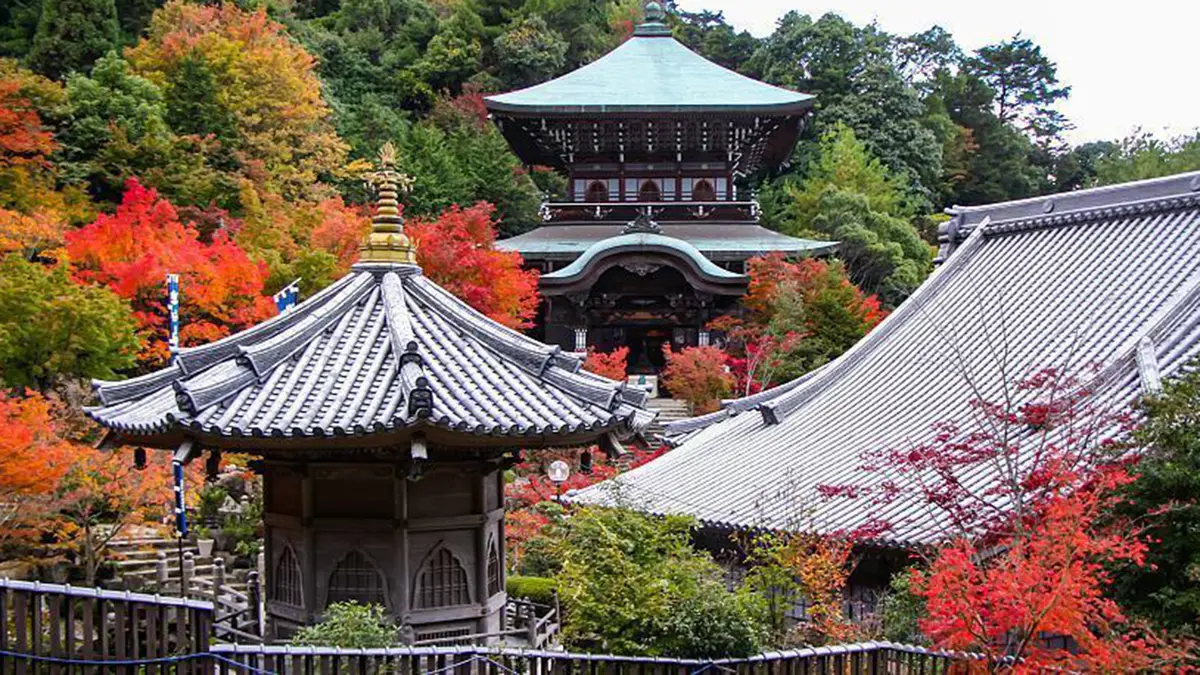
Daishō‑in is a historic Shingon Buddhist temple located partway up Mount Misen on Miyajima (also called Itsukushima) in Hiroshima Prefecture. The temple was established in 806 CE by the monk Kūkai, also known as Kōbō Daishi, who introduced Shingon Buddhism to Japan. For centuries Daishō‑in served as the administrative temple for the nearby Itsukushima Shrine and was patronised by emperors and samurai. Its grounds contain multiple halls, statues and caves dedicated to various bodhisattvas and esoteric rituals.
The Reikado Hall and the eternal flame
- Historical flame: The Reikado (“Hall of Spiritual Flame”) safeguarded a fire said to have been lit by Kūkai himself in 806. Legend holds that this flame has burned continuously for twelve centuries and was used to ignite the Peace Flame at Hiroshima’s Peace Memorial Park.
- Previous fire: An earlier hall housing the flame was destroyed by fire in 2005. It was rebuilt to incorporate modern materials and fire prevention measures, yet the 2026 blaze once again razed the structure.
- Loss and response: Officials retrieved the sacred flame during the recent fire and vowed to reconstruct the hall. Investigations are under way to determine the cause of the blaze. Preservationists emphasise the need for better fire safety at wooden heritage sites.
Itsukushima Shrine and Miyajima
Daishō‑in sits near the famous Itsukushima Shrine, a Shinto complex dedicated to the sea goddesses who are said to protect sailors. The shrine’s iconic vermilion torii gate appears to float on the sea at high tide. The current gate dates to 1875, but torii have stood on the site since at least 1168, when the warrior Taira no Kiyomori rebuilt the shrine in an elegant palace style (shinden‑zukuri) over the tidal flats. Because the island itself is sacred, structures are built on stilts over the water, allowing pilgrims to approach by boat without stepping on the holy ground.
Significance
- The fire at Reikado Hall represents a cultural loss for both Buddhism and Japanese heritage. The eternal flame is a symbol of perseverance and peace, linking Miyajima to Hiroshima’s Peace Memorial.
- Repeated fires at wooden religious sites underscore the vulnerability of traditional architecture and the need for improved conservation measures.
- Understanding the history of Daishō‑in and Itsukushima Shrine provides context for the region’s religious syncretism, where Buddhist and Shinto traditions coexist.
Conclusion
While the loss of the Reikado Hall is tragic, local authorities have pledged to rebuild and preserve the sacred flame. The incident draws attention to the delicate balance between maintaining centuries‑old wooden structures and protecting them from modern hazards such as fire. Visitors to Miyajima can appreciate both the resilience of the island’s spiritual heritage and the lessons it offers in cultural conservation.