
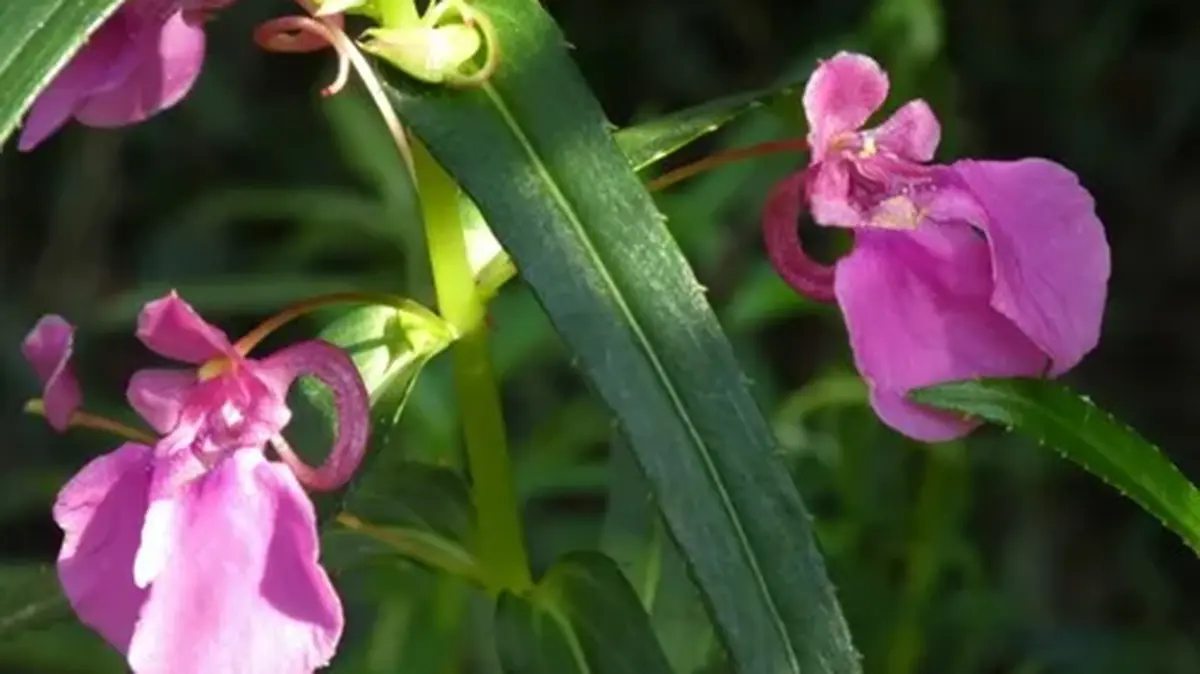
Why in news? Researchers working in the misty highlands of the Western Ghats have described five previously unknown species of Impatiens (balsams). These delicate flowering plants were collected from remote hill slopes in Kerala’s Idukki and Ernakulam districts. The discoveries highlight how much of the Western Ghats’ biodiversity is still undocumented.
Background
The genus Impatiens belongs to the family Balsaminaceae and includes several hundred species found in tropical Asia and Africa. Many balsams are valued for their ornamental flowers and grow in wet montane habitats. Botanical explorers in Kerala teamed up with local communities to search unexplored valleys. By examining flower shape, pollen structure and genetic traits, they concluded that five plants did not match any known species. Each new species has been named in honour of institutions and scholars who supported the study.
New species and their features
- Impatiens berchmansiensis – Named after St. Berchman’s College, this small herb produces bright yellow flowers. It grows beside cold streams in Vagamon (Idukki). The plant reaches about 20 cm and is adapted to shaded, water‑logged soils.
- Impatiens ninanii – This species honours botanist C.A. Ninan. It is a resilient herb with violet‑blue petals marked with deep purple blotches. Populations were found in the Mankulam–Viripara area of Idukki.
- Impatiens filcyii – Named after Professor Filcy T. Baby, this balsam bears pinkish‑purple flowers with a vivid yellow centre. It thrives in the grasslands of Mamalakkandam (Ernakulam) and displays a distinctive spur at the back of its flower.
- Impatiens xanthopetala – Its name means “yellow‑petalled.” Plants cling to rocky cliffs in Pambanar (Idukki) and display deep golden petals marked with brown spots. They prefer moist crevices in open grasslands.
- Impatiens flavispicata – This balsam has pure white petals and a hidden yellow spur. It grows in dense thickets in Mamalakkandam. The species was distinguished by its pollen surface and the shape of its floral spur.
Why these discoveries matter
The five discoveries underscore the Western Ghats’ status as one of the world’s biodiversity hotspots. Many balsam species are short‑lived annuals that germinate during the monsoon and quickly flower and set seed. Their restricted ranges make them vulnerable to habitat disturbance from tourism, road construction and climate change. Documenting such species is the first step toward conserving their habitats.
Conclusion
The identification of five new Impatiens species reminds us that India’s mountains still shelter many undiscovered plants. Protecting high‑elevation forests and involving local communities in conservation will be vital to safeguard these delicate balsams and the ecological web they support.
Sources: MATH