

Why in news?
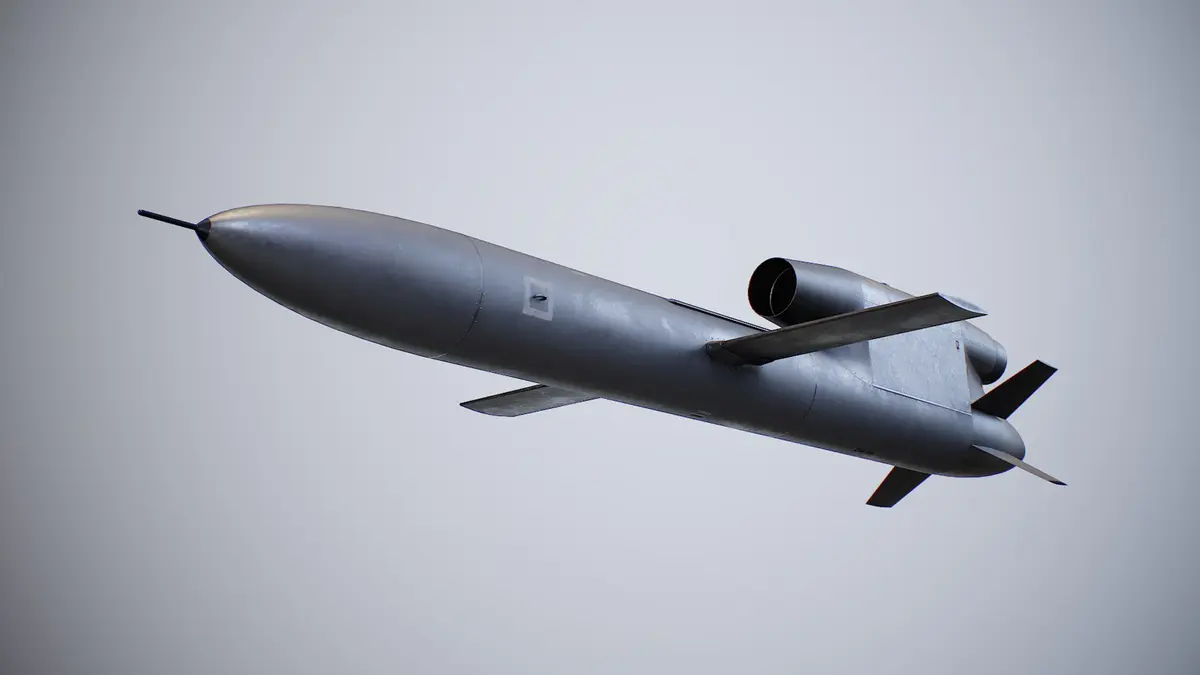
Ukraine’s defence industry recently unveiled the FP‑5 “Flamingo” cruise missile and reportedly used it for deep strikes on Russian targets in June 2026. The domestically developed missile is part of Ukraine’s long‑range strike capability against military infrastructure.
Background
After the 2022 Russian invasion, Ukraine accelerated the development of indigenous weapons. The FP‑5 was designed by the private firm Fire Point to provide a long‑range cruise missile that could be produced quickly and affordably.
Specifications and features
- The missile has an estimated range of around 3,000 kilometres and a top speed of roughly 900 km/h.
- It uses an AI‑25 turbofan engine and a composite monocoque fuselage. The airframe is light to ease manufacturing.
- The warhead weighs about 1,150 kilograms and is reportedly derived from a re‑purposed aircraft bomb. It is larger than the warhead on the U.S. Tomahawk Block V.
- Guidance is based on GPS and inertial navigation. The claimed circular error probable is around 14 metres.
- Because of cost constraints, the missile has limited sensors and relies on pre‑programmed waypoints. Production started in 2025 and each unit can be assembled in a few months.
- In June 2026 Ukrainian forces used FP‑5 missiles to hit strategic facilities such as the VNIIR‑Progress defence plant in Cheboksary, which produces navigation systems for drones and missiles.
Conclusion
The FP‑5 “Flamingo” demonstrates Ukraine’s capacity to develop long‑range strike weapons despite wartime constraints. Its extended range allows Ukraine to target high‑value sites deep inside Russia. The missile’s simple design and reliance on available parts suggest that Ukraine aims to produce these weapons rapidly to meet operational needs.
Sources: TOI