

Why in news?
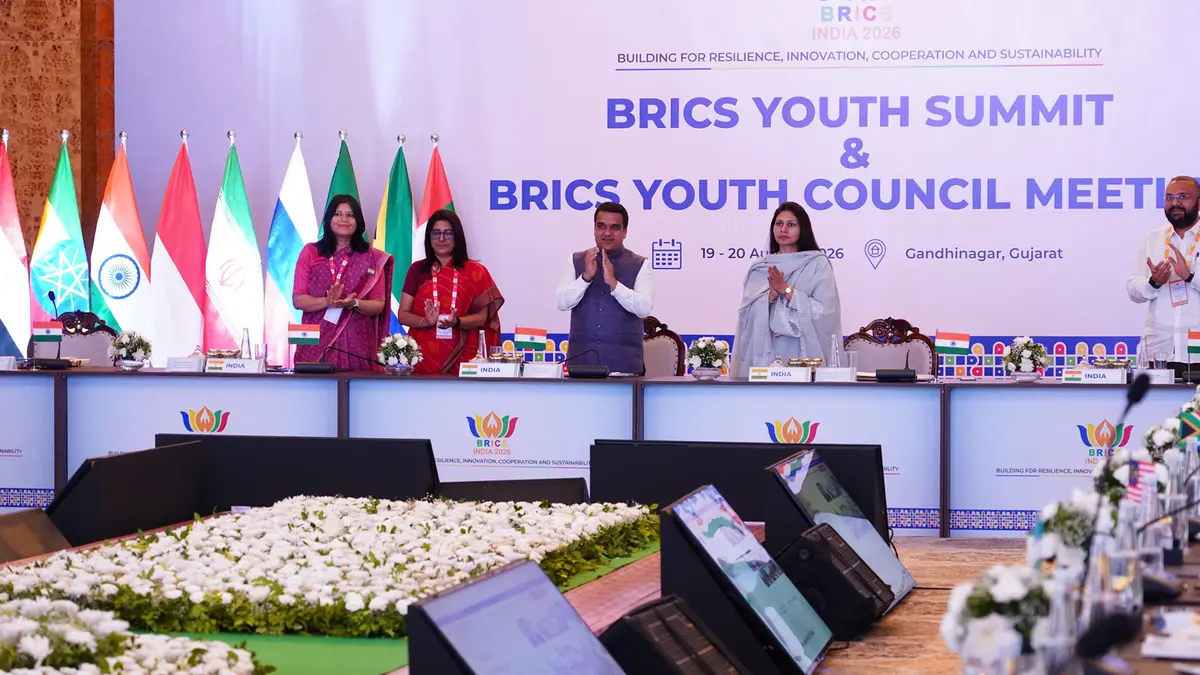
The Ministry of Youth Affairs and Sports launched Friends of Mera Yuva Bharat, or MY Bharat. The launch occurred during the 2026 BRICS Youth Summit in Gandhinagar, Gujarat. The grouping’s name began with Brazil, Russia, India, China and South Africa. Minister of State Raksha Khadse announced the new international initiative.
Participants can register themselves and share details of their youth clubs or associations. The platform is intended to link them with volunteering, dialogue and “Know Your India” activities. The launch extends an existing domestic youth platform towards the diaspora. Its value will depend on meaningful programmes, safe data handling and sustained participation after registration.
What is Mera Yuva Bharat?
Mera Yuva Bharat, or MY Bharat, is an autonomous body under the Ministry of Youth Affairs and Sports. The Union Cabinet approved its establishment in October 2023. The Prime Minister launched the platform on 31 October 2023, which is National Unity Day. It was designed as a whole-of-government mechanism for youth development and youth-led action.
The main platform serves young people aged 15 to 29. Some adolescent programmes may include those aged 10 to 19. It combines online access with physical activities, which the government calls a “phygital” approach. Users can find volunteering, experiential learning, mentorship and civic programmes. Institutions and organisations can also offer structured opportunities through the system.
Friends of MY Bharat adds an international layer to this framework. It focuses on Indian-origin students, professionals and youth associations outside the country. Such participants may have different citizenships, languages and levels of connection with India. The programme must therefore avoid treating the diaspora as one uniform group. Flexible and locally relevant engagement will be necessary.
Why the launch venue matters
The initiative was introduced at the BRICS Youth Summit under India’s 2026 presidency. The grouping now reaches beyond the five countries behind its original name. Youth summits create a forum for exchanges on entrepreneurship, technology and public service. Launching there gave the initiative an international audience from its first day.
Gandhinagar is Gujarat’s capital and part of the Ahmedabad–Gandhinagar urban region. Gujarat also has long-standing migration and commercial links with many countries. That setting fits a programme aimed at the overseas community. However, geographic symbolism cannot replace nationwide inclusion. Youth with family roots across every state and language group should find equal access.
Possible benefits
A well-run network can connect diaspora skills with Indian institutions. Young professionals could mentor students, support research links or join time-bound community projects. Cultural programmes may also help later generations understand India beyond family memories. The exchange should work in both directions. India can learn from the professional and civic experience of overseas youth.
Digital registration can make participation easier across time zones. Clubs can discover programmes without relying on personal contacts. Government agencies can also understand where active networks already exist. Yet registration numbers alone show little about real engagement. Public reporting should measure completed projects, participant diversity and lasting outcomes.
Safeguards and implementation questions
The platform will collect identity and association details from people in several jurisdictions. Its privacy notice must explain purpose, storage and data sharing. Users should know whether information will be public or restricted. Strong account verification can reduce impersonation and fraudulent groups. It should not create unnecessary barriers for small or informal youth associations.
Opportunities must carry clear roles, dates, costs and safeguarding rules. Overseas participants may need visa, insurance or background checks for physical programmes. Remote projects need reliable supervision and a defined public benefit. Feedback and complaint channels should be visible. These practical details determine whether a global network becomes useful or merely promotional.
The programme should also remain open to honest discussion. Diaspora engagement is stronger when participants can share expertise and constructive criticism. A network based only on celebration may lose serious young professionals. Clear non-partisan governance will help it survive political changes. Partnerships should be selected transparently and evaluated against published aims.
Connections must become completed work
The initiative can strengthen knowledge and civic links across borders. Registration is only the first step. Participants need defined roles and useful projects. Its success should be judged by safe participation, completed work and durable relationships.
Conclusion
Friends of MY Bharat gives overseas Indian-origin youth a dedicated entry into a growing public platform. The launch offers a practical chance to move diaspora policy beyond ceremonial contact. Detailed programme design must now follow. Young people need clear opportunities that respect their time and varied identities. Institutions in India must also be ready to use their contributions well.
The strongest network will connect service, learning and reciprocal exchange. It will protect personal data and publish meaningful results. It will also reach beyond large, well-known associations in major cities. If these conditions are met, the platform can support long-term civic relationships. The launch is therefore a starting structure, not a finished achievement.