
Why in news?
In May 2026 the Himachal Pradesh Forest Department obtained the first photographic evidence of a Himalayan brown bear in the Gamgul Siyabehi Wildlife Sanctuary. Camera traps captured the critically endangered bear while monitoring efforts in this remote high‑altitude protected area. The sighting highlights the sanctuary’s ecological value and need for conservation.
About the sanctuary
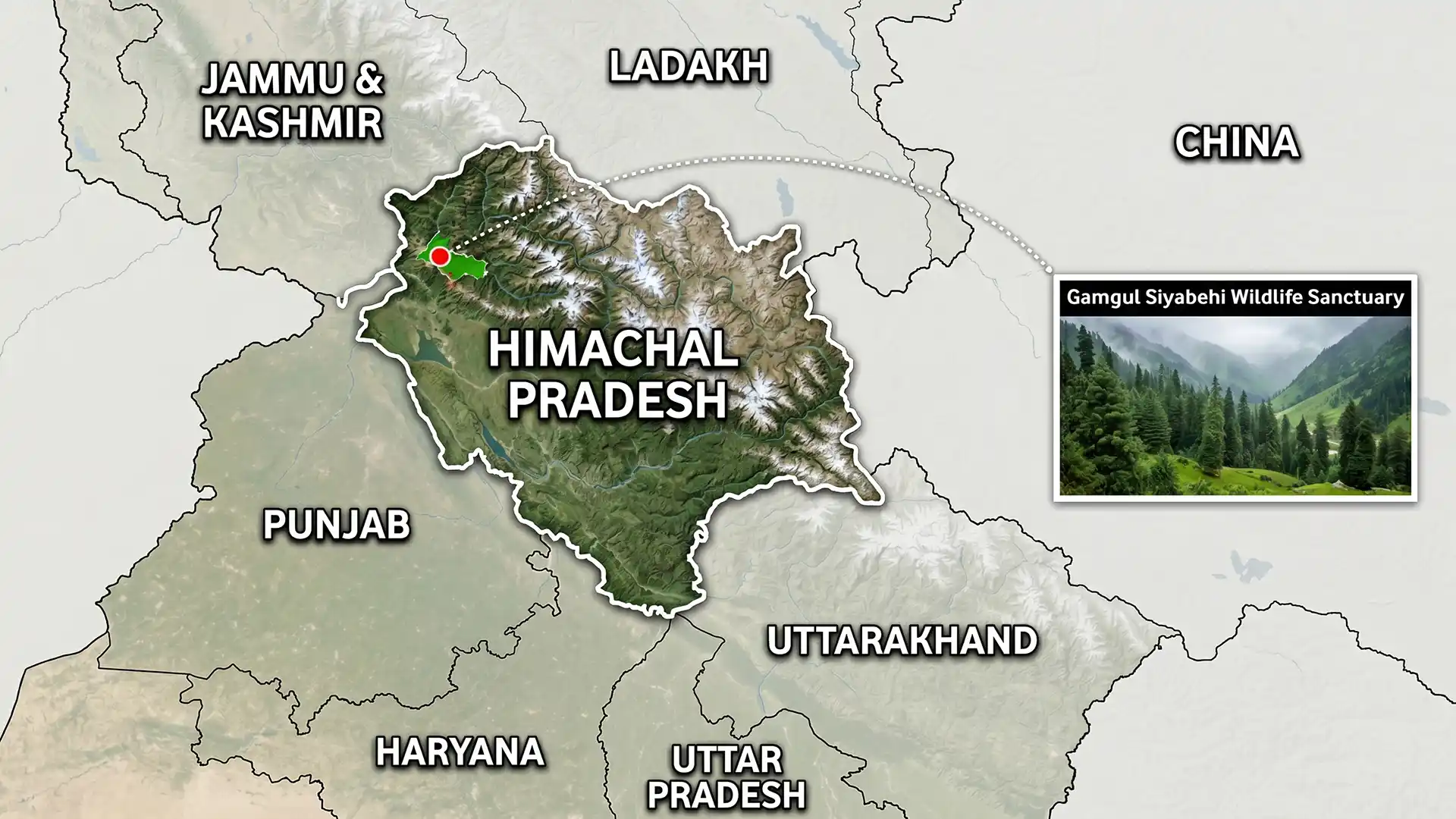
Gamgul Siyabehi Wildlife Sanctuary lies in the Bhandal valley of Salooni tehsil, Chamba district, Himachal Pradesh. Established in 1962, it covers about 109 km² and borders the union territory of Jammu and Kashmir. This high‑altitude reserve contains deodar and coniferous forests, alpine pastures and rugged valleys. It is the only sanctuary in Himachal Pradesh known to have once supported the Kashmir stag (hangul).
Wildlife significance
- Diverse fauna: The sanctuary hosts musk deer, Himalayan tahr, pheasants and colourful bird species. Alpine meadows and forest patches provide habitat for these animals.
- Critically endangered species: The Himalayan brown bear is listed as critically endangered in India. The recent photo confirms its presence in Gamgul, underscoring the importance of remote monitoring and habitat protection.
- Ecological importance: The mix of coniferous forest and alpine pastures creates a mosaic of habitats. The area is part of the Pir Panjal range, which links the western Himalayas with the Kashmir valley and supports species adapted to high elevations.
Challenges and conservation efforts
Rugged terrain and harsh weather make patrolling difficult. Human activities, such as livestock grazing and occasional encroachment, can disturb wildlife. The forest department has increased camera‑trap monitoring, engaged local communities and prepared an eco‑sensitive zone around the sanctuary. Protecting habitats will be key to ensuring that rare species like the Himalayan brown bear can survive.
Conclusion
The discovery of a Himalayan brown bear in Gamgul Siyabehi Sanctuary emphasises the region’s biodiversity. Continued monitoring, community participation and habitat protection will help safeguard this high‑ altitude reserve and its wildlife.