

Why in news?
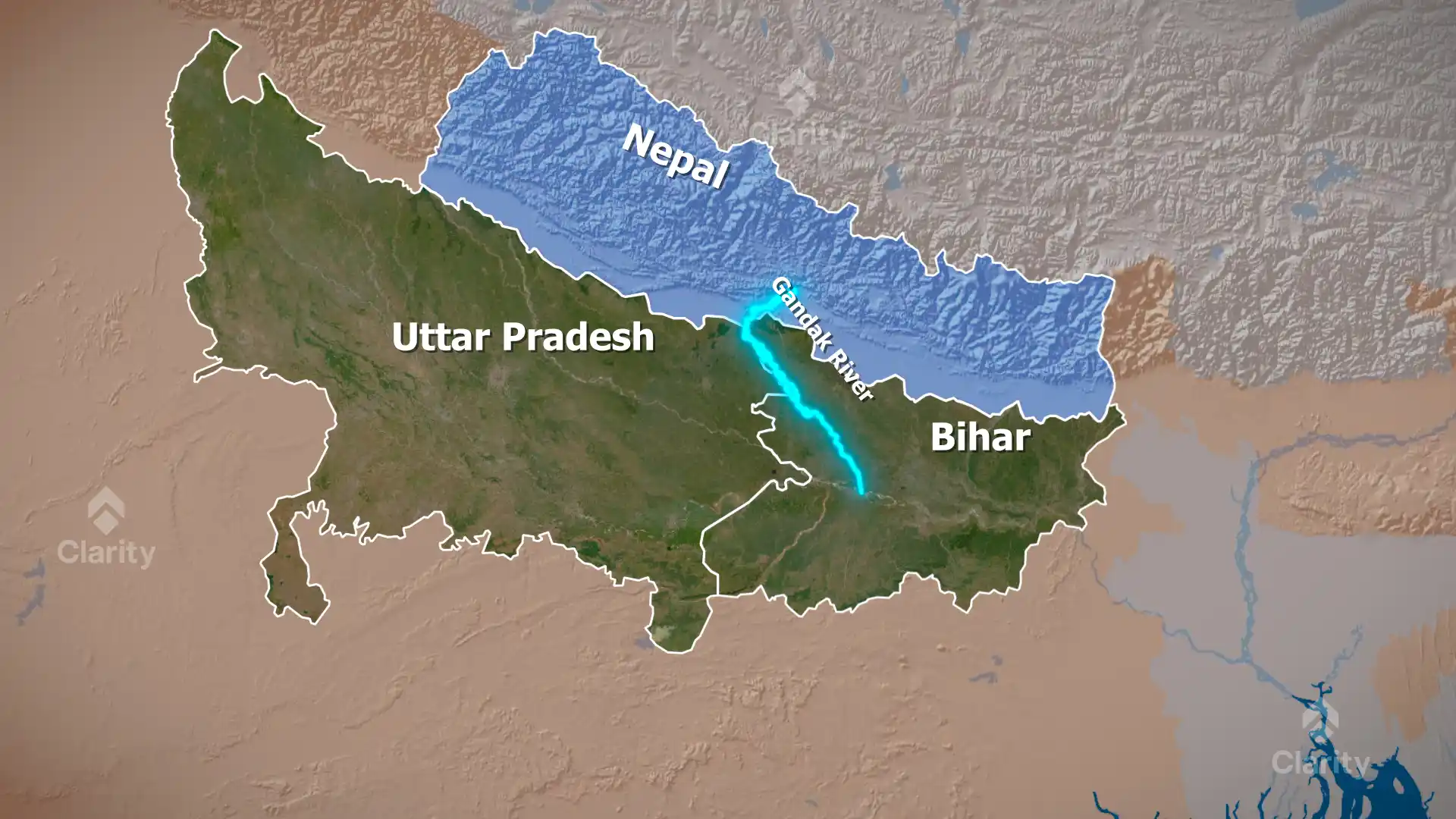
Conservationists announced that the Gandak River now hosts more than 1,000 gharials, making it the second‑largest habitat for this critically endangered crocodile after the Chambal River. Years of dedicated conservation work have led to this achievement.
Background
The gharial (Gavialis gangeticus) is a long‑snouted, fish‑eating crocodilian once common in South Asian rivers. Habitat destruction, sand mining, fishing nets and pollution caused its numbers to plummet. The Gandak (or Gandaki) River originates in the Himalayas of Nepal and flows through Bihar before joining the Ganga. In the 1980s, eggs collected from the Gandak were used in India’s first captive breeding programme for gharials.
Key developments
- Population recovery: Adult gharials in the Gandak increased from about 54 in 2015 to over 400 by 2025, with total individuals exceeding 1,000 due to hatchery releases and protection of nesting sites.
- Habitat management: Conservationists guard sandbanks, restrict sand mining during the breeding season and engage fishermen to keep nets away from critical zones.
- Community involvement: Local communities are trained as river guardians. They learn about the ecological role of gharials and receive compensation for protecting nests.
- Research and monitoring: Scientists tag and track released juveniles, studying their survival and movement to inform future conservation strategies.
Significance
- The Gandak’s success shows that species on the brink of extinction can recover with sustained effort, scientific planning and community participation.
- Protecting river ecosystems benefits not only gharials but also fish stocks, water quality and people’s livelihoods.
- The project provides a model for gharial conservation in other river systems.
Conclusion
The resurgence of gharials along the Gandak River is a conservation milestone. Continued funding, habitat protection and local stewardship will ensure that this unique crocodilian thrives for generations to come.
Source: The Times of India