

Why in news?
Scientists described a new groundwater fish from the India–Nepal border region. The paper appeared in the journal ZooKeys on 11 August.
A new genus and species
The authors created the genus Gangaichthys for the species. It belongs to Chaudhuriidae, a family of small earthworm eels.
The name indonepalicus reflects records from India and Nepal. Its combination forms the accepted scientific name.
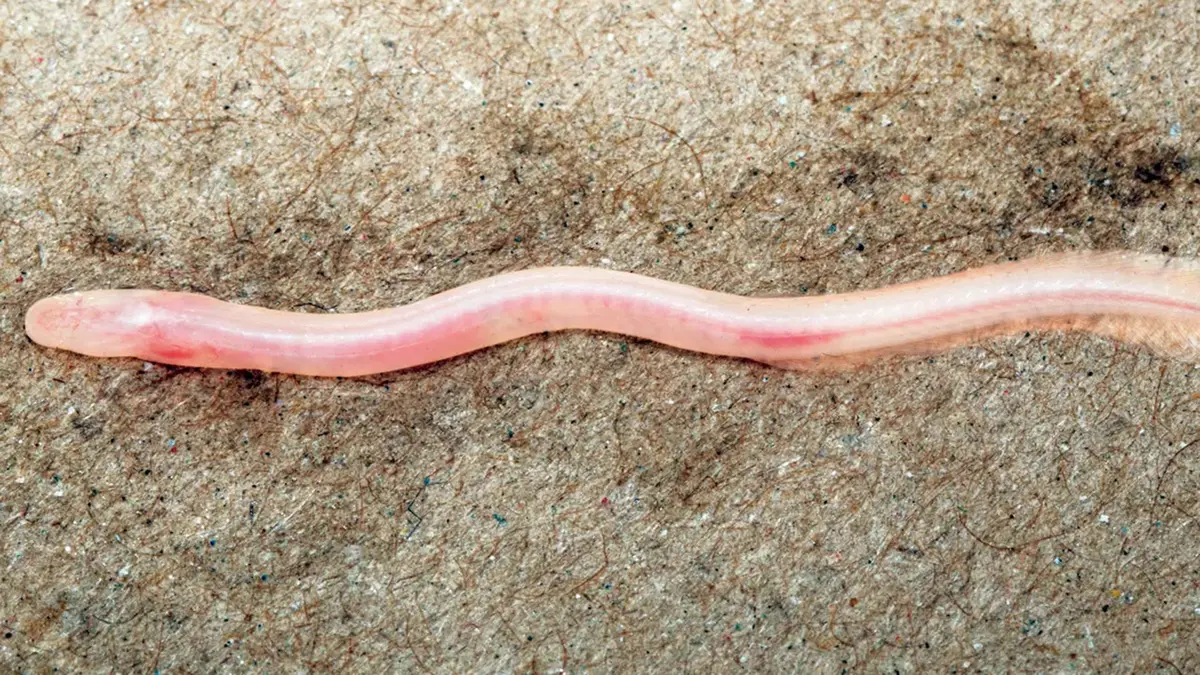
Three physical specimens were recovered from borewells. The holotype measured 40.6 millimetres and came from Pashchim Champaran district, Bihar.
It was collected near Balgangwa on 5 January 2025. Photographic records came from Triveni in Nepal’s Nawalparasi district.
The two reported localities lie within about 11 kilometres. Researchers withheld exact coordinates to protect the sites.
Geography beneath the border
The sites occupy the Terai edge of the Indo-Gangetic alluvial plain. Rivers have deposited deep layers of sand, silt and gravel here.
These permeable layers store and transmit groundwater across political boundaries. The fish therefore illustrates a connected subterranean habitat.
The region lies near the Gandak river system and the Himalayan foothills. Surface drainage and aquifers interact across the India–Nepal border.
What “stygobitic” means
A stygobitic animal is adapted to permanent life in groundwater. It does not simply shelter underground for part of its life.
Adaptations and scientific significance
The fish lacks visible body pigment and has reduced eyes covered by skin. These traits fit a life without sunlight.
It also has 64 vertebrae and an unusual fin-ray pattern. The authors reported an apparent absence of ribs.
Deoxyribonucleic acid analysis placed it within Chaudhuriidae. Comparative genetic data remain limited, so finer relationships need more sampling.
The paper describes it as the first stygobitic member of its family. It is also the first documented subterranean fish from this alluvial basin.
The discovery extends the family’s known range roughly 500 kilometres westwards. The authors also identify it as the family’s northernmost record.
Conservation without invented numbers
Only three specimens were collected, so no population estimate exists. Rarity in samples does not automatically prove rarity in the aquifer.
Groundwater extraction and contamination are plausible threats identified by the authors. Neither a decline nor a precise threat level has been measured.
Conservation requires aquifer maps, water-quality data and further surveys. India and Nepal should coordinate because groundwater does not follow the border.
Protect the habitat before it is fully known
The finding expands biodiversity knowledge while exposing a major survey gap beneath densely settled farmland.
Conclusion
Gangaichthys indonepalicus is both a taxonomic discovery and an aquifer signal. Its protection depends on evidence, groundwater stewardship and cooperation.