

Why in News?
On Endangered Species Day 2026, conservationists released the first satellite‑tagged Ganges soft‑shell turtle in Kaziranga National Park and Tiger Reserve in Assam. The satellite tag will provide data on the turtle’s movements, habitat use and survival. The initiative aims to improve understanding of the species and guide conservation strategies.
Background
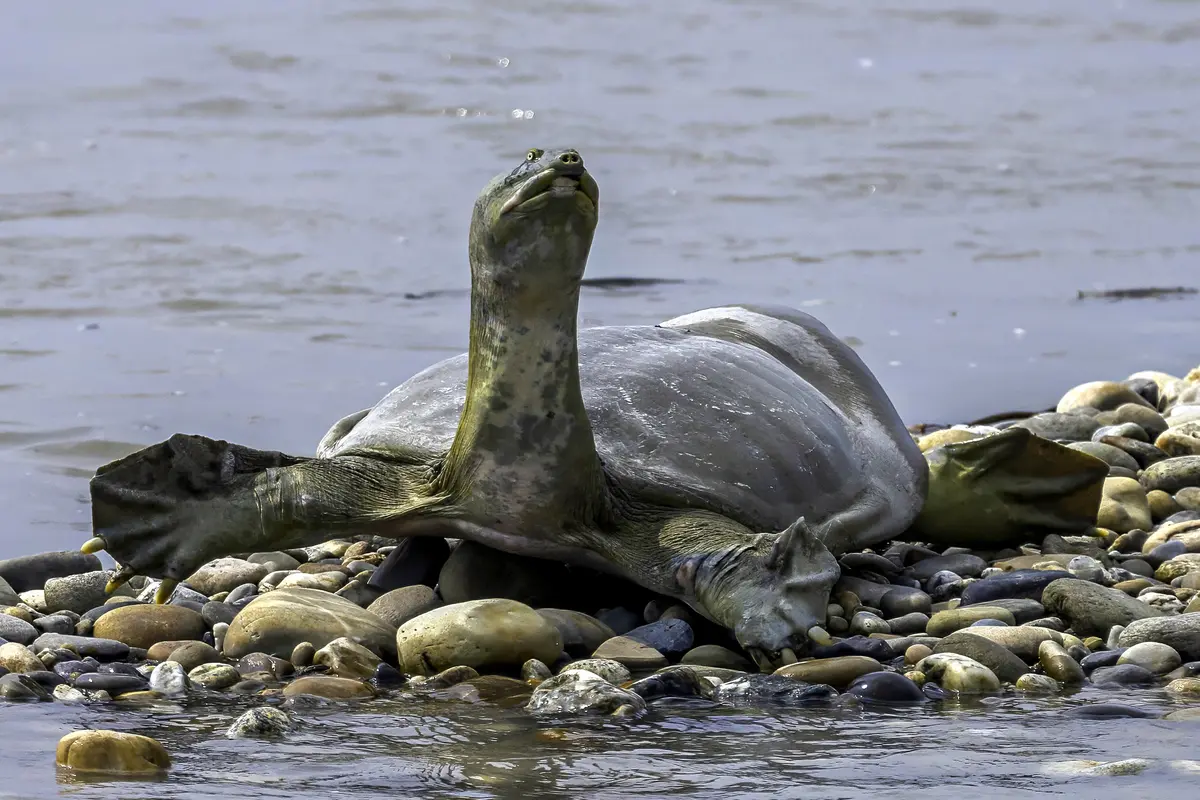
The Ganges soft‑shell turtle (Nilssonia gangetica) is one of the world’s largest freshwater turtles. It has a round to oval, olive‑green carapace with a yellow border and a long neck ending in a tube‑like snout. The species is omnivorous—feeding on molluscs, fish, insects, amphibians, aquatic plants and even carrion. It prefers deep rivers, streams, canals, lakes and ponds with sandy or muddy bottoms and is distributed across the Indian subcontinent from Afghanistan through India, Bangladesh and Pakistan.
Morphology and Behaviour
- Physical features – The carapace is leathery and streamlined; the head is narrow with a tubular snout adapted for breathing while submerged. These adaptations allow the turtle to remain hidden under sediment while extending its snout for air.
- Ecology – Ganges soft‑shell turtles are mostly nocturnal and spend much of their time buried in soft riverbeds. Females are larger than males and lay eggs on sandbanks during the warm season.
- Cultural importance – In parts of Odisha, temple ponds house these turtles, and they have been protected through religious practices.
Threats and Conservation Efforts
- Habitat alteration – Dams, sand mining, pollution and river‑front development have degraded nesting beaches and reduced water quality.
- Over‑exploitation – Illegal hunting for meat and the pet trade continues despite legal protection.
- Legal status – The species is listed as Endangered on the IUCN Red List and is included in Schedule I of India’s Wildlife Protection Act (1972), offering the highest level of protection.
- Satellites for conservation – Satellite tagging allows scientists to track long‑distance movements and identify critical habitats. Data from Kaziranga will help design protected areas and control threats along migratory routes.
Conclusion
The satellite‑tagging initiative marks a significant step in conserving the Ganges soft‑shell turtle. Understanding its movement patterns and habitat requirements will enable targeted conservation actions such as protecting nesting beaches and restoring riverine habitats. Ensuring community involvement, enforcing anti‑poaching laws and reducing habitat degradation are crucial to securing the future of this ancient freshwater species.