Why in news?
On 11 May 2026 a wild gaur (Indian bison) that had roamed through inhabited areas of Kannur district in Kerala was tranquillised and relocated by the Forest Department. Officials used dart guns to capture the animal in Pinarayi and transported it safely to the Tholpetty Wildlife Sanctuary in Wayanad. Residents had been living in fear for days because the large animal had damaged crops and property, so the relocation brought relief to the community and ensured the animal’s welfare.
Background
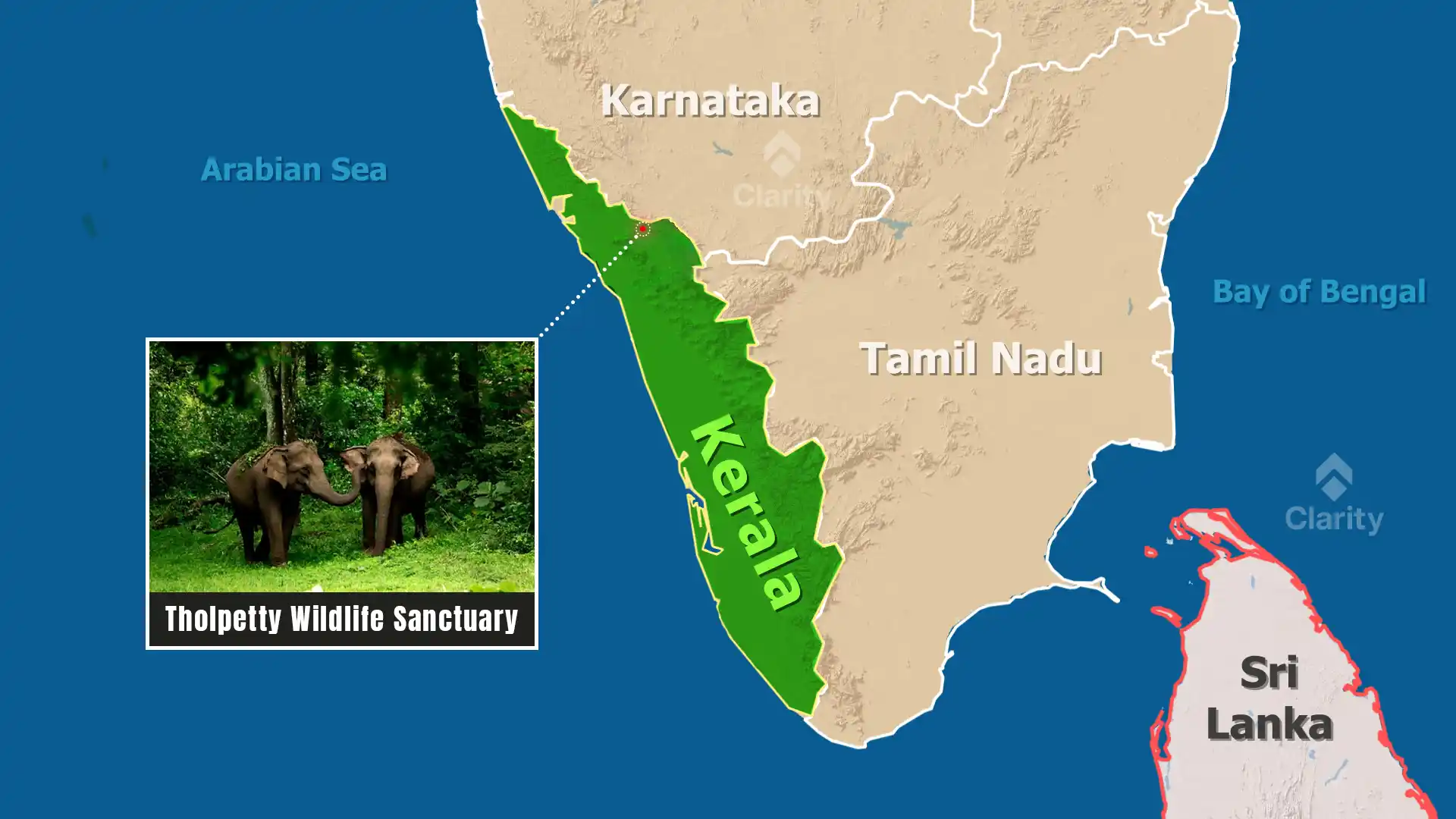
Tholpetty Wildlife Sanctuary forms part of the Wayanad Wildlife Sanctuary and the Nilgiri Biosphere Reserve in northern Kerala. Located about 16 kilometres from the town of Mananthavady, the sanctuary sits on the border with Karnataka and covers a mosaic of moist deciduous forests and plantations. It is home to elephants, tigers, leopards, gaurs, sambar deer and numerous smaller mammals. Birdwatchers visit to see species such as the Malabar grey hornbill, crested serpent eagle and over 300 other birds. The Kerala government organises regulated jeep safaris and nature walks to showcase the region’s biodiversity while limiting human impact.
Key points
- Rescue operation: The gaur had wandered from its forest habitat into villages in Pinarayi, Dharmadam and nearby areas. A team of forest officials and veterinarians tracked the animal and used tranquiliser darts to subdue it before loading it onto a specially designed vehicle.
- Safe release: Once transported to Tholpetty, the gaur was monitored until it recovered from sedation and then released into suitable habitat. This method avoids conflict and prevents injury to both people and wildlife.
- Biodiversity hotspot: Tholpetty is part of the larger Wayanad Wildlife Sanctuary, itself a component of the Nilgiri Biosphere Reserve. The protected area harbours tigers, leopards, elephants, gaurs, sloth bears and wild dogs. It also supports unique flora and serves as an important corridor linking forest tracts in Kerala, Karnataka and Tamil Nadu.
- Eco‑tourism and conservation: The forest department regulates visitor activities to balance tourism with conservation. Local communities are involved in managing safaris, which generates income and encourages stewardship of natural resources.