

Why in news?
Wildlife officers and conservationists released 31 gharial hatchlings into the Gandak River near Bagaha in Bihar during the 2026 breeding season. The event was celebrated as a sign of success for ongoing efforts to revive populations of this critically endangered crocodilian.
Background
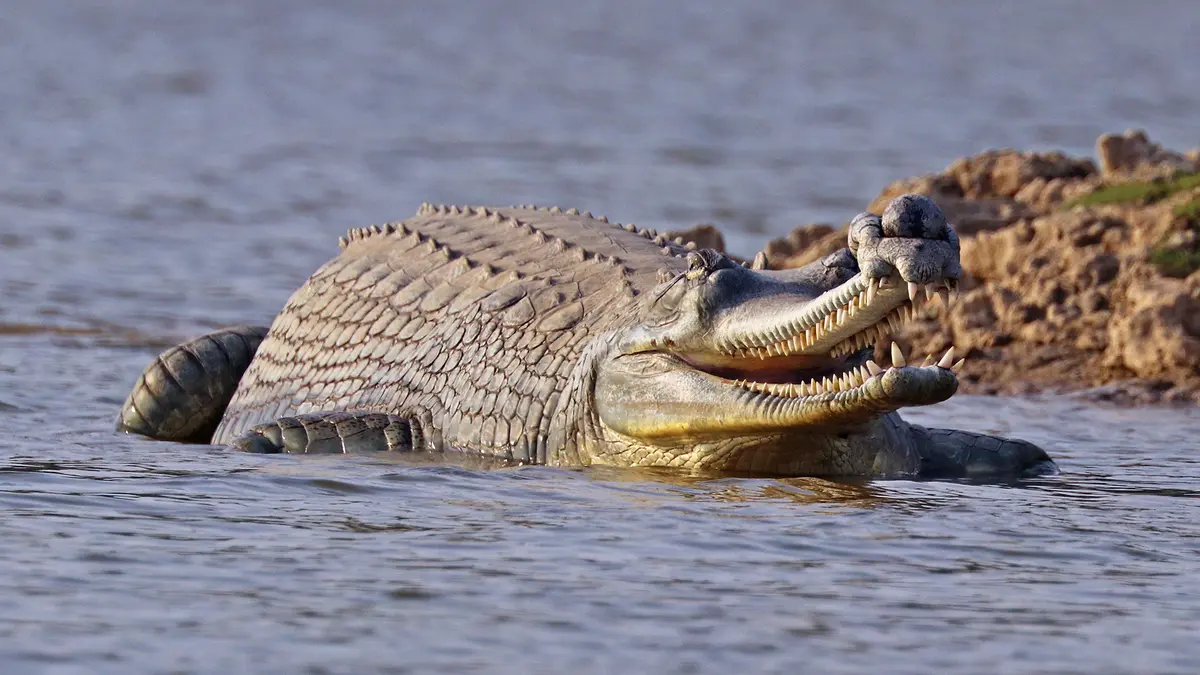
Gharials (Gavialis gangeticus) are long‑snouted fish‑eating crocodiles found in the Indian subcontinent. They are easily recognized by the bulbous growth on the snouts of mature males and their narrow jaws, which help them catch fish. Gharials were once widespread in northern rivers but came close to extinction in the twentieth century due to habitat loss, pollution, poaching and entrapment in fishing nets. By the early 2000s fewer than 200 adults survived in India and Nepal.
Recovery efforts and recent success
- Nesting protection: The Bihar Forest Department, Wildlife Institute of India and conservation groups protect nests along the Gandak River by fencing off breeding sites and reducing human disturbance. This has allowed gharials to lay eggs naturally in sandbanks.
- Population rebound: The gharial population in the Gandak has risen from around 54 in 2015 to 372 in the 2026 survey. Gharials of all age classes now inhabit the river, making it one of the species’ most important strongholds.
- Indicator species: Because gharials feed mainly on fish, their presence indicates clean water and healthy fish populations. Local communities benefit from improved fisheries and ecotourism when rivers are restored.
- Continued challenges: Although numbers are rising, gharials still face threats from sand mining, dam construction and accidental entanglement in fishing nets. Conservationists stress that public awareness and community involvement are essential for long‑term success.
Conclusion
The release of gharial hatchlings in the Gandak River demonstrates that targeted conservation strategies can bring species back from the brink of extinction. Sustained protection of nesting sites, pollution control and cooperation with local fishing communities will help secure a future for these unique reptiles and the rivers they depend on.