
Why in news?
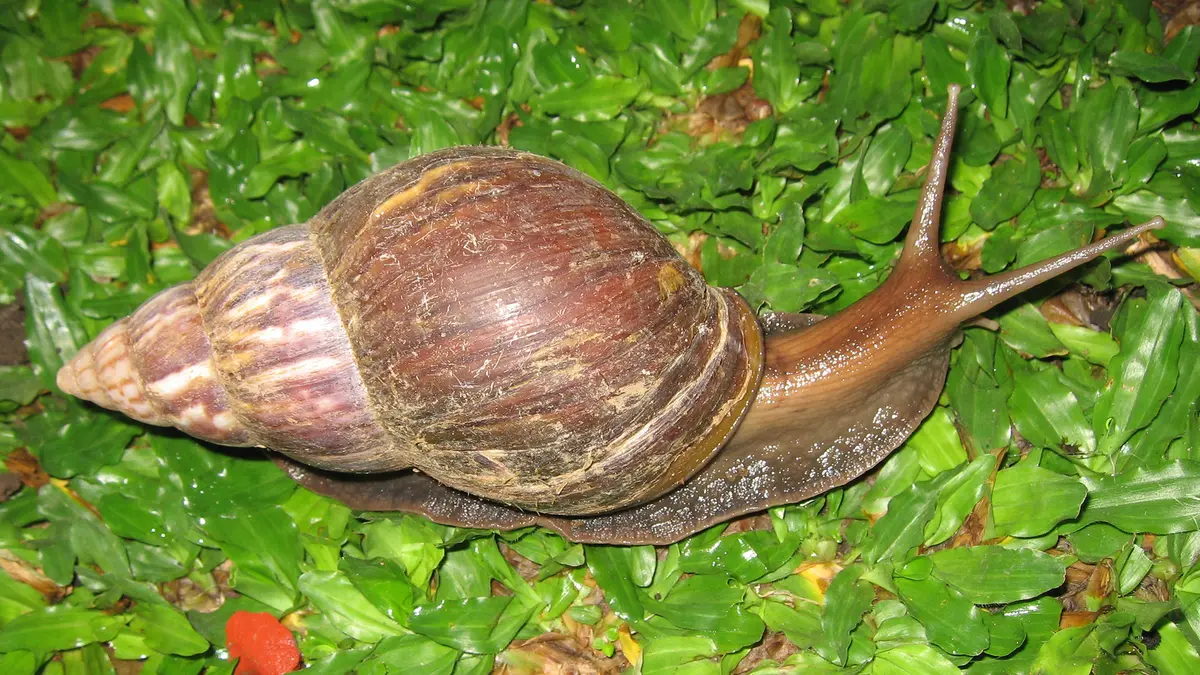
Farmers in Andhra Pradesh and Kerala have reported severe infestations of the Giant African Snail. The invasive species has damaged horticultural crops such as papaya, guava and chrysanthemum and triggered public health concerns. News reports describe how communities are struggling to control the rapidly multiplying pest.
Background
The Giant African Snail (Lissachatina fulica) is native to East Africa but has spread to many tropical regions. It is listed among the world’s 100 worst invasive alien species. In India the snail first appeared in the Andaman Islands around the 1840s and later established populations on the mainland. It feeds on a wide range of plants, can survive harsh conditions and has few natural predators. Each adult lays up to a thousand eggs per year, allowing rapid population explosions.
Recent observations
- In Parvathipuram‑Manyam district of Andhra Pradesh the snail invaded orchards after farmers imported areca nut saplings from Kerala. Yields of papaya, guava and chrysanthemum were badly affected.
- Farmers initially mistook the snails for harmless garden snails and allowed them to multiply. Numbers exploded as the moist environment and absence of predators favoured breeding.
- Locals used salt, cabbage leaves, hand picking and metaldehyde pellets to control the outbreak. Agriculture officers advised trapping snails with jaggery and copper sulphate and disposing of collected snails safely.
- The snails can carry a parasitic worm that causes eosinophilic meningitis in humans. Kerala authorities launched a One Health campaign in 2023 involving public health, agriculture and wildlife departments to curb infestations.
- Experts stress community participation and regular sanitation to prevent future outbreaks, as chemical control alone cannot eradicate the pest.
Conclusion
The Giant African Snail illustrates how invasive species threaten agriculture and public health. Integrated pest management that combines manual removal, habitat sanitation and public awareness is essential to protect crops and human health from this resilient mollusc.