

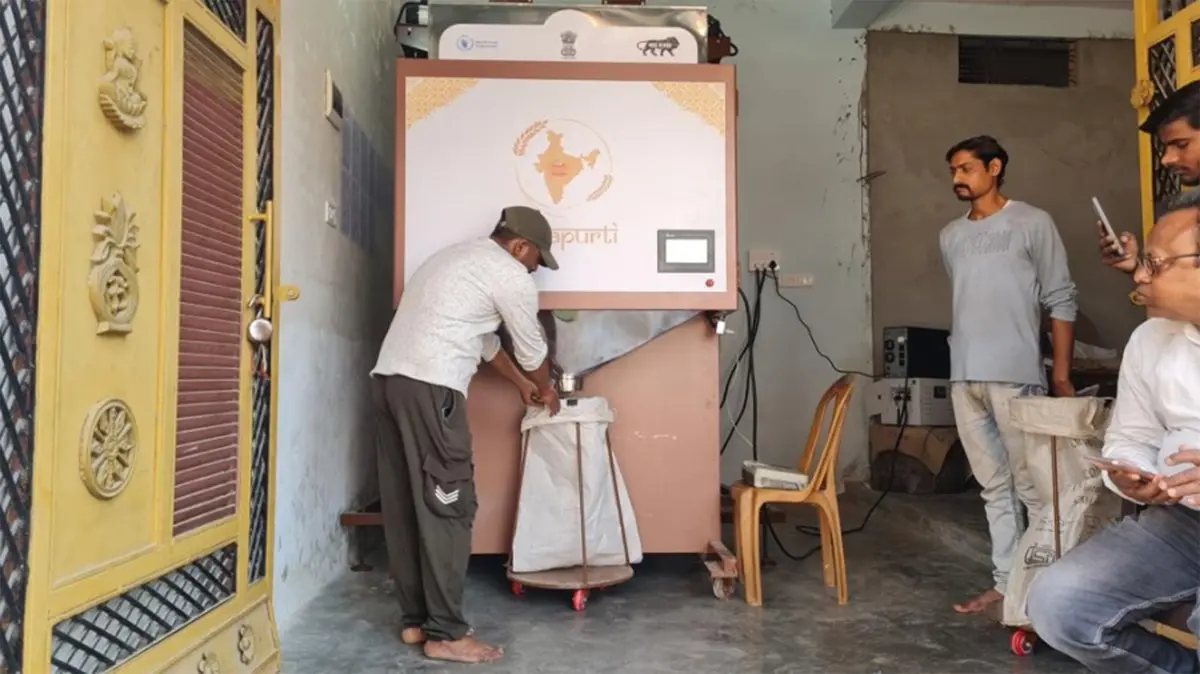
Why in news?
The Bihar government recently approved installation of Grain ATM machines under the Public Distribution System (PDS). These vending machines, called Annapurti, dispense rice or wheat directly to beneficiaries using their ration cards. Pilots in Odisha and Bihar have shown that a single machine can dispense 50 kilograms of grain within five minutes, reducing queues and improving transparency. The move has sparked interest in expanding the technology to other states.
Background
Annapurti machines were developed by the United Nations World Food Programme (WFP) to improve last‑mile food delivery. Traditional PDS outlets often suffer from long lines, limited working hours and manual errors in weighing. The machines, which resemble bank ATMs, operate 24×7 and are connected to the PDS database. Beneficiaries authenticate themselves using biometric identifiers or ration cards, and the machine dispenses the allocated grain while updating the electronic record.
Features
- Fast dispensing: Each Annapurti machine dispenses up to 50 kg of grain in about five minutes. The error margin in weighing is less than 0.01 %, ensuring fair allocation.
- Round‑the‑clock operation: Because the machines are automated, beneficiaries can collect their entitlements at any time of day. This flexibility reduces crowding and waiting time by roughly 70 %.
- Energy efficient and solar‑ready: Annapurti devices consume only 0.6 watts per hour and can be equipped with solar panels for off‑grid locations.
- Connectivity: Each unit is connected to the internet to verify beneficiaries against the PDS database and record transactions.
- Modular design: Machines are assembled from prefabricated modules for quick installation and easy maintenance.
Benefits
- Transparency: Automated weighing and digital records minimise pilferage and ensure that beneficiaries receive their full entitlement.
- Convenience: 24×7 access saves time and eliminates the need for beneficiaries to queue during specific hours.
- Gender inclusive: Women, who often face mobility constraints, can collect grain at a convenient time without missing work or household duties.
- Scalability: The WFP plans to scale up Annapurti machines across India; one pilot phase distributed 293 tonnes of wheat and rice and is expected to reach 8 million people as the project expands.
Source: IE