
Why in news?
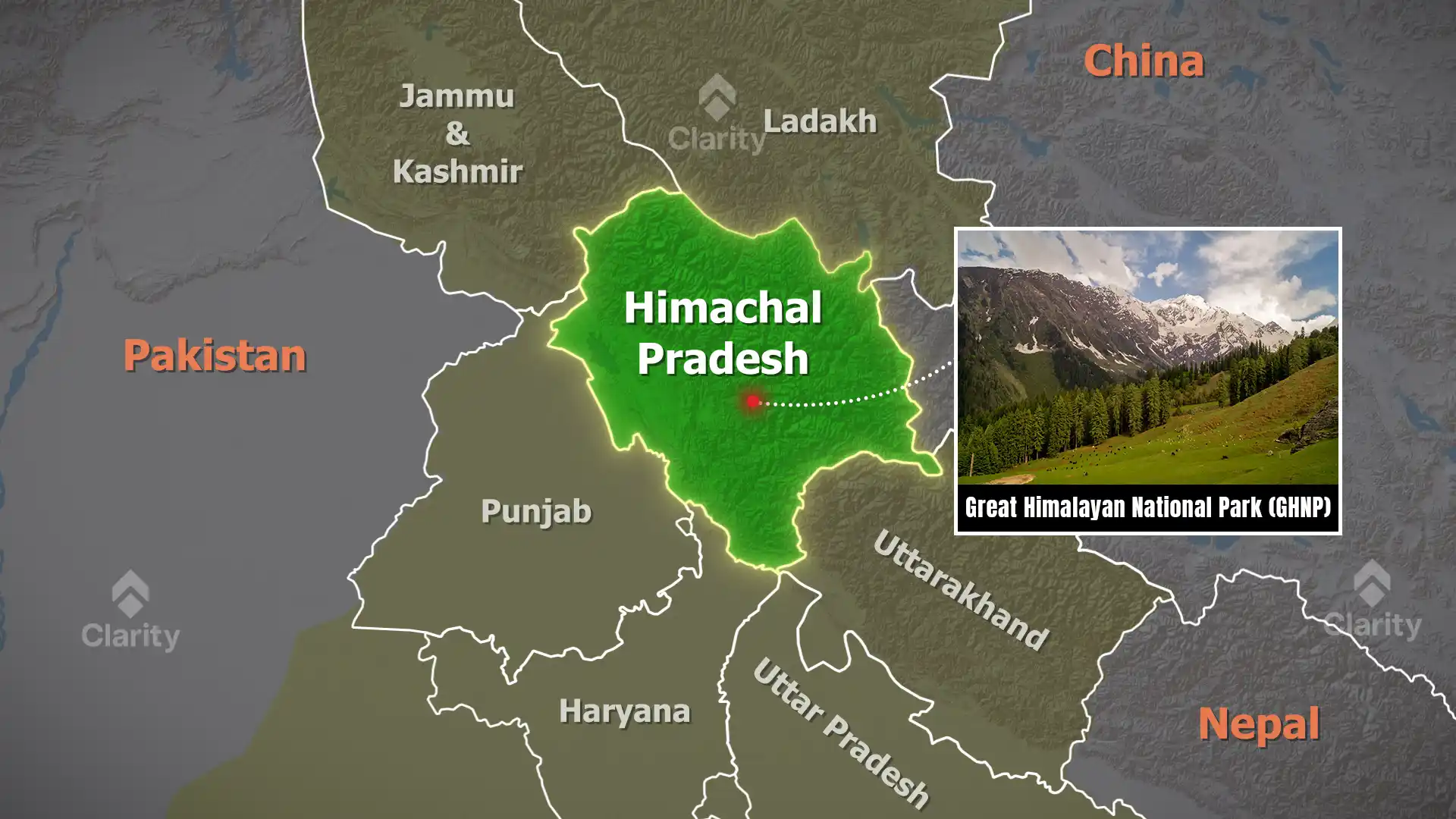
The Great Himalayan National Park, a UNESCO World Heritage Site in Himachal Pradesh, has been in the news for its conservation efforts and biodiversity studies. Authorities continue to balance ecological protection with sustainable livelihoods for local communities.
Background
Established in 1984 and notified in 1999, GHNP covers about 90,540 hectares in the western Himalayas. It spans elevations from 1,500 metres to over 6,000 metres, encompassing deep river valleys, alpine meadows and snow‑clad peaks. Four major rivers—Jiwa Nal, Sainj, Tirthan and Parvati—originate within the park and feed into the Beas and Indus basins. Surrounding the park is a 26,560‑hectare buffer zone (eco‑zone) where villages practise eco‑friendly livelihoods.
Biodiversity
- Flora: GHNP hosts more than 800 species of vascular plants, including conifers, rhododendrons and alpine herbs. Twenty‑five distinct forest types span the transition from moist temperate forests to alpine scrubs.
- Fauna: The park shelters around 31 mammal species and over 200 bird species. Notable animals include the endangered western tragopan, Himalayan tahr, snow leopard, musk deer and Himalayan brown bear. Amphibians, reptiles and diverse insect life add to its richness.
- Biogeographic significance: GHNP lies at the meeting point of the Palearctic and Indomalayan realms and receives both monsoon and western disturbance influences. This combination creates varied habitats and high endemism.
Conservation and community involvement
- Protection: The park is governed by the Wildlife Protection Act 1972. Grazing and resource extraction are prohibited within the core area. Hydropower development and tourism are regulated to minimise ecological impact.
- Eco‑zone: About 160 villages lie in the buffer zone. Residents are encouraged to participate in eco‑tourism, handicraft production and medicinal plant cultivation. Programmes aim to reduce dependence on the park’s resources while improving livelihoods.
- World Heritage status: UNESCO recognised GHNP for its outstanding universal value in 2014. Ongoing management plans focus on habitat conservation, scientific research and community education.
Significance
GHNP protects high‑altitude ecosystems that are vulnerable to climate change. Its rivers provide water to millions downstream, and its biodiversity makes it an important reservoir of genetic resources. Conservation efforts here offer lessons for balancing ecological integrity with human well‑being.

