
Why in news?
Birdwatchers recorded a Greater Sand Plover at Chandu village in Gurugram. The coastal migrant is uncommon at inland Haryana sites. This was the region’s fifth documented record. Repeated sightings suggest that Chandu may provide a useful migration stop.
Background
The Greater Sand Plover is a medium-sized migratory wader, and its current scientific name is Anarhynchus leschenaultii.
Many older books use Charadrius leschenaultii, and this change reflects updated understanding of plover relationships.
The bird belongs to the family Charadriidae, and this family includes plovers and related shorebirds.
A wader feeds on wet ground or in shallow water. Waders usually have legs and bills suited to searching exposed sediment.
How can the bird be identified?
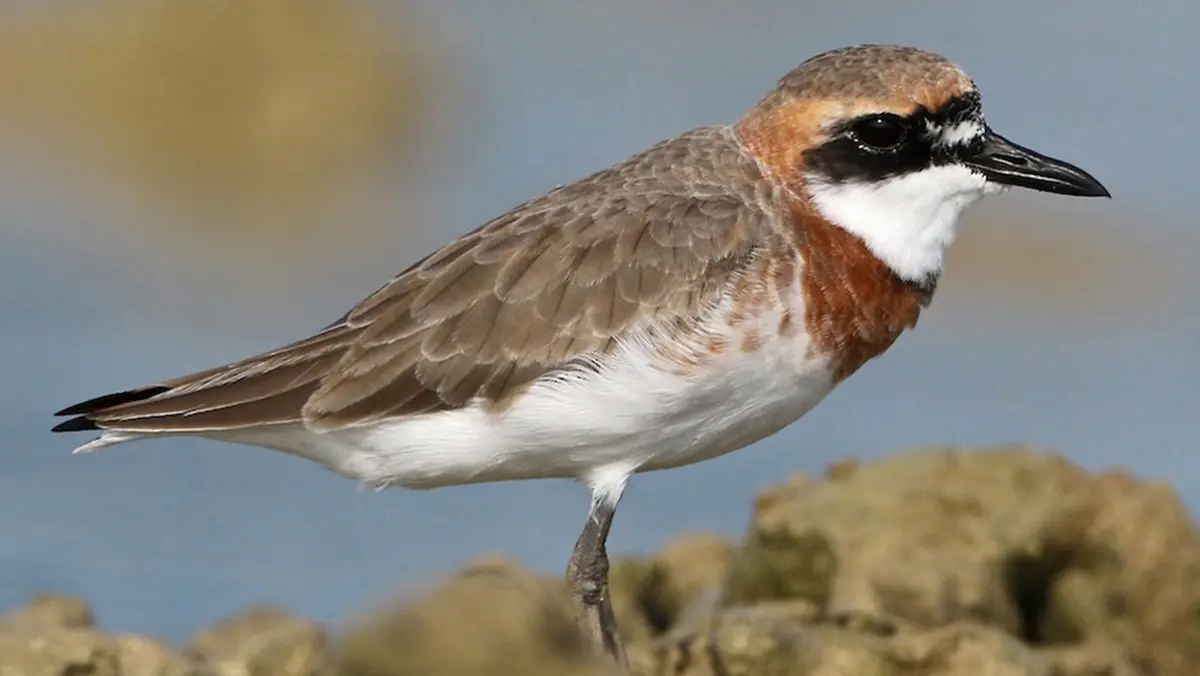
The Greater Sand Plover has a compact body and relatively long legs. Its bill is heavy and longer than smaller sand plovers’ bills.
A breeding male develops a dark face mask, and it also shows orange colouring across the forehead, neck and breast.
Outside breeding season, both sexes appear sandy brown above and white below. This quiet colour provides camouflage on mud and sand.
The bird often runs several steps and then pauses, and it uses sight to pick prey from the ground.
How does it differ from smaller sand plovers?
- The Greater Sand Plover is generally larger.
- Its bill looks longer, deeper and heavier.
- Its legs often appear relatively long and pale.
- Its head can look more elongated and substantial.
- Distance, light and feather condition can confuse identification.
Taxonomists recently revised several smaller sand plover groups, and bird names may therefore differ between field guides and newer checklists.
Taxonomy note: The accepted genus is now Anarhynchus, and many older sources place the species under Charadrius.
Where does it live during the year?
The species breeds across dry landscapes from western Asia through Central Asia, and some breeding areas occur at high elevations.
After breeding, birds migrate southwards, and they winter along coasts from eastern Africa through South Asia and Australasia.
Indian wintering habitats include tidal flats, sandy shores, estuaries and salt pans, and the species is much less common inland.
Its diet includes insects, crustaceans and worms, and feeding areas must expose enough soft sediment during low water.
What happened at Chandu?
Birdwatchers Anil Gandas and Gaurav Yadav recorded the bird during July 2026, and Chandu lies in Gurugram district of Haryana.
Documented Chandu records also occurred during 2021, 2023 and 2025, and haryana’s first documented record came from Sirsa in 2016.
The 2026 observation therefore became the fifth documented regional record. It was another inland appearance of a mainly coastal visitor.
Repeated records can indicate suitable feeding or resting conditions, but they do not establish that the bird breeds at Chandu.
Do not overstate: The sighting suggests a migration stop. One bird does not prove a resident population or breeding site.
Why might a coastal bird appear inland?
Migrants do not always follow a narrow coastal line, and weather and wind can shift their routes.
Inland wetlands can offer exposed mud, shallow water and abundant prey. Birds may rest there before continuing a longer journey.
Young or exhausted birds may also wander from usual routes. Repeated sightings deserve monitoring before researchers infer a stable pattern.
What is its conservation status?
The Greater Sand Plover is globally listed as Least Concern. This category indicates a relatively low measured global extinction risk.
Least Concern does not guarantee safety at every site, and coastal development and disturbance can still remove important feeding grounds.
A species can be globally widespread yet locally rare, and local rarity and global threat category describe different conditions.
Why do inland stopover sites matter?
Migration requires a chain of safe resting and feeding places, and a bird may fail if one important link disappears.
Temporary wetlands can therefore support birds far beyond their boundaries. Their value may become visible only during short migration periods.
- Regular surveys should cover different seasons and water levels.
- Shallow edges and open mud should remain undisturbed.
- Wastewater and solid waste should not pollute feeding areas.
- Bird records should include photographs and precise dates.
- Nearby construction should consider seasonal bird movement.
Conclusion
The Chandu record shows how inland habitats support long journeys, and repeated monitoring can establish the site’s true migration value.