
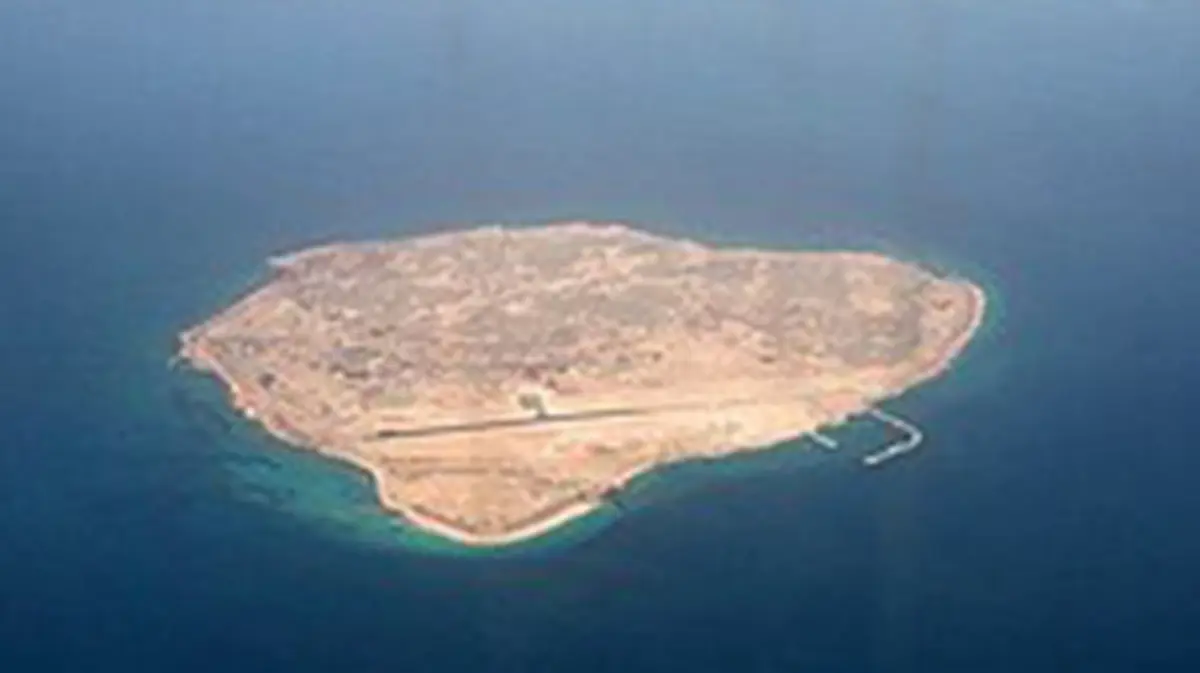
Why in news?
United States forces struck military targets on Greater Tunb Island. The operation occurred on 15 July 2026. Iran controls the island, while the United Arab Emirates claims sovereignty. Its location near the Strait of Hormuz gives it strategic importance.
Background
Greater Tunb is a small island in the Persian Gulf, and it lies close to the Strait of Hormuz.
The island covers roughly ten square kilometres, and Iran has exercised effective control over it since November 1971.
The United Arab Emirates disputes Iranian sovereignty, and it also claims Lesser Tunb and Abu Musa.
Two different ideas: Effective control describes present administration. Sovereignty concerns the disputed legal ownership of the island.
Where is the island located?
Greater Tunb lies near the Persian Gulf’s eastern entrance, and it stands west of the Strait of Hormuz.
The Iranian mainland lies to its north, and Ras al-Khaimah, an emirate of the United Arab Emirates, lies southwest.
Nearby waters connect Gulf oil ports with the Gulf of Oman. Ships then enter the Arabian Sea and Indian Ocean.
How did the dispute develop?
- Arab rulers and Persian authorities advanced competing historical claims over the islands.
- Britain protected several Gulf sheikhdoms during the nineteenth and twentieth centuries.
- Britain announced its withdrawal from the Gulf by the end of 1971.
- Iran took control of Greater Tunb and Lesser Tunb during November 1971.
- Iranian forces encountered resistance on Greater Tunb, and several people died.
- The United Arab Emirates formed on 2 December 1971.
- The new federation continued Ras al-Khaimah’s claim over both Tunb islands.
- Diplomatic exchanges have not produced a mutually accepted settlement.
Abu Musa followed a different arrangement, and Iran and Sharjah reached a memorandum shortly before Britain’s withdrawal.
That memorandum divided certain administrative responsibilities, and it did not finally settle sovereignty over Abu Musa.
No comparable agreement governs Greater Tunb, and Iran rejects negotiations that question its sovereignty over the three islands.
What happened on 15 July 2026?
United States Central Command announced a ninety-minute operation against Iranian military facilities. It reported strikes on defence and missile sites.
The operation occurred during renewed regional conflict and a naval blockade. These conditions increased fears about energy movement through the strait.
Initial claims came from the attacking military command, and independent confirmation of every claimed outcome may require additional evidence.
Why is the Strait of Hormuz important?
The strait is the only sea entrance to the Persian Gulf. Iran lies north, while Oman and the United Arab Emirates lie south.
It is about thirty-three kilometres wide at its narrowest point, and designated shipping lanes occupy only part of this space.
Roughly one-fifth of globally consumed petroleum liquids usually passes through it. Large volumes of liquefied natural gas also use this route.
Therefore, insecurity can raise freight, insurance and fuel prices, and even a threatened disruption can affect global markets.
Map point: The Strait of Hormuz joins the Persian Gulf with the Gulf of Oman.
How does Greater Tunb provide strategic value?
- Radar and observation systems can monitor nearby sea and air movement.
- Missiles placed there can threaten ships using nearby routes.
- An airstrip supports surveillance, transport and military deployments.
- The island can strengthen Iran’s layered defence around the strait.
- Its capture or disablement could weaken that defensive network.
However, island control does not create an unlimited legal right to close the strait. International navigation law remains relevant.
Why does the dispute matter for India?
India imports substantial energy from the Gulf, and Indian trade and migrant travel also depend upon stable regional sea routes.
A prolonged disruption can raise import costs and shipping delays. It may also affect inflation and the current account balance.
India maintains relations with Iran and Gulf Arab states, and it therefore supports dialogue, stability and freedom of navigation.
Conclusion
Greater Tunb combines a sovereignty dispute with exceptional strategic geography, and conflict there can quickly influence global energy security.