
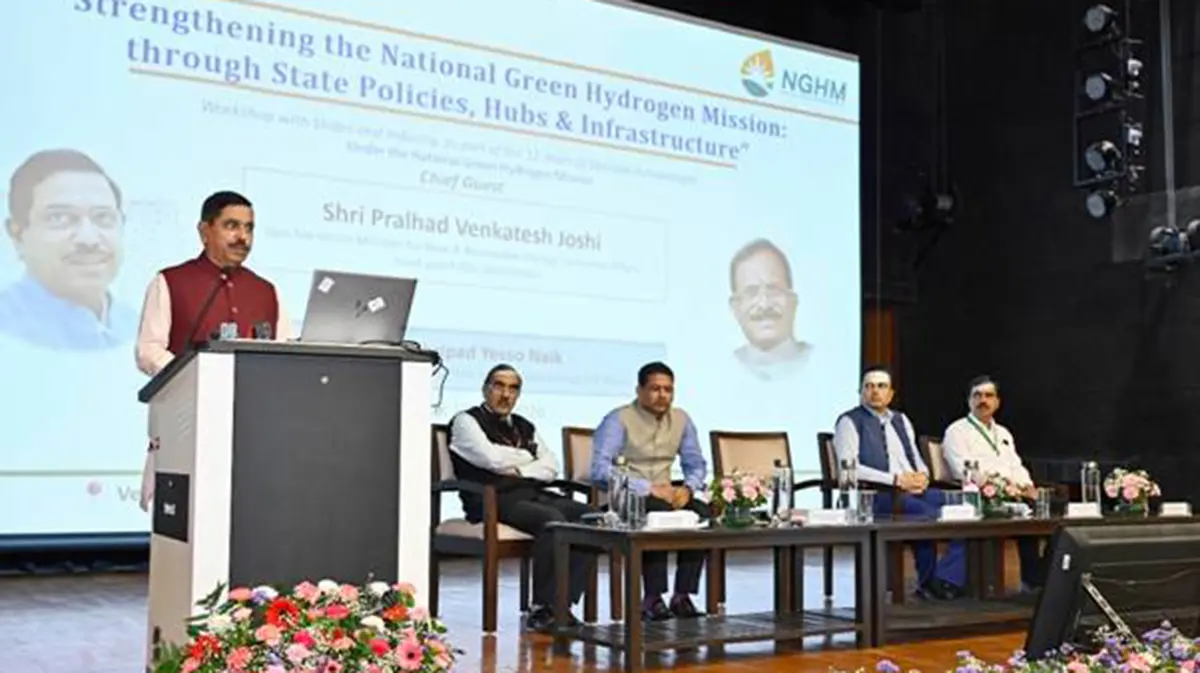
Why in news?
The Ministry of New and Renewable Energy launched India’s Green Hydrogen Certification Portal on 17 June 2026. The portal, part of the Green Hydrogen Certification Scheme (GHCS), is intended to ensure that hydrogen produced and sold as “green” meets verified environmental standards【750810520827086†L19-L28】.
Background
India’s National Green Hydrogen Mission, announced in 2023, aims to make the country a global hub for producing and exporting green hydrogen. To build trust in the nascent market, the government has introduced a certification system that verifies the carbon footprint of hydrogen production. Hydrogen produced from renewable energy via electrolysis or biomass conversion can qualify as green if its non‑biogenic greenhouse gas emissions do not exceed 2 kg of CO₂ equivalent per kilogram of hydrogen, averaged over twelve months.
Key features of the certification scheme
- Certification types: Four certificates are issued: Concept, Facility‑Level, Provisional and Final. Concept and Facility‑Level certificates assess design and readiness; Provisional and Final certificates evaluate actual emissions during production【362999595843341†L664-L669】.
- Independent verification: Producers must engage Accredited Carbon Verification agencies recognised by the Bureau of Energy Efficiency to audit their emissions【362999595843341†L662-L663】.
- Eligible pathways: Only hydrogen produced via electrolysis using renewable electricity or through biomass conversion is eligible for certification【362999595843341†L651-L662】.
- Carbon credits: Certified green hydrogen producers can access carbon credits under India’s Carbon Credit Trading Scheme, provided they meet additional requirements【362999595843341†L670-L671】.
- Policy momentum: The Union Minister reported that several states have introduced or integrated green hydrogen policies and that incentives have been awarded to companies for electrolyser manufacturing and hydrogen supply contracts【750810520827086†L21-L49】【750810520827086†L69-L72】.
Significance
- Market integrity: Certification ensures transparency and prevents greenwashing, building confidence for investors and consumers.
- Emission reduction: By setting clear emission thresholds, the scheme supports India’s decarbonisation goals and encourages adoption of renewable energy.
- Industrial growth: Incentives for electrolyser manufacturing and hydrogen usage promise jobs and technological advancement in clean energy sectors.
Conclusion
The Green Hydrogen Certification Scheme positions India at the forefront of clean‑fuel governance. By linking certification to emission standards and carbon credits, the government aims to cultivate a transparent market and accelerate investment in green hydrogen infrastructure.