

Why in news?
The Gulf of Oman has been mentioned in recent geopolitical discussions because of tensions around the Strait of Hormuz and the security of oil shipments. Understanding the gulf’s geography helps explain its strategic importance.
Geographical features
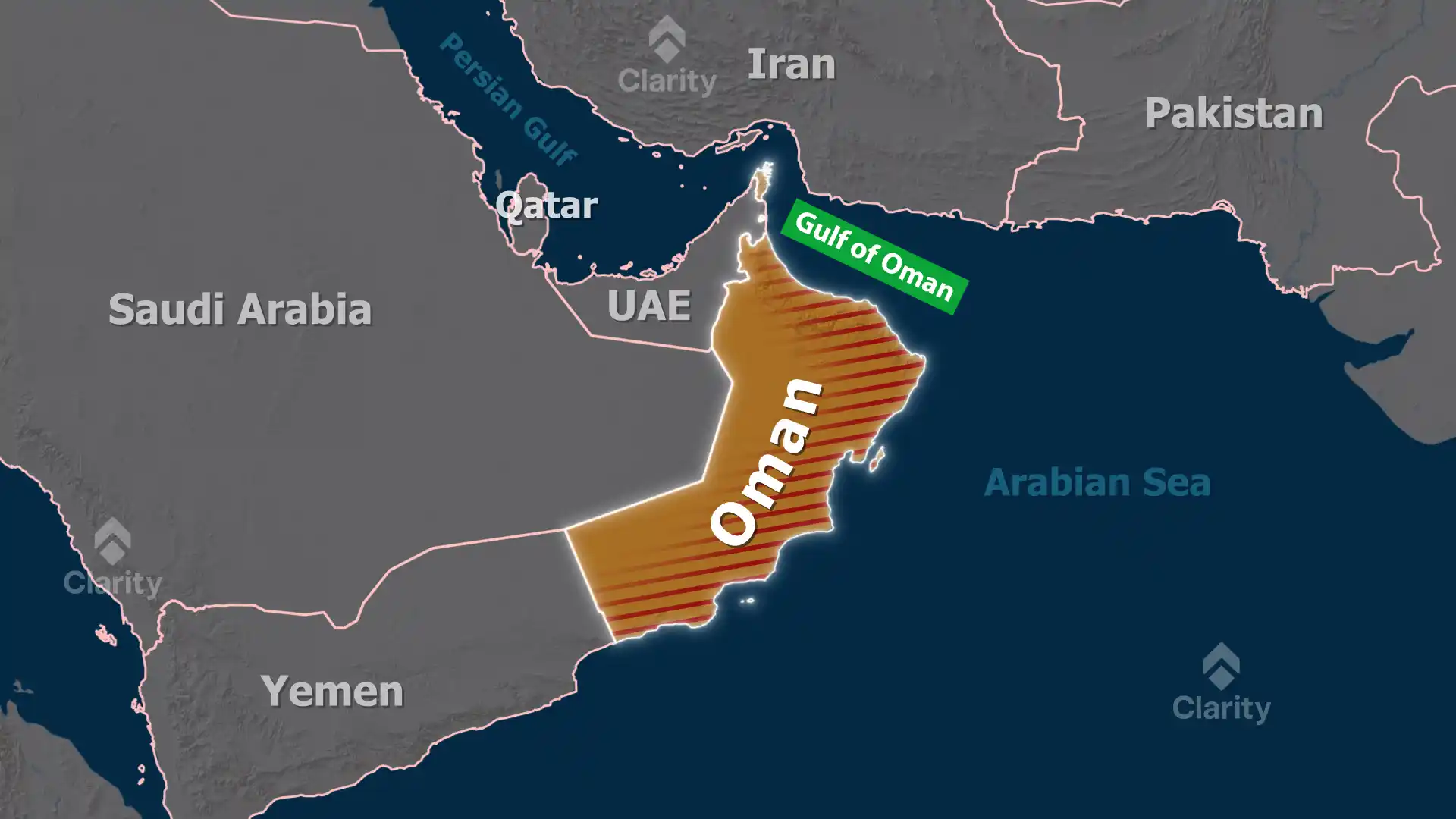
- Location: The Gulf of Oman is a north‑western arm of the Arabian Sea. It lies between Oman on the south and Iran on the north. The United Arab Emirates and Pakistan border its western end.
- Size: The gulf is about 320 km wide between Cape al‑Ḥadd in Oman and Gwadar Bay on the Pakistan–Iran border. It stretches roughly 560 km from the Arabian Sea in the southeast to the Strait of Hormuz in the northwest.
- Connection to Persian Gulf: The Gulf of Oman connects to the Persian Gulf via the narrow Strait of Hormuz, making it the only sea route from the Arabian Sea and Indian Ocean into the oil‑rich Persian Gulf.
- Ports: Important ports on its shores include Ṣuḥār, al‑Khābūrah, Muscat and Ṣūr in Oman and Jāsk and Bandar Beheshtī in Iran. On the UAE coast, Fujairah and Khor Fakkan serve as major commercial ports.
Strategic significance
- Energy lifeline: The gulf is a vital shipping lane for crude oil and liquefied natural gas. Most tankers carrying hydrocarbons from the Persian Gulf to world markets must pass through the Gulf of Oman before navigating the Strait of Hormuz. Any disruption can have global economic consequences.
- Military presence: Due to its strategic importance, navies from several countries regularly patrol the waters to deter piracy and ensure freedom of navigation. The United States, United Kingdom and other nations have operated joint maritime security missions in the region.
- Environmental concerns: Heavy shipping traffic and occasional oil spills pose risks to the gulf’s marine ecosystems. Pollution from urban runoff and industrial activity along the coast has affected fish populations and coral reefs.
Historical context
The Gulf of Oman has served as a key trade route for centuries. Traders from the Indian subcontinent, Persia and Arabia navigated its waters to exchange goods. During the Age of Discovery, European powers sought control of its ports. Today it remains a crucial maritime chokepoint in international trade.
Source: TH