

Why in news?
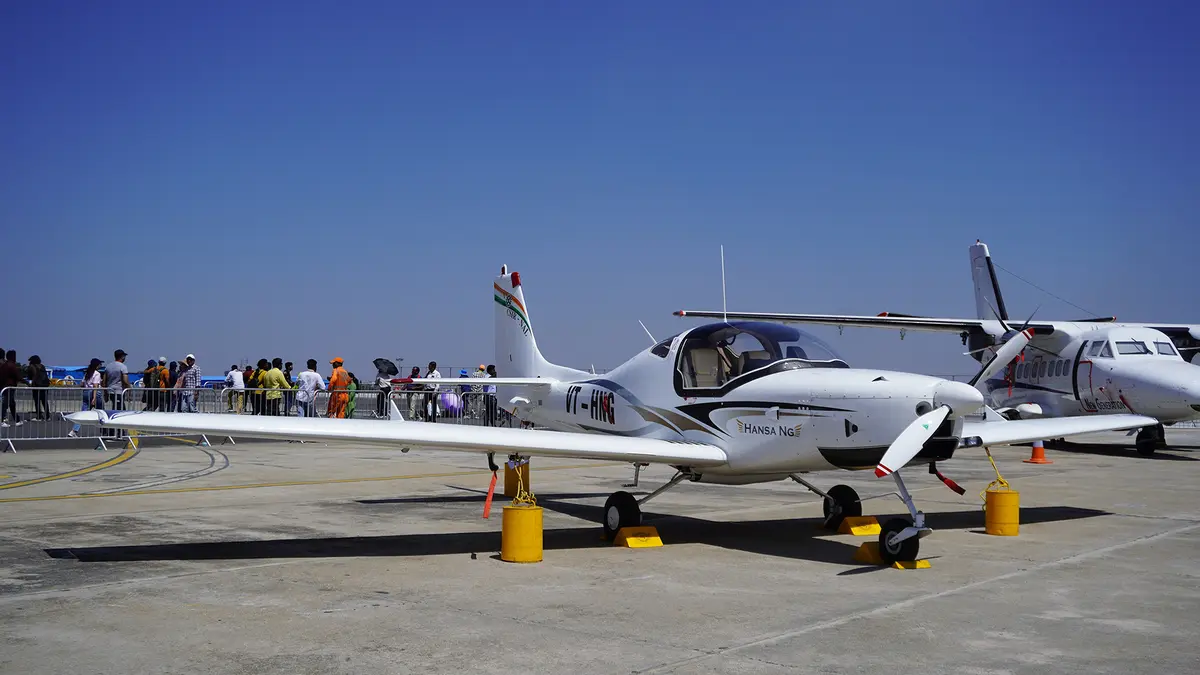
The Council of Scientific and Industrial Research’s National Aerospace Laboratories (CSIR‑NAL) has unveiled the production‑ready version of the Hansa‑3 New Generation (Hansa‑3 NG) trainer aircraft. The light two‑seater aircraft, designed for pilot training, was handed over to a private manufacturer for commercial production and is expected to boost India’s aviation training infrastructure.
Background
CSIR‑NAL developed the original Hansa‑3 trainer in the 1990s to provide an indigenous aircraft for basic pilot training. The aircraft is certified by the Directorate General of Civil Aviation (DGCA) and has been operated by flying clubs for decades. Recognising the need for modernised trainers, CSIR‑NAL upgraded the design with new avionics, improved aerodynamics and a more powerful engine, leading to the Hansa‑3 NG.
During an event in Bengaluru, Union Minister Jitendra Singh released the production version of Hansa‑3 NG and presided over a technology‑transfer agreement with Pioneer Clean Amps Pvt Ltd. Under this agreement, the company will set up a manufacturing facility to produce the aircraft commercially.
Main features
- Two‑seater layout: Hansa‑3 NG is a side‑by‑side two‑seat aircraft suitable for ab‑initio flight training leading up to a Private Pilot Licence (PPL) or Commercial Pilot Licence (CPL).
- Modern cockpit: The upgraded trainer uses a glass cockpit with digital flight displays and advanced avionics, improving situational awareness for trainee pilots.
- Efficient engine: A more powerful and fuel‑efficient engine provides better climb performance and endurance compared with the original Hansa‑3.
- Training aids: The aircraft is fitted with dual controls and safety features necessary for instructor supervision.
- Indigenous content: Most components are sourced domestically, supporting the Make in India and Aatmanirbhar Bharat initiatives.
Significance
- Boost to pilot training: India’s aviation sector faces a shortage of training aircraft. The Hansa‑3 NG will increase capacity at flying schools and reduce dependence on imported trainers.
- Industry collaboration: The transfer of technology to a private company demonstrates the growing partnership between research institutes and industry for commercialising home‑grown technology.
- Export potential: With competitive pricing and modern features, the aircraft could find markets in neighbouring countries seeking affordable training solutions.
Conclusion
The Hansa‑3 NG represents an important step in India’s effort to develop indigenous civil aviation products. As production commences, the aircraft will not only train the next generation of pilots but also showcase India’s capabilities in aerospace design and manufacturing.
Source: News on air