

Why in news?
A report by the Global Coral Reef Monitoring Network highlights a sharp decline in hard corals across the Caribbean. Average hard‑coral cover has fallen by nearly half since 1980 due to bleaching, disease and the loss of herbivorous species. This alarming trend underscores the vulnerability of coral reefs to rising sea temperatures and human‑induced stress.
Background
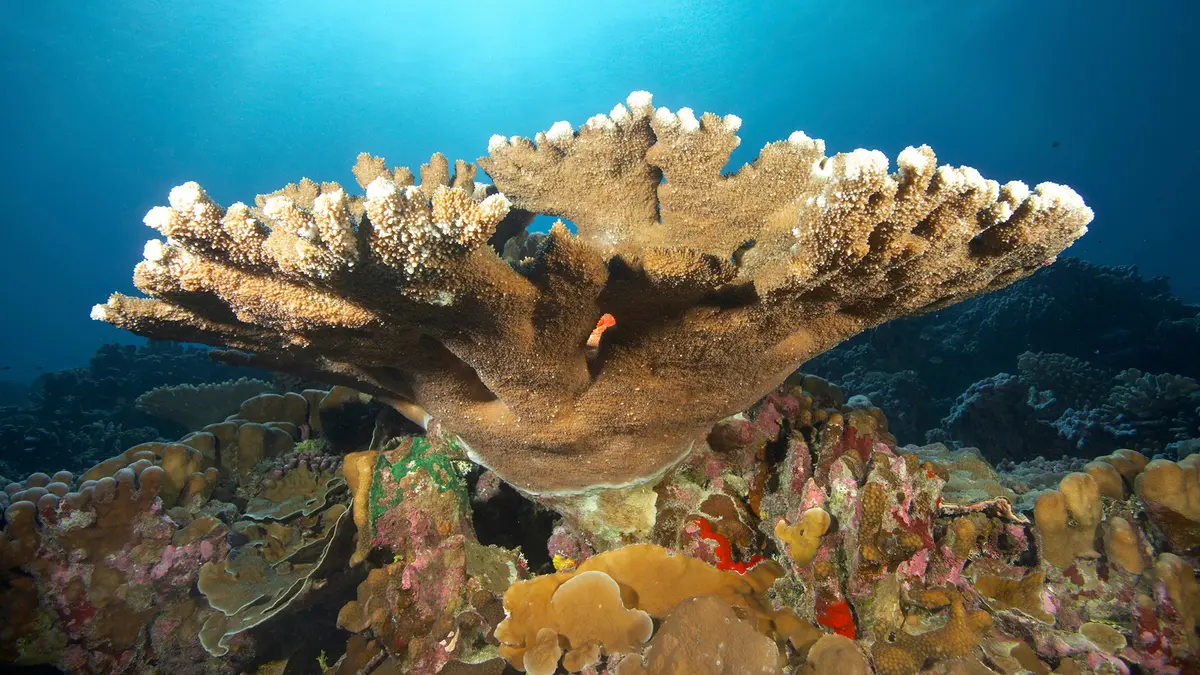
Hard corals—also called stony corals—are tiny marine animals that build rigid skeletons of calcium carbonate. Over centuries their colonies create the complex structures we know as coral reefs. In contrast, soft corals lack solid skeletons and do not form reefs. Despite occupying less than one percent of the ocean floor, reefs support about one‑third of all marine species, acting as nurseries for fish, protecting coastlines from storms and providing livelihoods through tourism and fisheries.
Biology of hard corals
- Colonial builders: Each hard‑coral colony consists of thousands of polyps—small, sac‑like animals with tentacles. Polyps secrete limestone skeletons that fuse together to form a reef.
- Symbiosis with algae: Corals harbour microscopic algae (zooxanthellae) in their tissues. The algae produce food through photosynthesis, while corals provide shelter and carbon dioxide. This partnership fuels the growth of reefs but makes corals sensitive to temperature changes.
- Slow growth: Hard corals grow only a few centimetres each year. Some reefs take thousands of years to form, making them especially vulnerable to rapid environmental change.
Threats
- Bleaching: When water gets too warm, corals expel their algae, losing colour and becoming “bleached.” Repeated bleaching events in 1998, 2005 and 2023–24 have devastated Caribbean reefs.
- Disease: The Stony Coral Tissue Loss Disease has spread across 30 countries, causing unprecedented mortality among Caribbean corals.
- Herbivore decline: The die‑off of key herbivores such as the Diadema sea urchin has allowed macroalgae to overgrow corals, blocking sunlight and smothering young colonies.
- Pollution and overfishing: Sedimentation, nutrient runoff and destructive fishing practices further stress coral ecosystems.
Why reefs matter
- Biodiversity hotspots: Reefs support countless species of fish, crustaceans, molluscs and other marine life.
- Coastal protection: Reef structures absorb wave energy, protecting shorelines from erosion and storms.
- Economic value: Tourism and fisheries associated with reefs provide income for millions of people worldwide.
Conclusion
The decline of hard corals in the Caribbean reflects broader challenges facing reefs globally. Reducing greenhouse‑gas emissions, improving water quality and protecting herbivores are essential steps to give reefs a chance to recover and continue sustaining marine life and human communities.
Source: Down To Earth