

Why in news?
During his Mann Ki Baat address on 28 June 2026, Prime Minister Narendra Modi praised the women of Assam’s “Hargila Army” for saving the endangered Greater Adjutant Stork, locally called Hargila. He noted how community efforts turned a bird once considered a bad omen into a symbol of pride.
Background
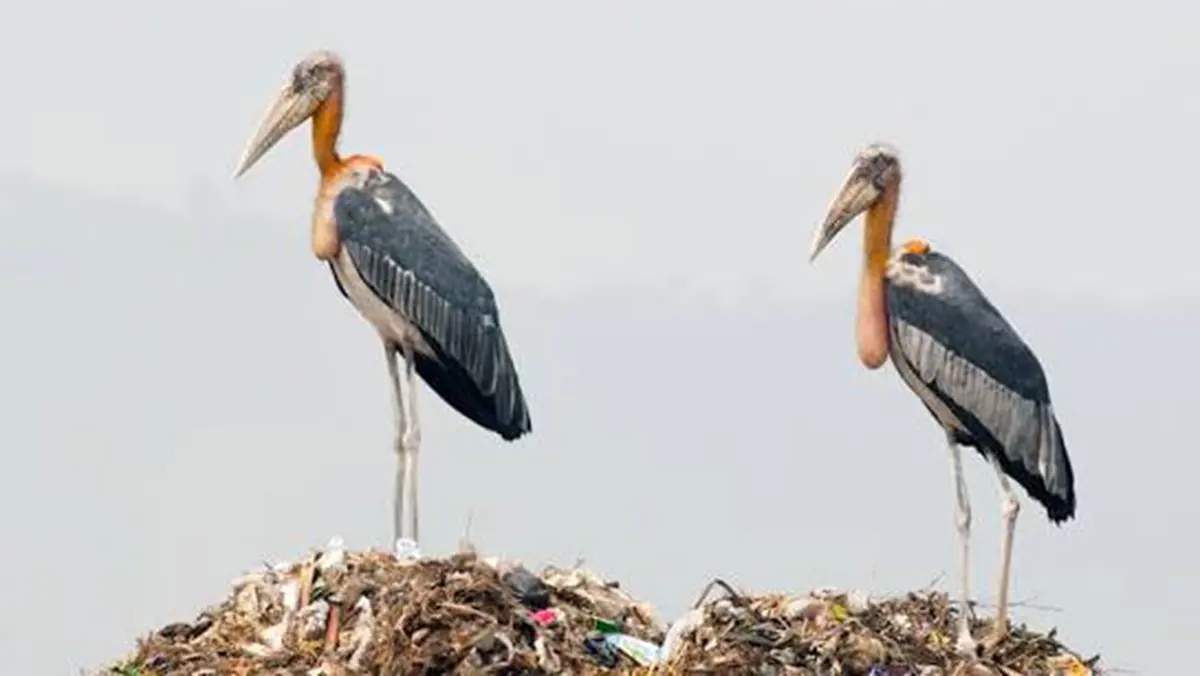
The Greater Adjutant (Leptoptilos dubius) is one of the world’s largest storks. Adults stand about 120–152 cm tall with a wingspan of around 250 cm. They have a long, pale grey bill and a bare head with a distinctive pouch that can flush yellow to orange. Historically the species ranged across South and Southeast Asia, but habitat loss and hunting have reduced its numbers. There are roughly 1,200 individuals left, with about 80 % living in Assam. They nest in tall trees near wetlands, laying about three eggs which both parents incubate.
The Hargila Army and its work
- Community movement: Local conservationist Purnima Devi Barman mobilised thousands of rural women to protect Hargila nests. The group became known as the Hargila Army. They guard nesting trees, rescue fallen chicks and build artificial platforms.
- Cultural change: In the past villagers cut down nesting trees because they believed the storks brought bad luck. Through awareness campaigns and folk songs, the Hargila Army changed perceptions. The stork is now celebrated during festivals.
- Women’s empowerment: The movement supports women by teaching them to weave Hargila motifs into textiles. The sale of handicrafts provides income while promoting the bird’s image.
- Recognition: The Prime Minister acknowledged their work on national radio. The project has received conservation awards and inspires similar initiatives for other species.
Significance
The Hargila Army shows how community leadership can save a species. By respecting local culture and providing livelihoods, conservation becomes sustainable. Protecting the Greater Adjutant also benefits wetland ecosystems where the birds help clean carcasses and control pests.
Conclusion
Grass‑roots conservation can succeed when it empowers people. The transformation of the Hargila from a feared scavenger to a revered bird is a powerful lesson. Strengthening such community‑led initiatives will help protect India’s rich biodiversity.
Sources: NOA